

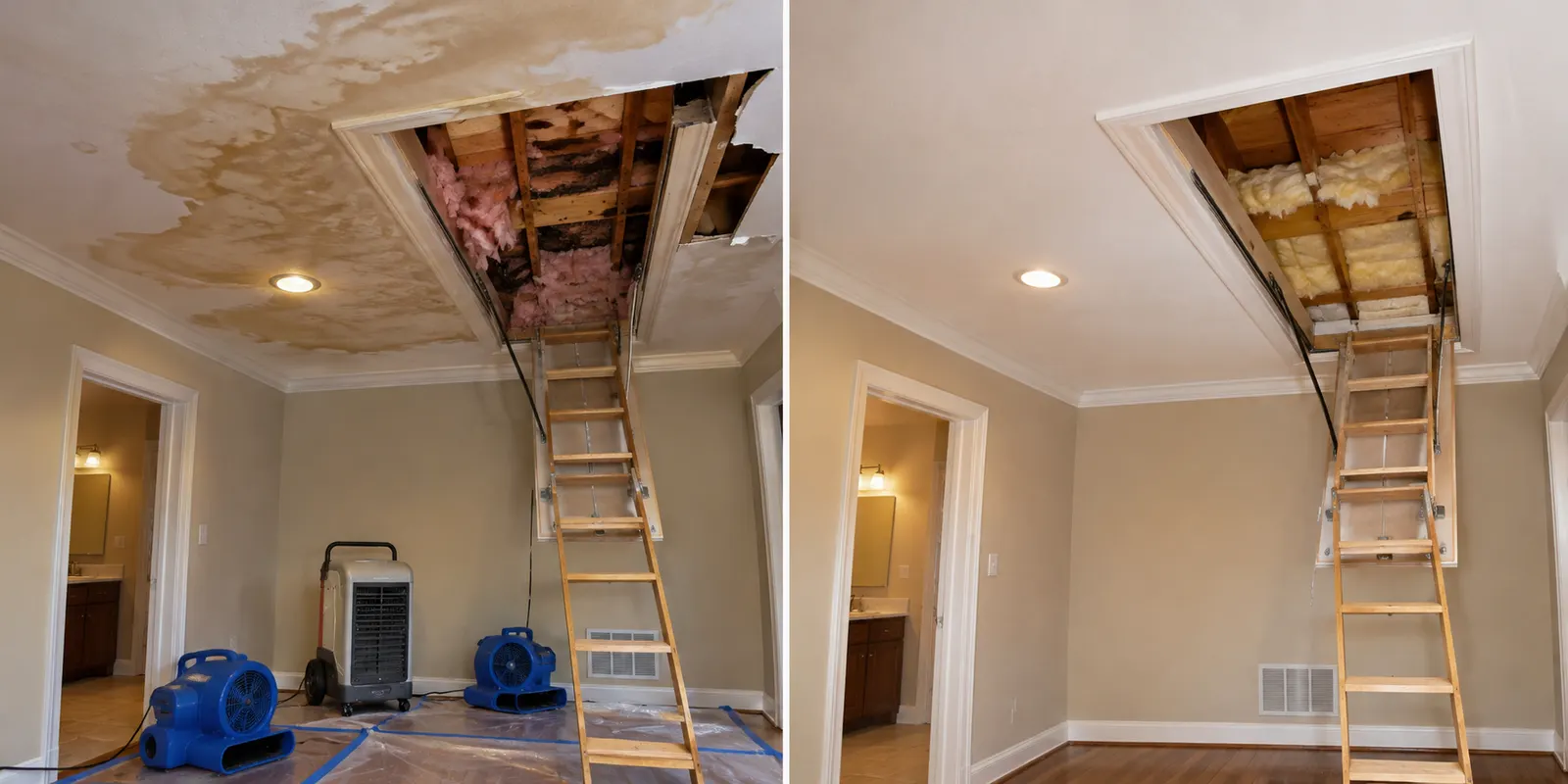
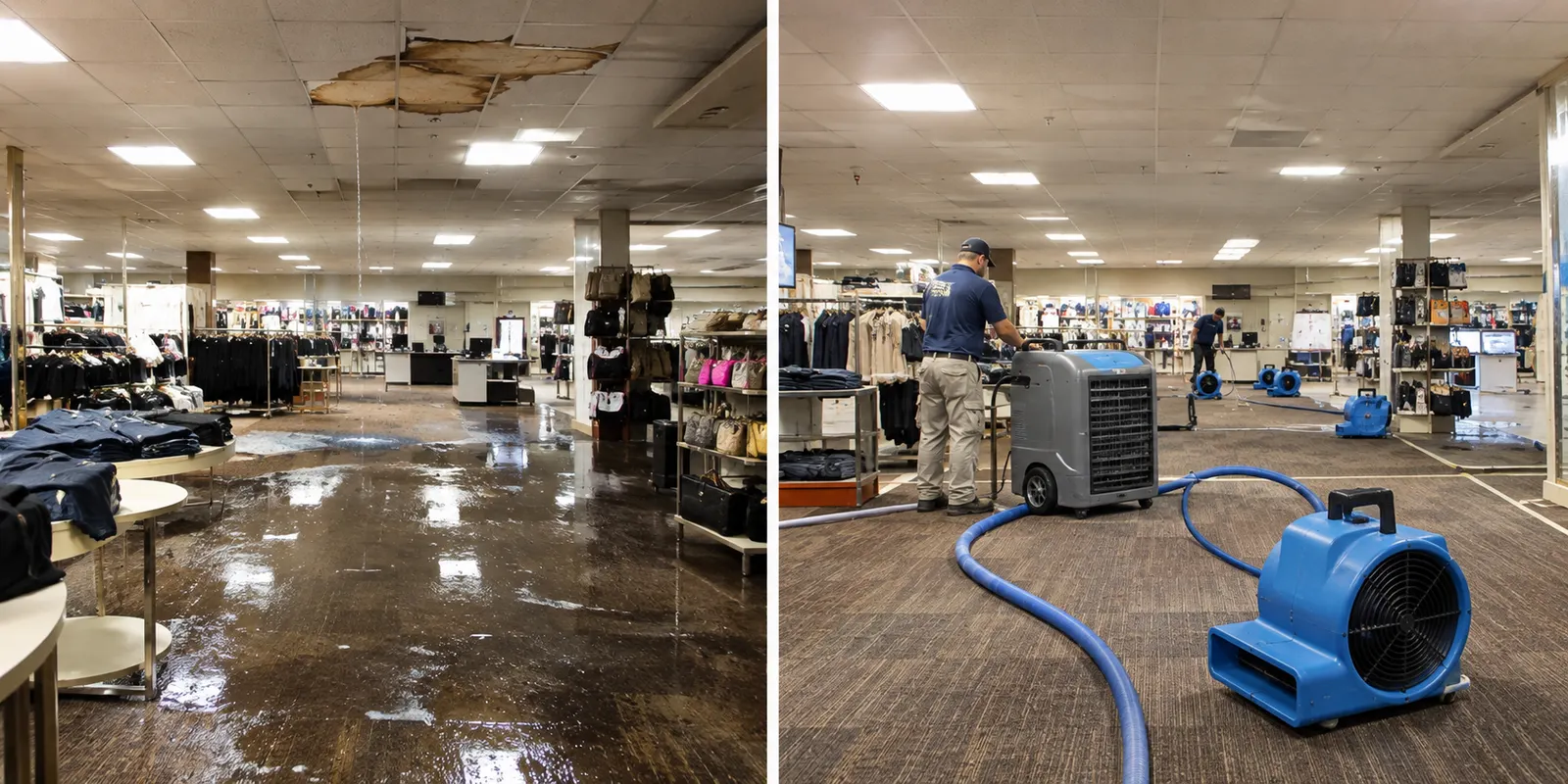
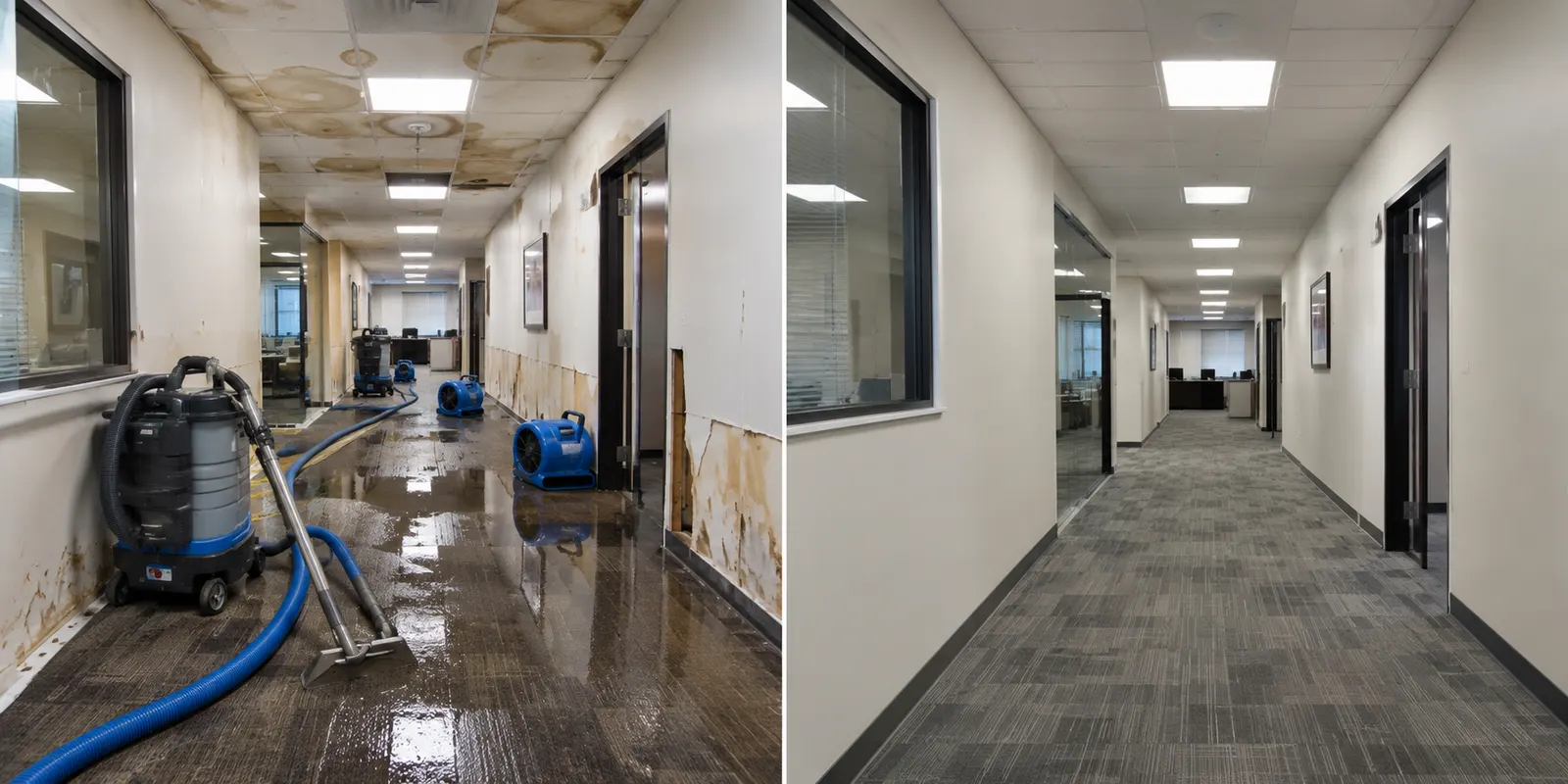
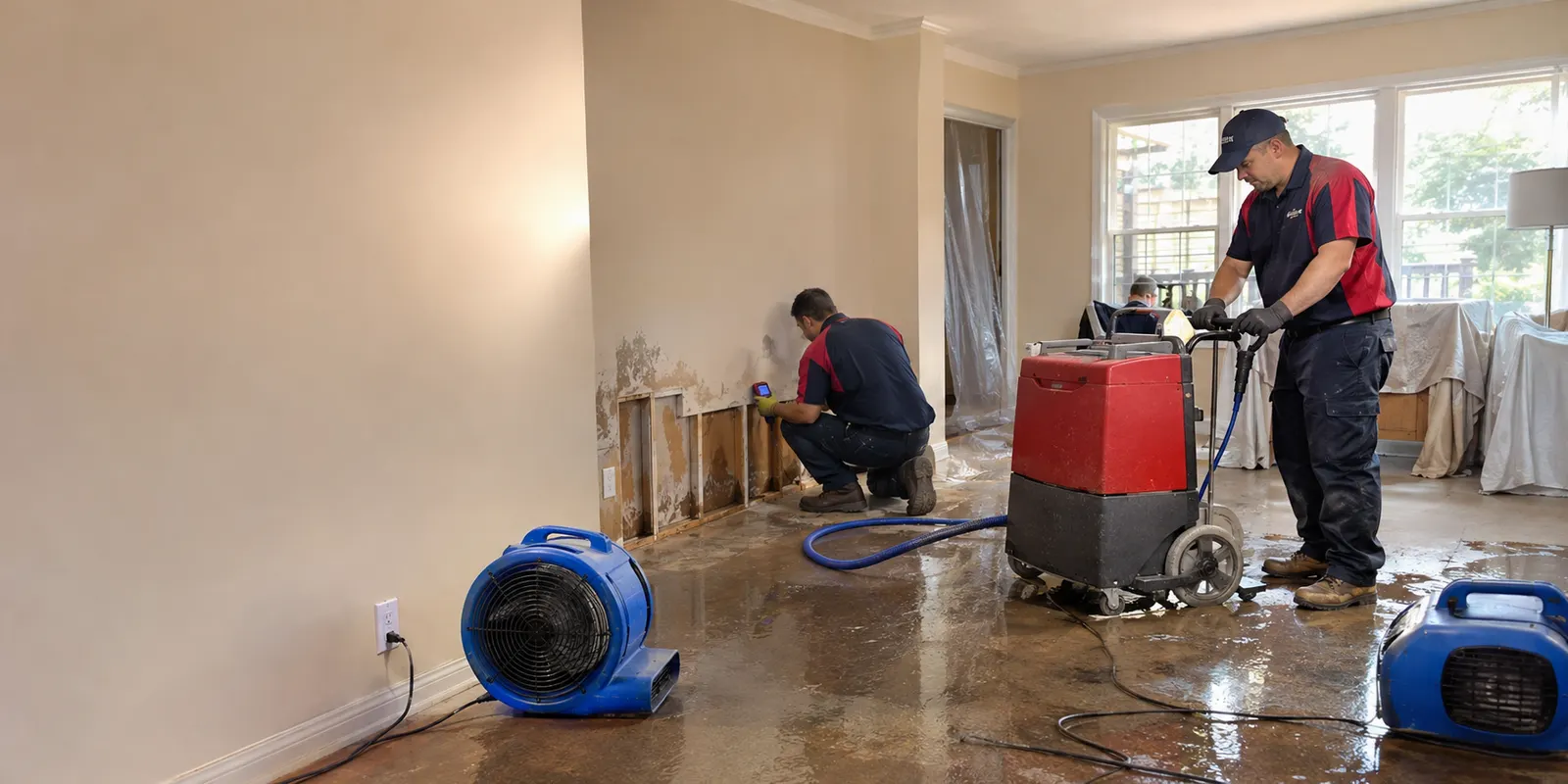
The first hour after you find water
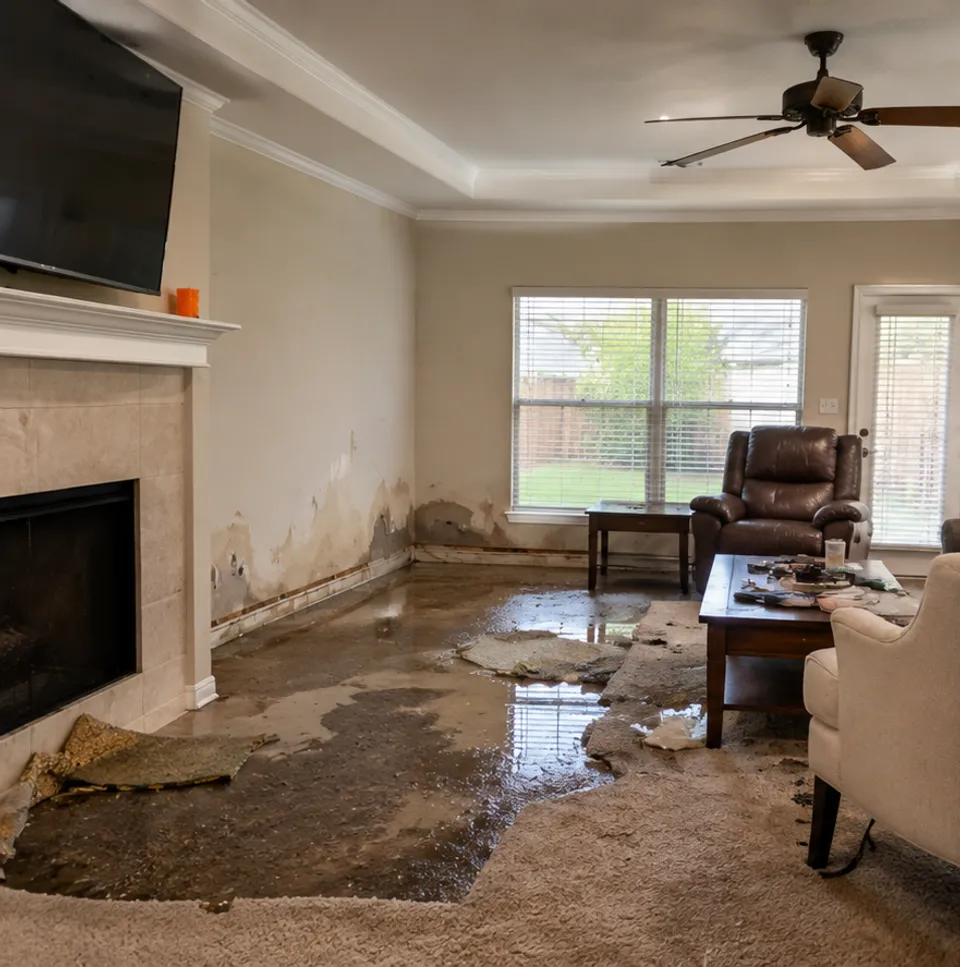
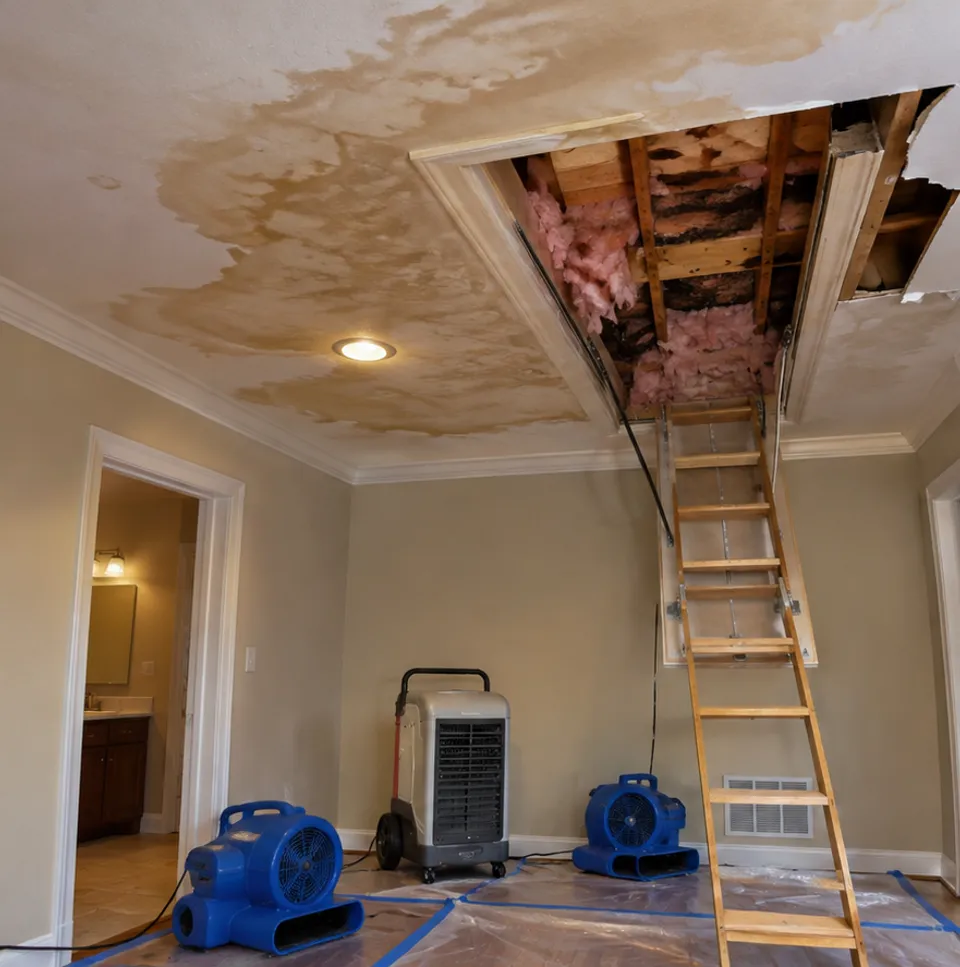
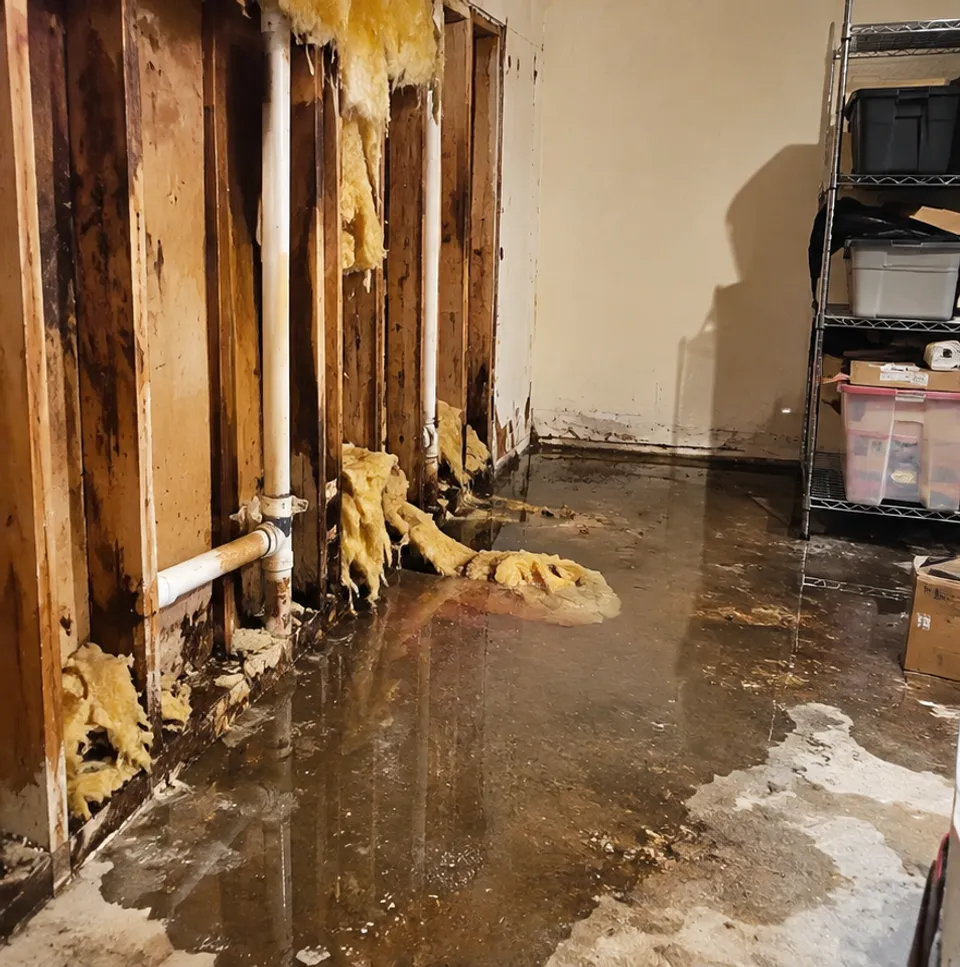
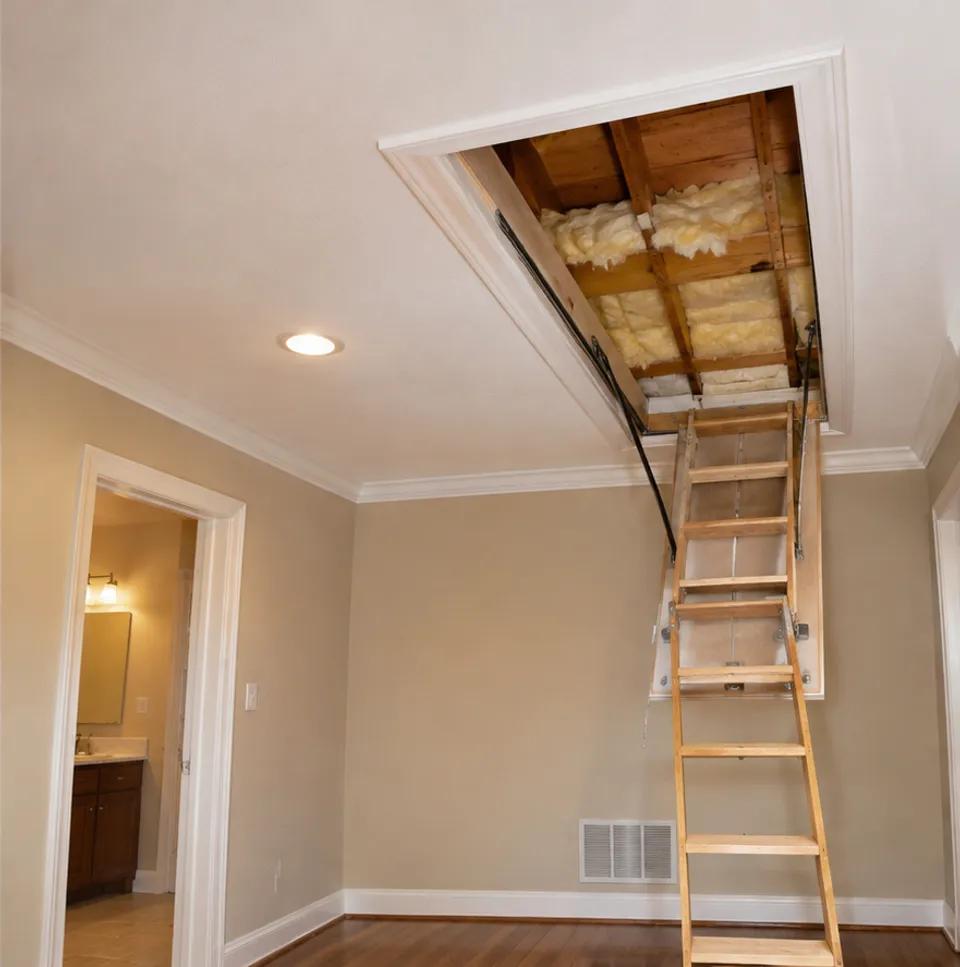
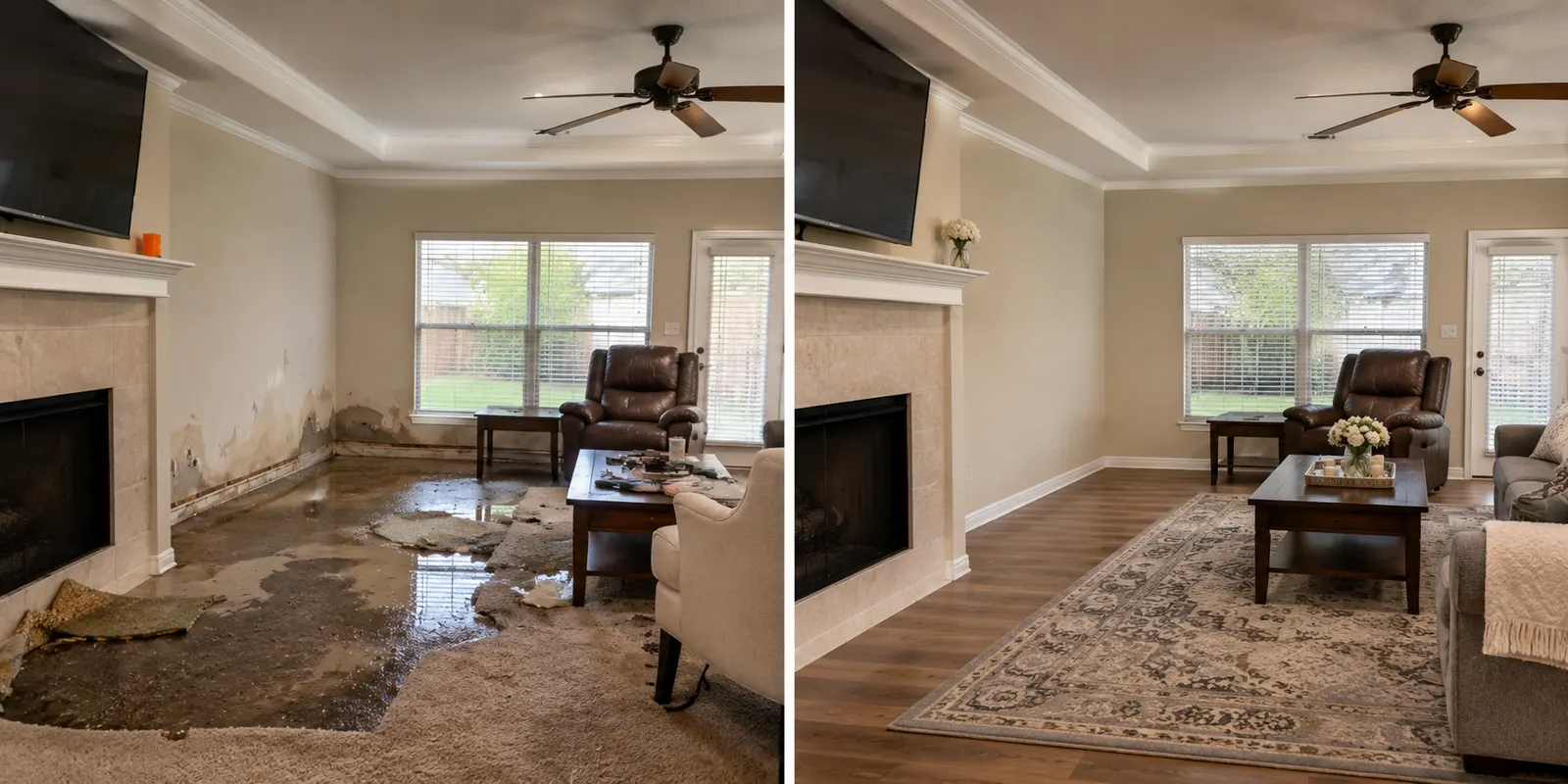
What you do in the first hour mostly limits how far the damage spreads. Safety comes before cleanup. Water and electricity are a dangerous combination, and a flooded room can have live circuits behind the baseboards even when nothing looks wrong. If water is near a breaker panel, do not wade to it. If the ceiling is bulging, stay out from under it, because saturated drywall and insulation are heavy and can drop without warning.
Once the area is safe, stop the source. A burst supply line usually has a shutoff at the fixture, at the water heater or at the main. A roof leak cannot be stopped from inside, but you can move belongings and place containers. Then document. Wide photographs of each room, close photographs of damaged finishes and a short video walk-through are enough. Keep any damaged items that an insurance adjuster may want to see.
Do not run a household vacuum on standing water and do not use ceiling fans or space heaters to “dry things out” while water is still in the room. Opening windows is fine when it is not raining. Lift furniture legs off wet carpet with foil or blocks if you can do it safely, since furniture finishes stain quickly. Beyond that, the next step is professional extraction and drying, and the sooner it starts the more of the building can usually be dried in place.
Have the rooms, the water source and the time it started ready. That is enough for a first conversation about extraction and drying.
Why water gets into Dallas buildings
The causes fall into two groups: water that starts inside the building and water that arrives from outside. Inside causes are the larger group in ordinary neighborhoods: failed supply lines, water heater leaks, dishwasher and washing machine hoses, slab leaks, condensate lines from air handlers, and toilet or sink overflows. Older homes add galvanized or polybutylene-era plumbing in some cases, but building age alone does not tell you whether a particular pipe will fail.
Outside water comes from roof failures, window and door flashing, grading that sends runoff toward a foundation, drains that back up, and, in the lowest areas, creek or river overflow. North Texas has a pronounced rain season in late spring and another in early autumn. The National Weather Service’s 1991–2020 normals for DFW Airport show May and October as the two wettest months, and they illustrate how a single storm can overload drainage that handles an ordinary rain without trouble.
measuredDFW rainfall and freeze exposure by month
Monthly normals, DFW Airport station, 1991–2020. Bars show average precipitation; the strip below shows average days per month with a low of 32°F or colder.
Inches of precipitationThe two highest months (May, October)
10.6
6.2
1.9
0
0
0
0
0
0
<0.5
2.3
8.1
Reading it: water intrusion from heavy rain peaks in late spring and early autumn; plumbing exposure to freezing is concentrated in December through February. The annual normal is 37.01 inches and 29.2 freeze days.
The regional soil is also relevant. Much of North Texas sits on clay-rich soils that swell when wet and shrink when dry, and foundation movement can open gaps at plumbing penetrations. That is a regional pattern, not a diagnosis of any one house; the USDA NRCS Web Soil Survey is the place to look up the mapped soil units for an address.
Extraction, drying and what “dry” means
Water extraction removes bulk water from floors and saturated soft materials. It is the visible part of the job and it matters, but extraction alone does not make a building dry. Water moves into drywall by wicking, into insulation by absorption, and into framing and subfloors through joints. A room can look and feel dry at the surface while the bottom of a wall cavity is still reading wet on a moisture meter.
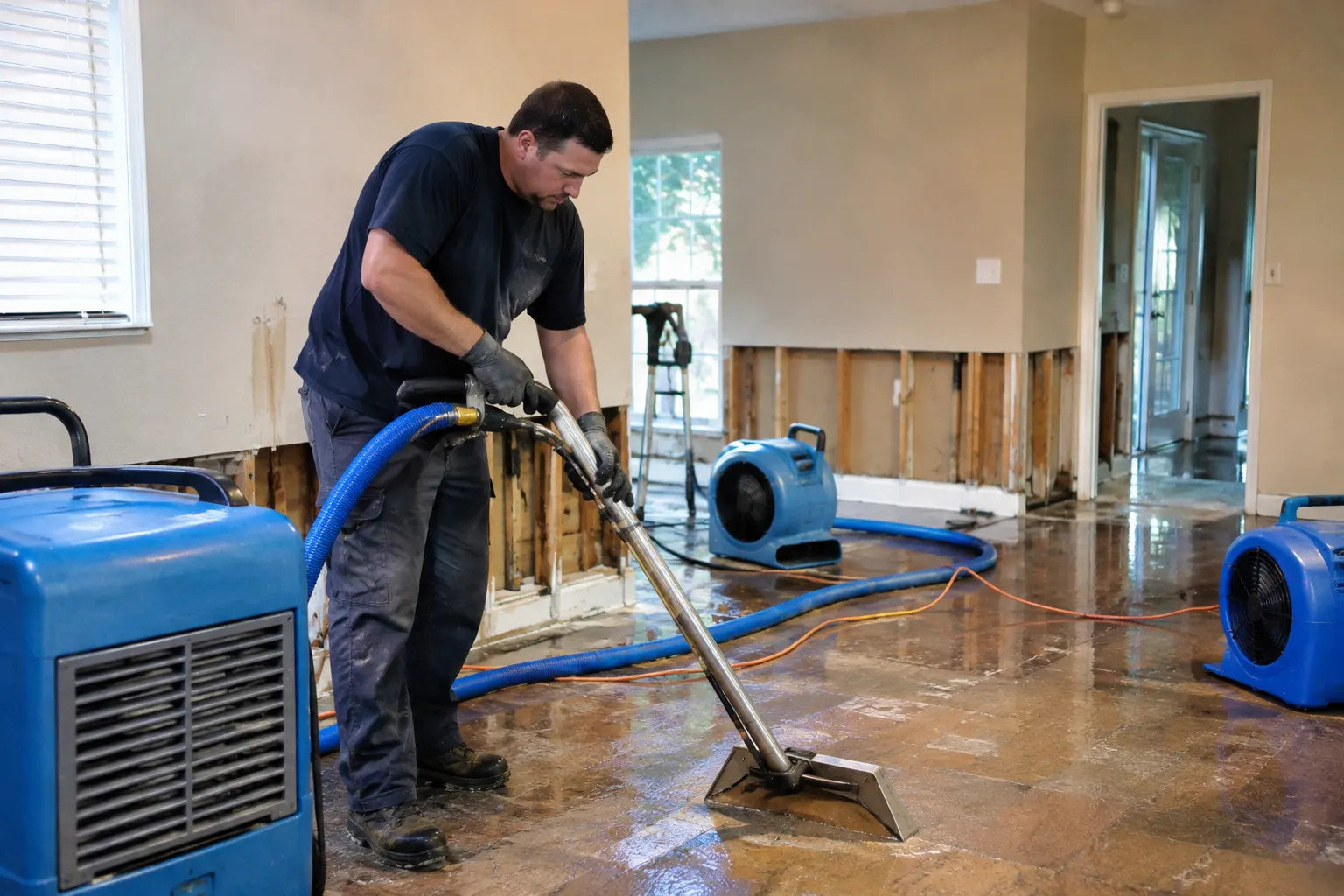
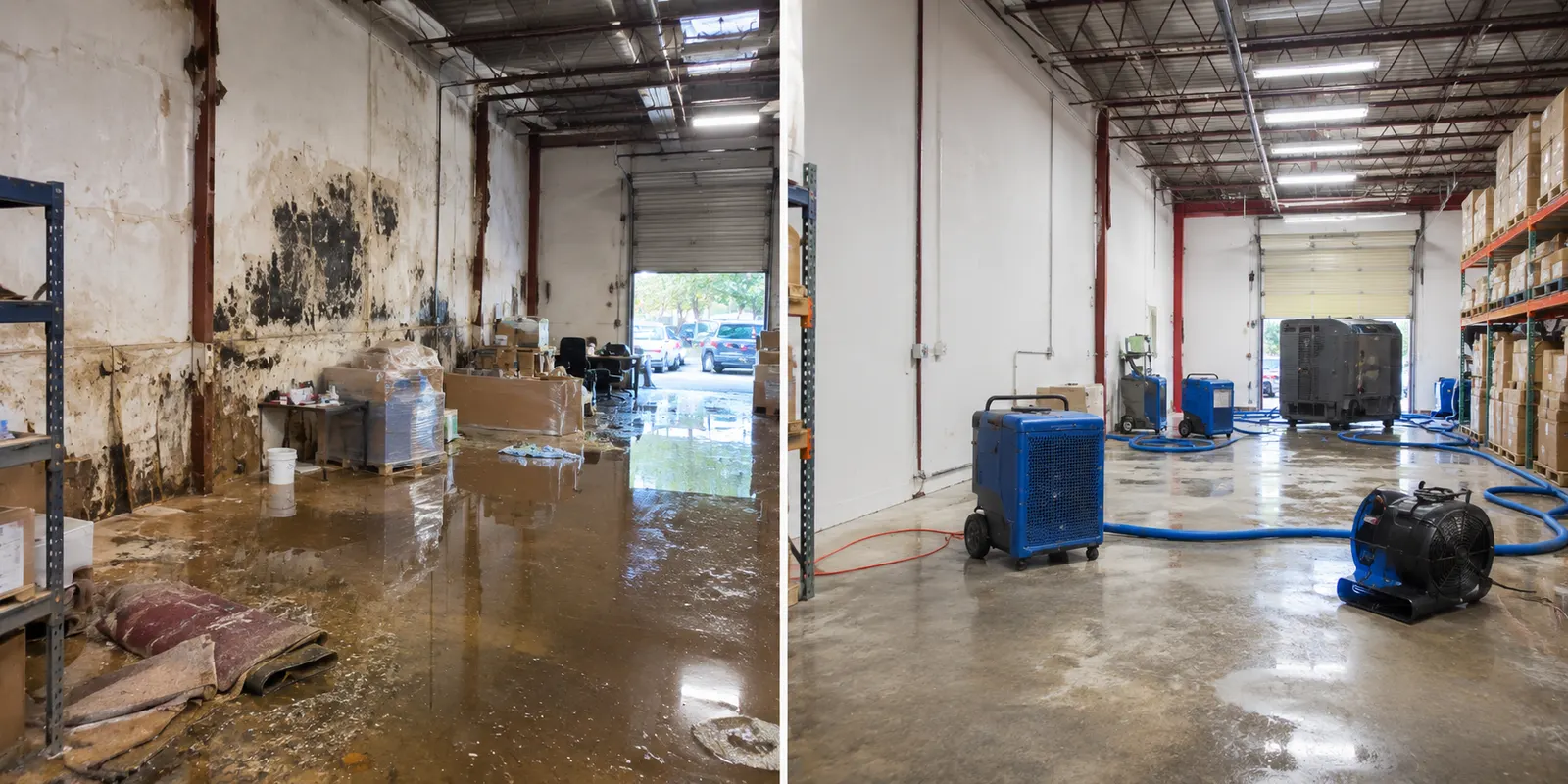
Structural drying is the controlled removal of that remaining moisture. Technicians map wet areas with moisture meters and thermal imaging, set air movers to push dry air across wet surfaces and dehumidifiers to remove moisture from the air, and then take readings on a schedule until the wet materials match the readings of comparable dry materials in the same building. The job is complete when the readings say so, not when the equipment has run for a set number of days.
schematicHow water moves from a ceiling or supply-line leak
Simplified two-story wood-frame cross section. Real buildings differ; this shows common paths, not a prediction for any property.
What to take from it: the stain on the ceiling is often the last place water shows up, not the first. Drywall, insulation, framing and subfloor each dry at different rates, which is why moisture readings, not appearance, decide when drying is finished.
Some materials are removed rather than dried: saturated insulation, carpet padding in many situations, drywall that has been wet for long enough or contaminated, and laminate or engineered flooring that has swollen. A restoration plan that promises to save everything is either incomplete or optimistic. For the detailed workflow, see water damage restoration.
schematicRestoration workflow and what visible water depth can and cannot tell you
Top: the sequence most water-loss jobs follow. Bottom: illustrative scenarios, not measurements from any real job.
Illustrative scenarios (observed condition → what a technician would still need to check)
Burst pipes and cold-weather failures
Freezes are less frequent in Dallas than in northern states, which is partly why they cause so much damage when they arrive. Plumbing in attics, exterior walls, garages and crawlspaces is often only lightly protected. The NWS normals for DFW Airport record an average of about 29 days a year with a low at or below 32°F, concentrated in December, January and February, and the station’s records show daily record lows of 9°F, 4°F and −2°F for February 14–16, 2021. One severe freeze does not prove anything about a given building, but it explains why pipe failures cluster after a cold event: many break when the pipe freezes, but the water often does not flow until it thaws.
A burst pipe may release water for hours before anyone notices, particularly in an attic or an unoccupied property. The cleanup then involves wet ceilings, wall cavities and floors across more than one level. The frozen and burst pipe cleanup page covers the shutoff sequence and the drying steps in detail, and the burst pipe checklist turns them into a printable list. Winter damage also includes basement flooding after snowmelt, ice dam roof leak cleanup, and winter ceiling & attic water damage.
Commercial properties and business interruption
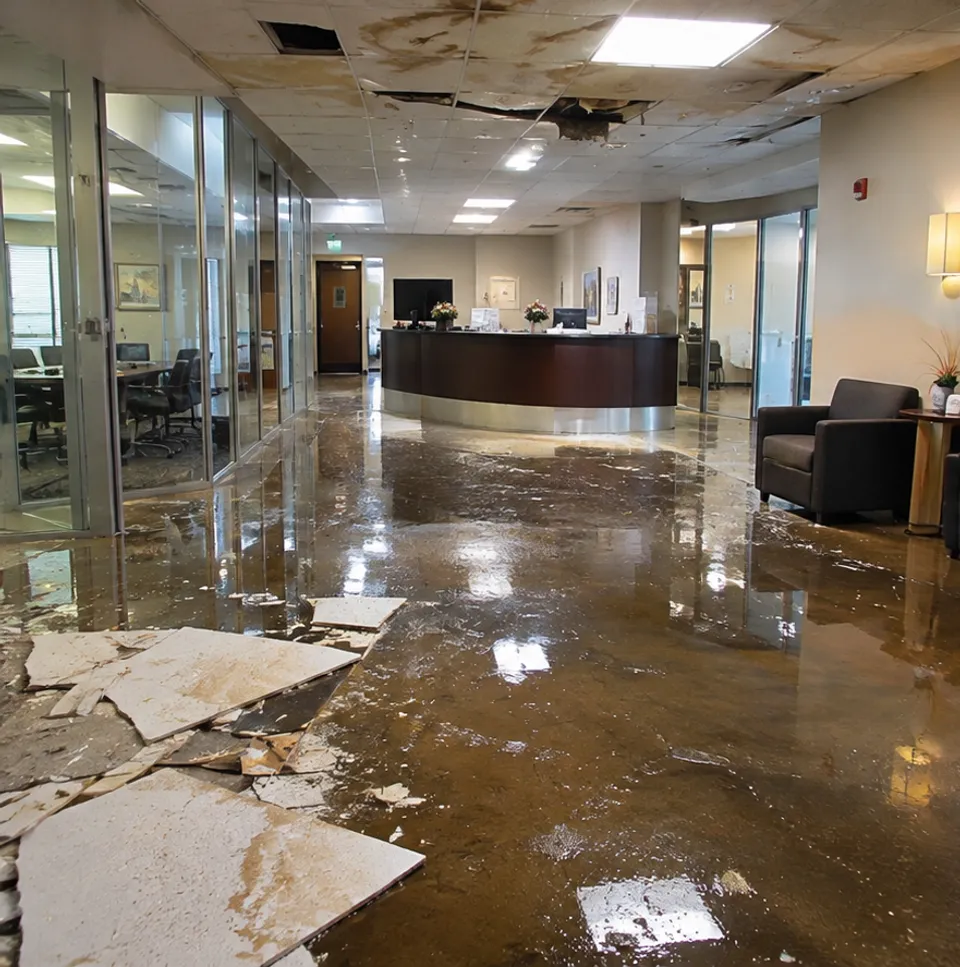
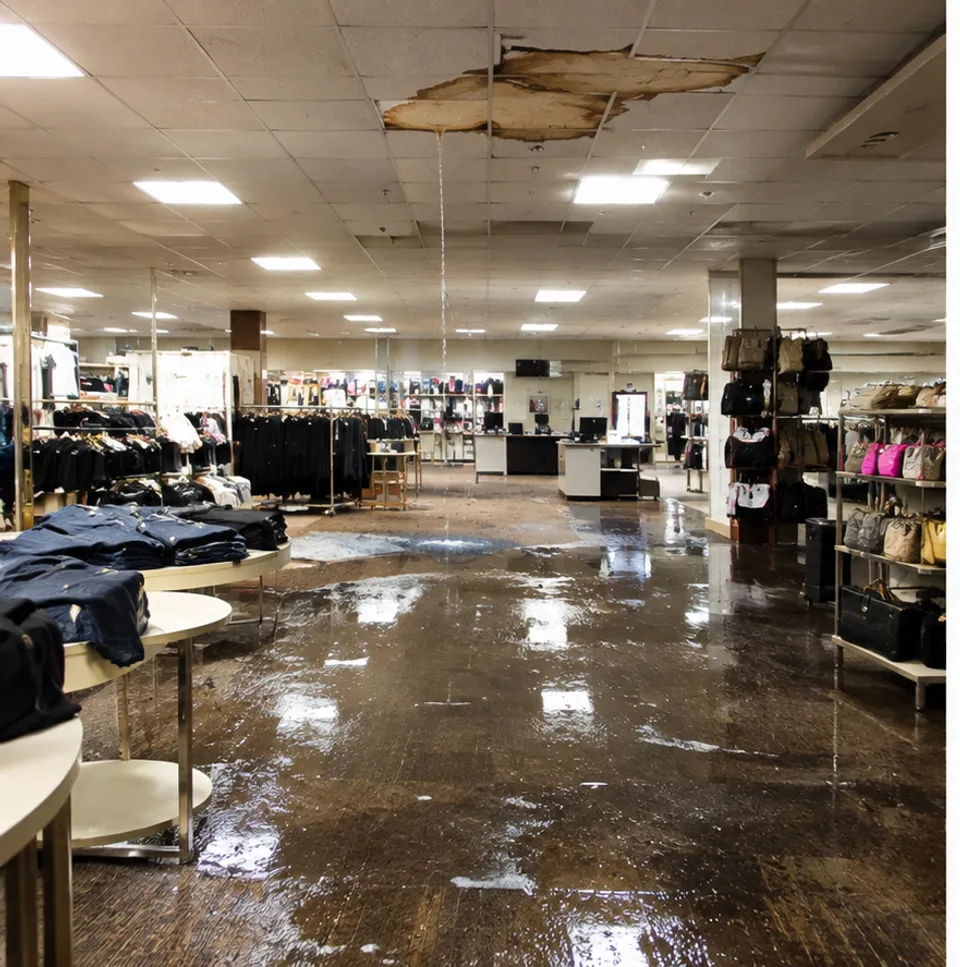
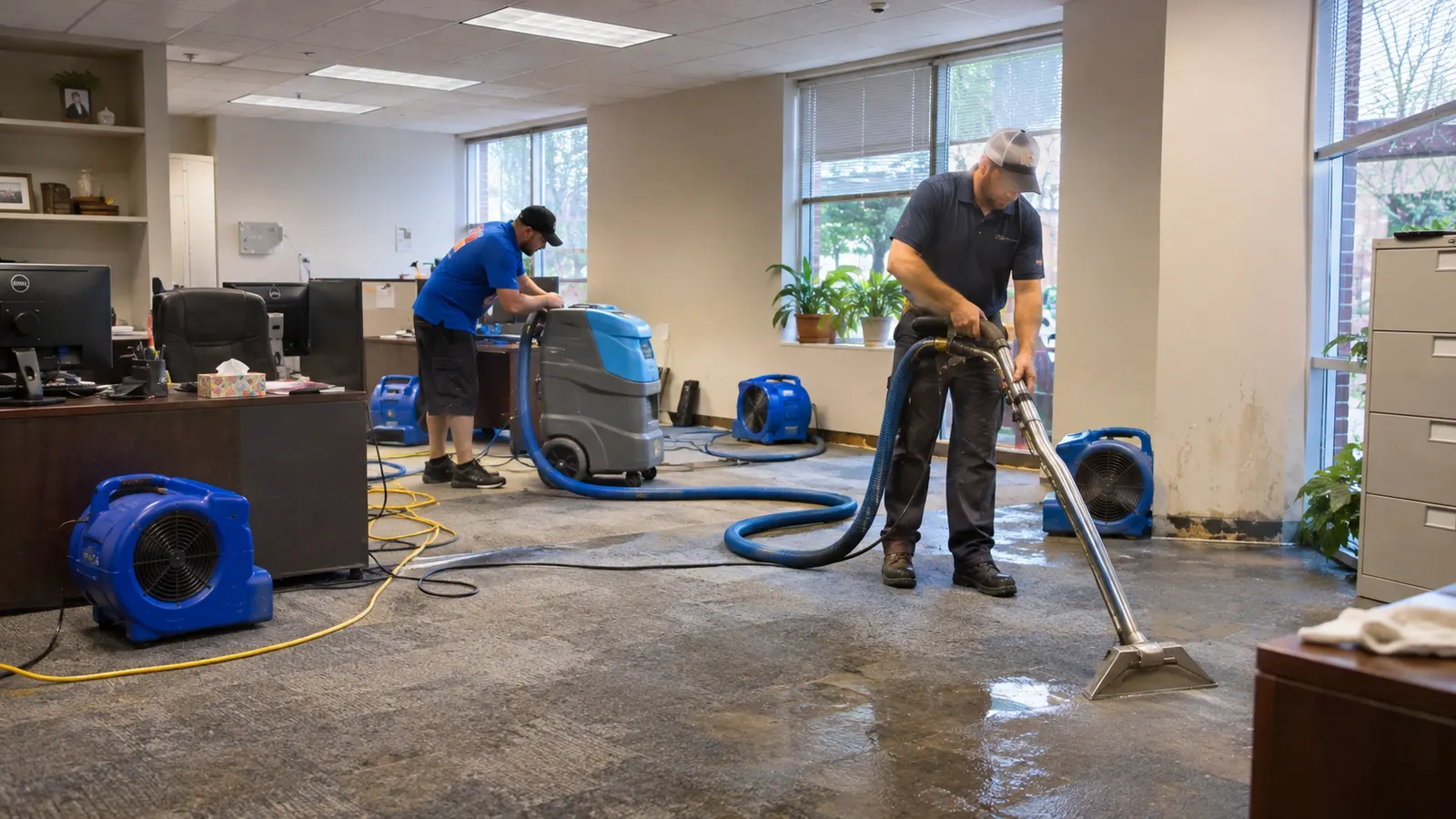
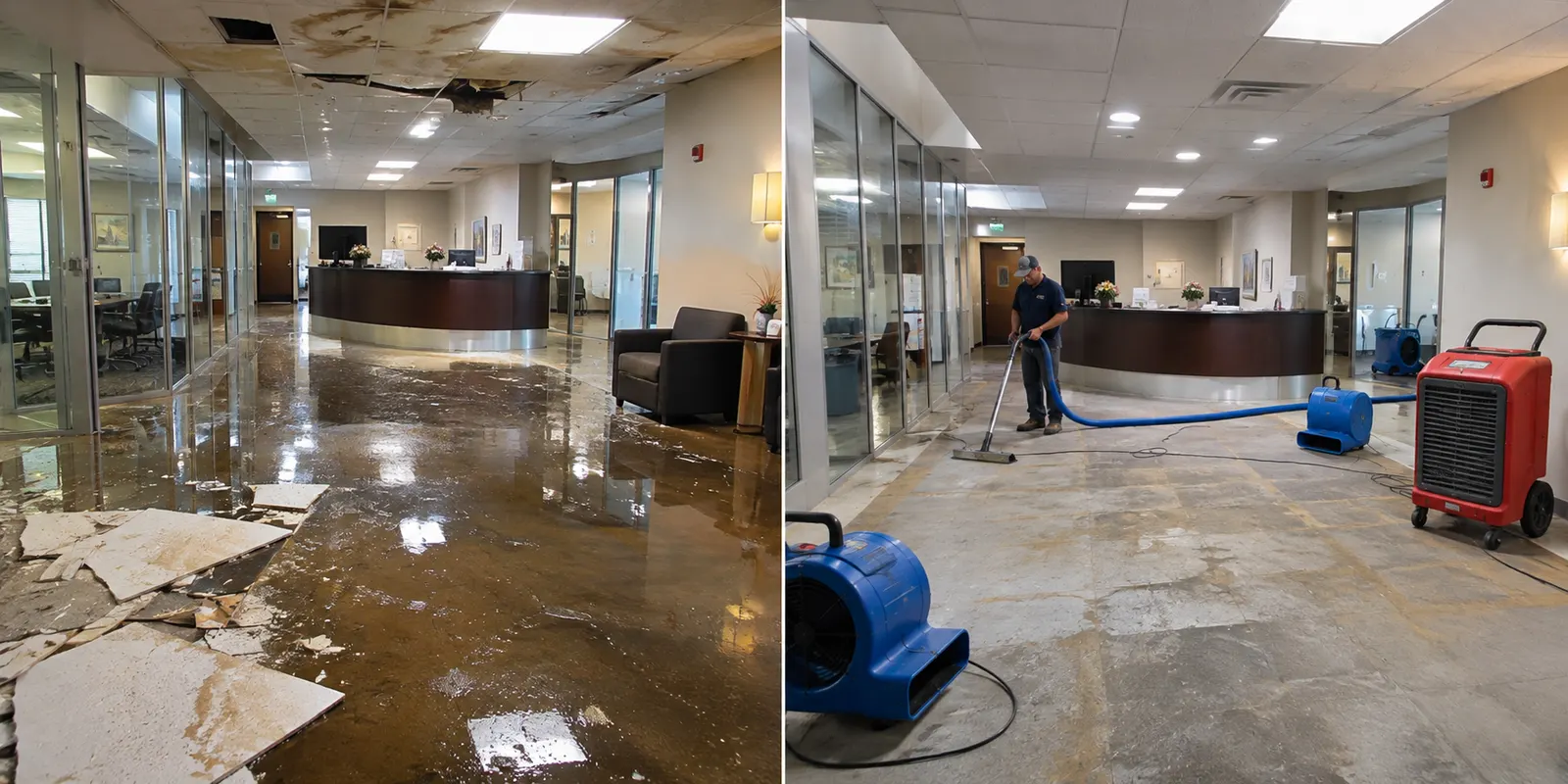
A water loss in an office, restaurant or retail unit adds coordination problems that do not exist in a house: more than one party may have authority over the space, a neighboring tenant’s ceiling may be the source, and the business has a reason to reopen quickly that can conflict with drying time. The first decisions are water shutoff, electrical safety, who may enter, and which equipment and inventory can be moved. Clear photographs and an inventory of affected items support later conversations with a landlord or insurer. The commercial water damage restoration page explains the sequence for multi-tenant and single-occupant buildings.
Mold and persistent dampness
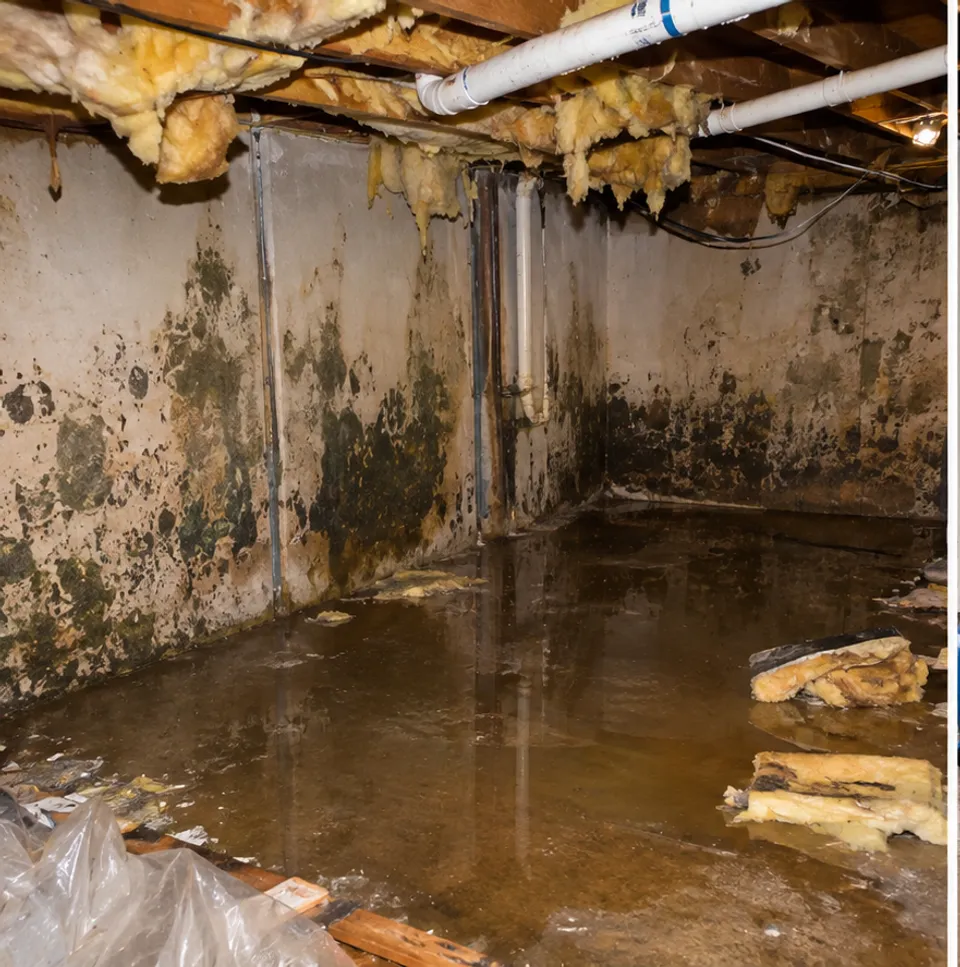
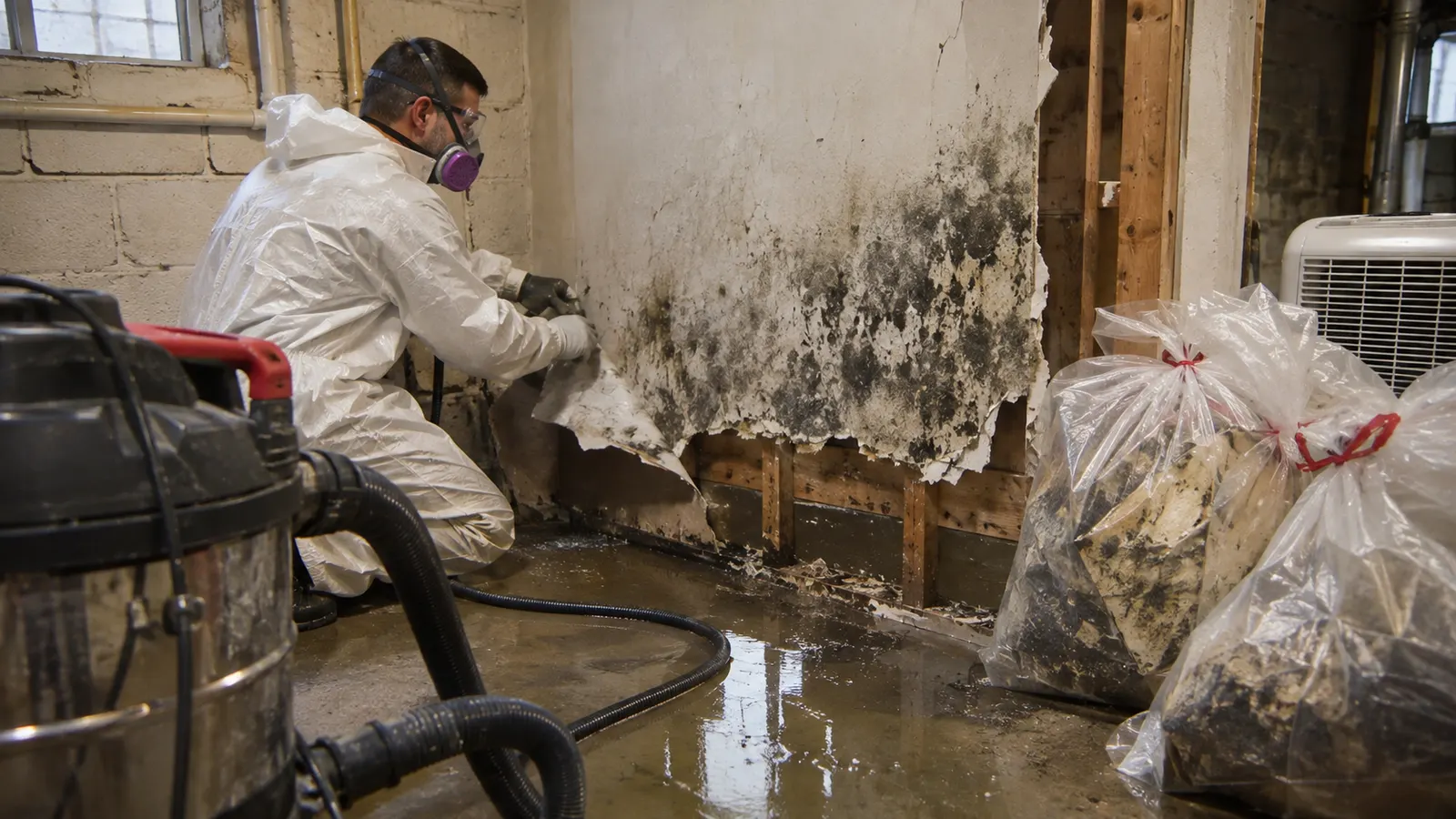
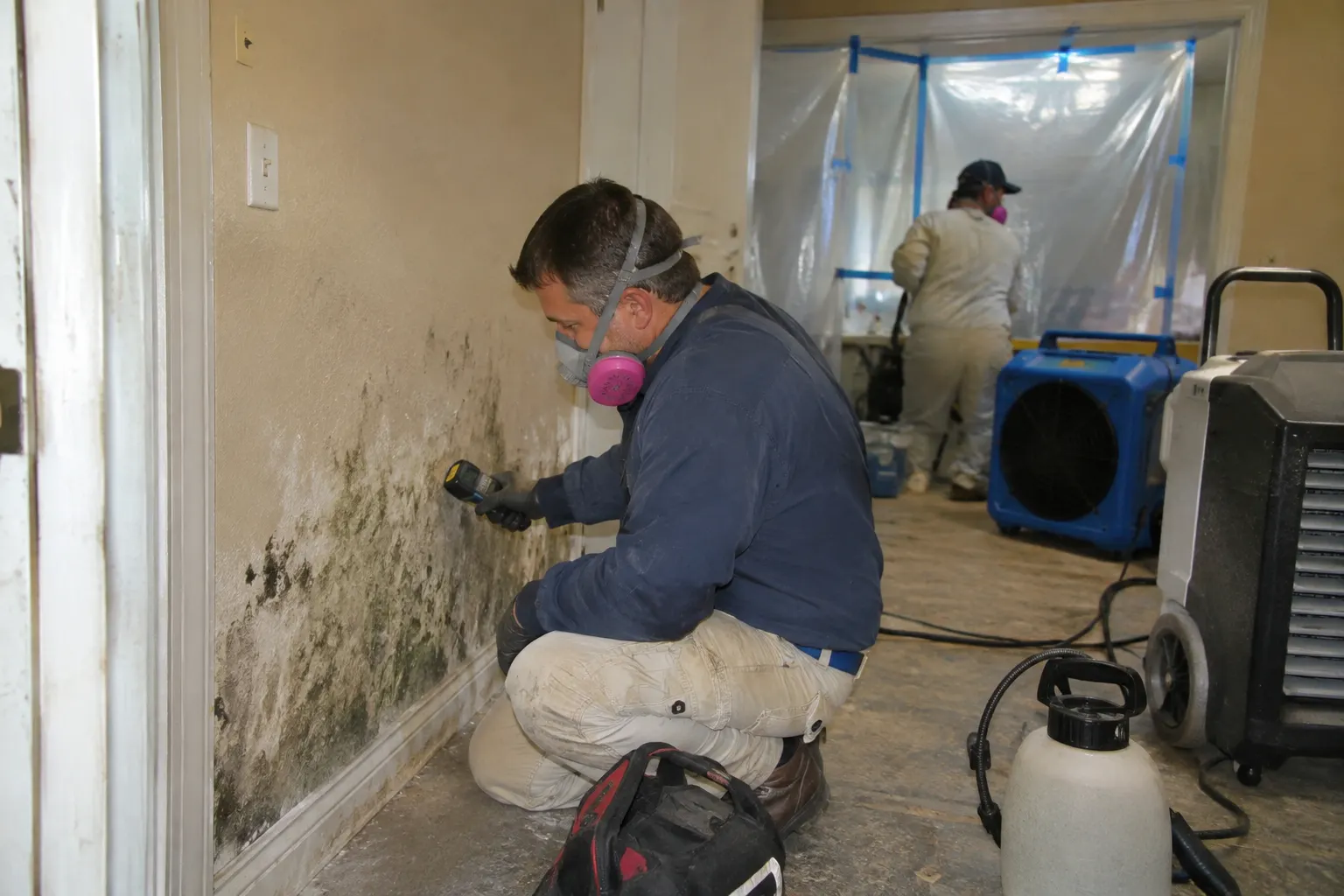
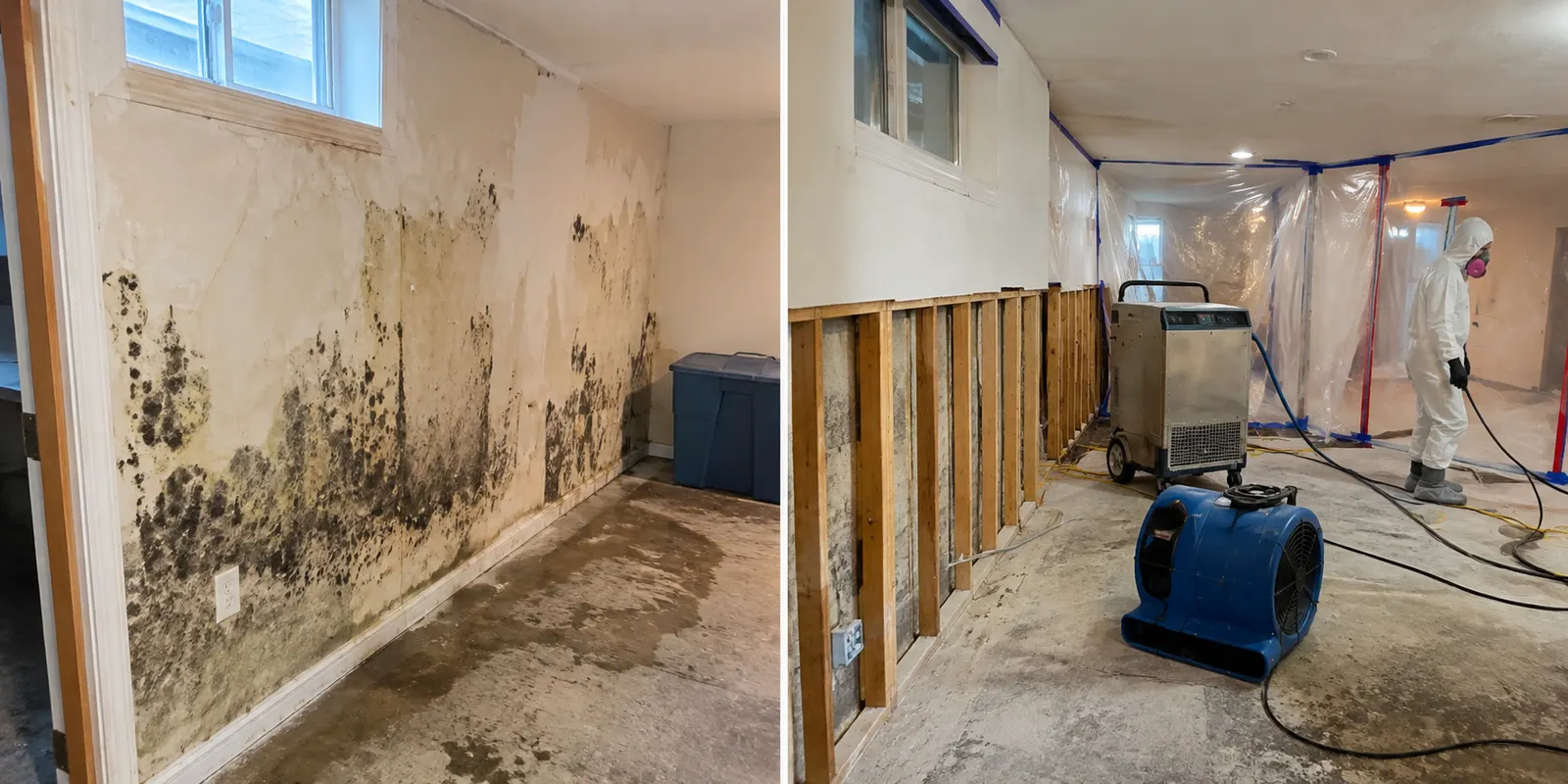
Mold needs moisture, organic material and time. A musty odor, a ceiling stain that returns after drying, or discoloration on the back of drywall are signs that moisture has been present for a while. Surface cleaning does not fix that; the moisture source has to be stopped and the affected materials dealt with. Visual assessment tells you where growth is visible, while laboratory sampling is a separate decision that answers different questions. The mold removal page covers containment and material removal, and the mold assessment tool helps you describe the situation. Neither is a diagnosis.
Hidden moisture and the limits of restoration
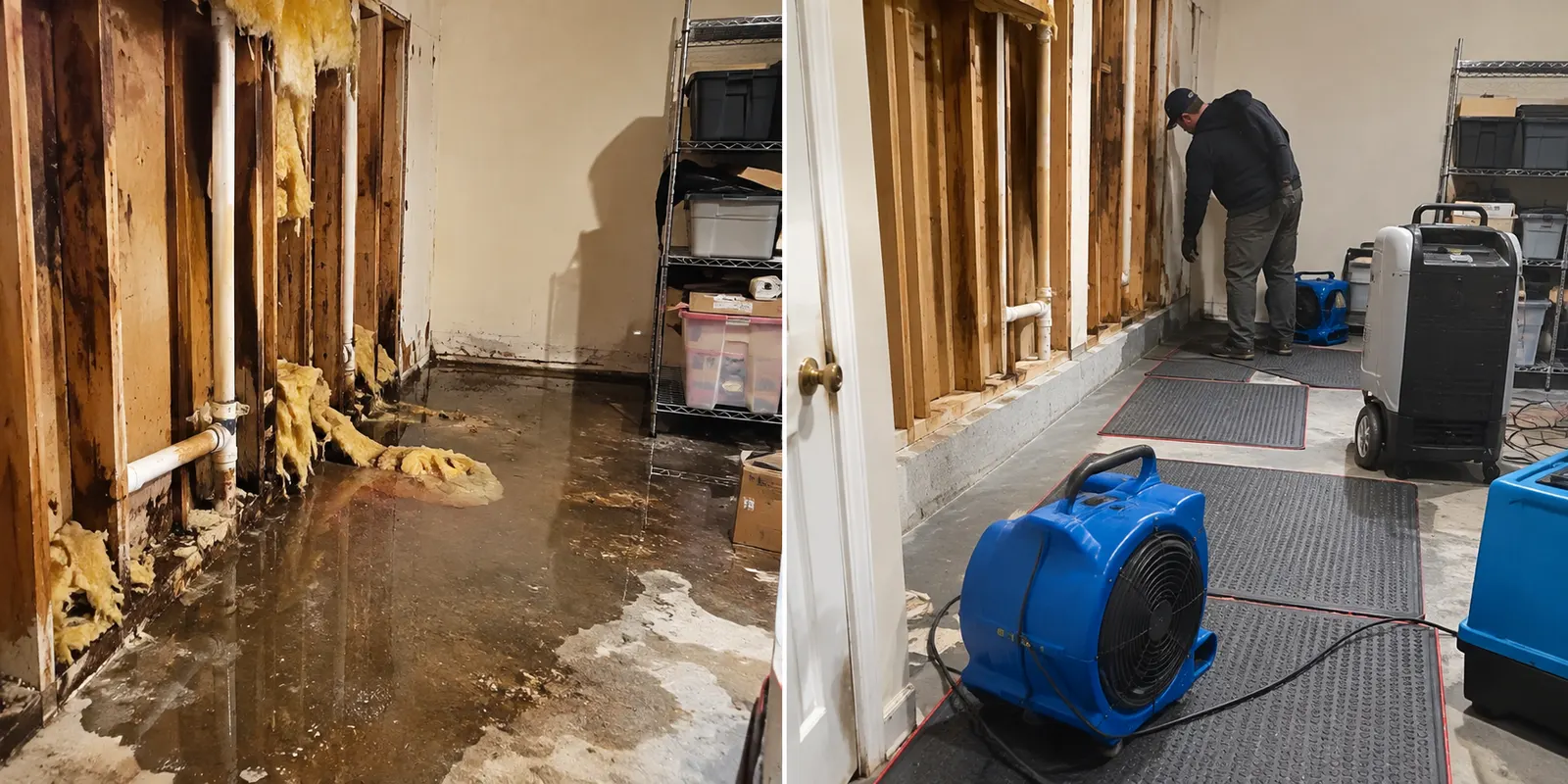
Water behaves in ways that surprise people. It travels along pipes, framing and the back side of cabinets, and it collects in low spots under flooring. Hardwood can cup weeks after a leak, and a wall that read dry on day three can stain later if a pocket of insulation was missed. This is why moisture readings are recorded and why inspections look behind finishes.
There are also things restoration cannot do. It cannot guarantee that every material will be saved, cannot undo structural damage from long-term leaks, and cannot repair the plumbing or roof that caused the loss. A good plan states which materials will be removed, which will be dried in place, and which decisions depend on later readings.
Dallas geography and weather in context
Dallas sits in the Trinity River watershed on the Blackland Prairie edge of North Texas. Floodplains along the Trinity and its tributary creeks are mapped by FEMA and by the City of Dallas, and those maps are the starting point for questions about outside flooding. They have limits. They show regulatory zones, not a promise that a building inside or outside a boundary will or will not take on water, and a flat roof, a clogged gutter or a failed water heater does not care about the map.
For weather, the National Weather Service Fort Worth office publishes the climate normals used in the chart above, along with warnings and records. When a storm or freeze is in the forecast, that is also the best source for timing.
Where we work around Dallas
Beyond the city itself, the area pages cover how conditions differ nearby: the lakeshore setting in Lake Dallas, the mix of residential and warehouse buildings in Farmers Branch, the office and apartment concentration in Addison, the creek system that crosses Carrollton, and the combination of older neighborhoods and large commercial districts in Irving. The service areas overview lists them all.
What a good restoration plan should include
Whoever you call, these are fair things to ask for. They separate a plan based on readings from a guess.
Questions Dallas property owners commonly ask
Should I turn off the power if water is on the floor?
Only if you can reach the breaker panel without standing in or crossing water. If the panel is wet or the route is wet, stay out and call your electric utility or an electrician. Do not touch outlets, cords or appliances that are in or near standing water.
How long can wet drywall and carpet stay wet before it becomes a problem?
There is no single safe number. Porous materials that stay wet for more than a day or two become much more likely to need removal, and mold growth becomes a concern when moisture persists. Start extraction and drying as soon as the area is safe to enter.
Does insurance cover water damage?
It depends on the policy and on the cause of the water. Sudden pipe failures are treated differently from long-term seepage or surface flooding, and flood damage generally requires separate flood coverage. Read your policy or call your agent, document the damage, and keep damaged materials until an adjuster has seen them if you are told to.
Do you fix the broken pipe?
Plumbing repair and water restoration are different scopes. Restoration deals with the water, wet materials and drying. A licensed plumber repairs the line. Ask about scope when you call; do not assume restoration includes plumbing repair.
Is the water in my house contaminated?
It depends on where it came from and how long it has been there. Clean supply-line water can degrade into contaminated water after sitting, and water that came from outside, a drain or a sewer line should be treated as contaminated from the start. A technician classifies it on site; a website cannot do that for you.
What does a reliable quote depend on?
A reliable quote depends on seeing the actual damage: the affected area, the water source, how long materials have been wet, the materials involved and how much equipment drying will take. Anyone quoting a firm figure over the phone without those facts is guessing.
You do not need a complete list. Say where the water is, what it came from and how long it has been there.
Source notes
- NWS Fort Worth, DFW Normals, Means, and Extremes (1991–2020), precipitation, freeze days and February 2021 daily records
- FEMA Flood Map Service Center, official flood hazard maps; not yet reviewed for this page
- USDA NRCS Web Soil Survey, soil units by address; general reference