
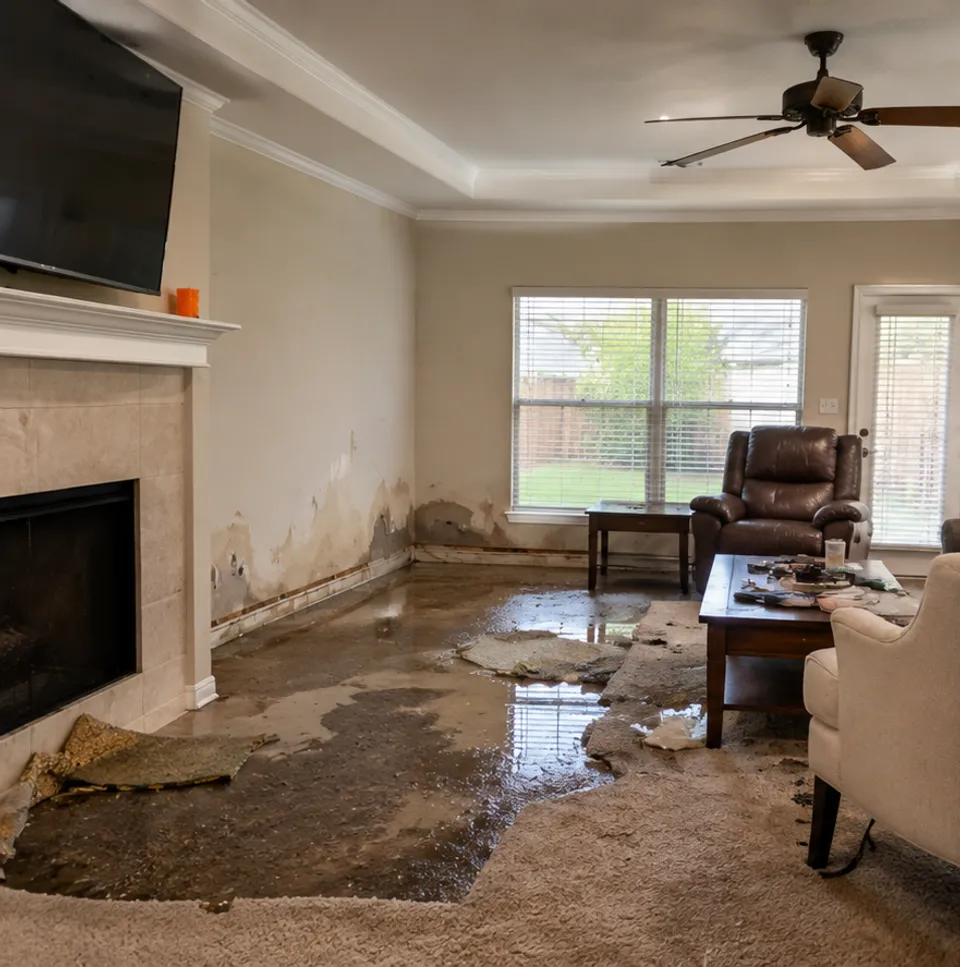
- Typical cause
- A tank that corrodes through, a loose or aged supply connection, a hose that lets go, or a drain line that clogs.
- First move
- Close the supply valve at the appliance, or the main if it will not close. Power off only if the area is dry.
- Not included
- Repairing or replacing the appliance is an appliance or plumbing job. Restoration dries what the water reached.
The usual sources and where their water goes
| Source | Typical failure | Where the water goes |
|---|---|---|
| Water heater | Tank corrodes through; relief valve discharges; a supply connection loosens. | Closet or garage floor, then adjoining rooms. An attic unit soaks insulation and the ceiling below. |
| Washing machine | Supply hose bursts; drain hose slips off the standpipe. | Laundry floor, the wall cavity behind the machine, rooms below. |
| Dishwasher | Door seal, supply line or drain connection. | Under the cabinet, into the subfloor and the adjoining flooring. |
| Refrigerator ice maker | A small supply tube cracks or loosens. | Slowly behind and under the fridge, often unnoticed for weeks. |
| Air handler condensate | Clogged or frozen drain line; overflowing pan. | Ceiling below an attic unit, or a closet floor. |
Sudden leaks and slow leaks need different handling
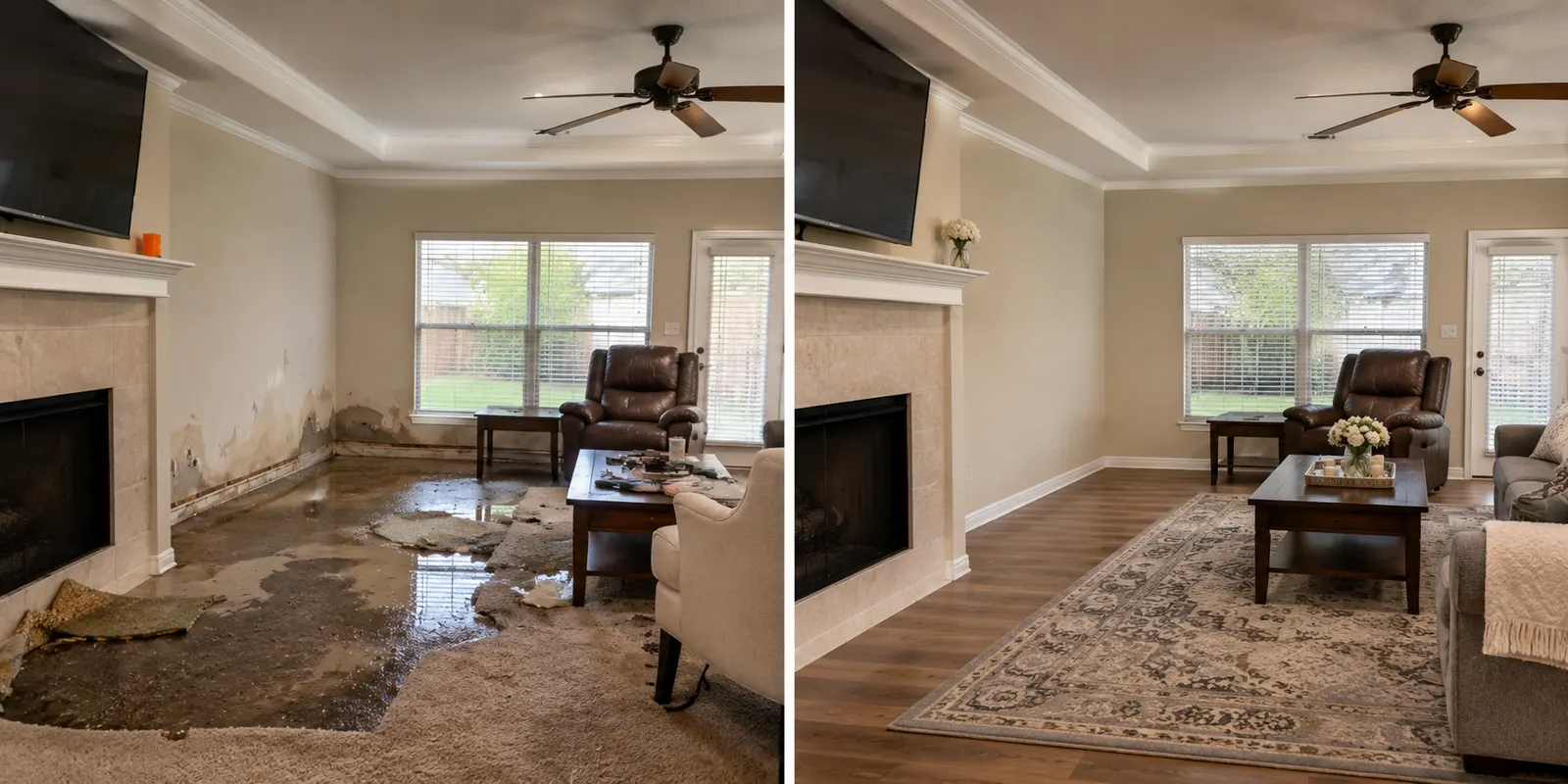
A burst washing machine hose floods a room in minutes and cannot be missed. The cleanup is about speed: extraction, removal of wet padding and low drywall, and drying. A slow leak is quieter and more expensive in the long run. It wets the same small area repeatedly, so the subfloor, bottom plate and cabinet bases stay damp and can rot. By the time a stain or smell shows, the materials may have been wet for weeks, and the job includes deciding what has to come out rather than dry.
Stopping the water first
- Water heater. Close the cold supply valve above the unit. Switch off its breaker or gas control only if the area is dry and safe.
- Washing machine or dishwasher. Close the appliance’s supply valve, or the main if it will not turn. Unplug only if the outlet and the floor are dry.
- Refrigerator. Close the ice maker supply valve. Pull the unit out only if you can do it without wading.
- Air handler. Switch the system off at the thermostat and the breaker, then call for service.
- Photograph the source and the wet area before anything is moved.
Tell us which appliance, whether the water is stopped and how long you think it has been leaking.
How cleanup differs after an appliance leak
Clean supply water, the kind that comes from a water heater or a burst hose, is the most favorable case for drying in place. Drywall that was wet briefly, carpet, and sometimes hardwood can be dried with air movers and dehumidifiers. Washing machine discharge and anything that has sat for days are less clean, and more of the material gets removed. The sequence is the same as other losses: moisture mapping, extraction, removal of what cannot dry, structural drying and verification, described on the home page.
Cabinets deserve a closer look. Water gets behind toe-kicks and wicks into cabinet bases and the wall bottom plate. Drying often means taking off the toe-kick or opening the cabinet back. A swollen particleboard base usually cannot be saved, and replacing it may be more practical than drying it, but that call depends on the readings and the cabinet.
Attic and closet installations
In many slab-on-grade houses the water heater or air handler sits in an attic or a closet. A leak up there saturates insulation first, then the ceiling, then the wall cavities. A stain on a ceiling near a hall closet or a bathroom wall is a prompt to check what is above it. See ceiling and attic water damage for how those ceilings are assessed.
Repair and replacement are separate jobs
An appliance technician or plumber fixes the appliance or the connection. Restoration handles the water and the damaged building materials. If the cause is not corrected the leak resumes, so keep the failed hose or part in case the insurer or the manufacturer wants it. If the damp area has been there for a while, read mold removal too.
Frequently asked questions
My water heater is leaking. What do I shut off?
Close the cold water supply valve on the pipe above the tank. For an electric heater, switch off its breaker; for gas, turn the gas control to off or pilot. Do this only if the floor around it is dry and the controls are reachable without wading.
How can I tell if an appliance has been leaking slowly?
Look for soft, cupped or discolored flooring beside the appliance, cabinet bases that swell or darken, a musty smell, or a baseboard that has pulled away. A moisture reading confirms it. If you suspect a leak somewhere you cannot see, check the water meter with every fixture off.
Is a slow leak worse than a sudden one?
Often. Slow leaks can run for weeks and soak subfloor, framing and cabinet bases before anyone notices, which is why they lead to rot and mold more often than a visible burst.
Is a water heater in the attic a problem?
It is a common setup in houses built on slabs, and it means any leak goes straight into the insulation and the ceiling below. A drain pan with a drain line, a working relief valve line and a leak sensor reduce the damage, but none of them is a substitute for checking the area now and then.
Does insurance cover an appliance leak?
It depends on the policy and on whether the leak was sudden or gradual. Many policies treat long-term seepage differently from a sudden failure. Keep the failed part, photograph the area and ask your agent.
Describe what leaked and what is wet.