Key points
- Most houses have two shutoffs on the supply line: the utility’s valve at the meter and your own main where the line enters the house.
- A valve you have never turned may not turn. Test it twice a year, slowly, and know what to do if it sticks.
- IBHS recommends knowing where the main is and turning it off when traveling.
- Condos and apartments usually have a unit shutoff and a separate building riser that only management can close.
- Label the valve, show everyone in the household, and photograph its location.
The shutoff that ends a flood is the one you can find and close in under a minute. Plenty of people discover during a burst pipe that they have never located it, or that it has not moved in twenty years and will not turn. IBHS’s guidance on preventing interior water damage tells homeowners to know the location of the main shutoff and to turn it off when traveling. Triple-I’s winter guidance says the same thing in different words: know where your pipes are and learn how to shut the water off. This post is the practical version.
Two valves, two owners
On a typical single-family lot there are two places the water can be stopped on the supply line, and they are not equivalent.
- The meter valve. In a box at the edge of the property, near the street. It belongs to the water utility. Many utilities treat it as theirs, and the lid may need a special key. Ask your utility whether residents may use it.
- Your main shutoff. On the line where it enters the house, usually inside a garage, utility room or closet, or outside against an exterior wall. This is the one meant for you.
Below those are the smaller valves: one on the water heater, a stop valve under each sink and behind each toilet, one at each washing machine hookup, and one at each outdoor faucet. These stop a single fixture, which is useful for a leaking toilet supply but does nothing for a burst line in a wall.
schematicWhere the shutoffs usually are
Plan view of a typical single-family lot. Your house may differ, so walk the property and find yours.
How to find your main
- Find where the water enters. Walk to the side of the house facing the street. The line from the meter comes in near the same spot, often at an exterior hose bib, a utility closet or the garage wall.
- Look at the water heater. The cold supply line feeding it often has a valve, and the main is frequently within a few feet of it in houses where the heater is near the entry point.
- Follow the meter. The line from the meter box to the house shows where the main must be, even if it is hidden behind a panel.
- Check the plans or ask. If the house has a plumbing diagram, a home inspection report or a seller’s disclosure, it may say. A plumber can find and label it in a few minutes.
- Mark it. A bright tag, a photo on your phone and a note in the household’s emergency list is enough.
Ball valves and gate valves
| Type | How it looks | How it works | Watch for |
|---|---|---|---|
| Ball valve | A lever handle. | A quarter turn. Lever in line with the pipe is open; across the pipe is closed. | Usually reliable. Move it gently once in a while so it does not stick. |
| Gate valve | A round wheel handle. | Turn clockwise several turns to close, counterclockwise to open. | Older gate valves can seize, leak at the stem or snap if forced. Never wrench one. |
| Utility curb stop | A buried valve with a small cap in the meter box. | Closed with a key by the utility. | Not meant for residents unless your utility says so. |
The twice-a-year test
- Tell the household. Water will be off for a few minutes.
- Close the valve slowly. For a ball valve, a quarter turn. For a gate valve, turn the wheel clockwise until it stops. Do not force it past firm resistance.
- Check that it worked. Open a faucet on the lowest floor. Water should stop within a few seconds.
- Look at the valve. Any drip at the stem or the connections is a sign it needs service.
- Reopen it slowly, then open a faucet for a moment to clear air from the lines.
While you are there, you can run a leak check. EPA’s WaterSense program says to check your water meter before and after a two-hour period when no water is being used, and that if the meter changes at all, you probably have a leak. The shutoff is the other half of that test: with the valve closed, a meter that still moves means the leak or the meter itself is on the street side of the valve. The hidden leak guide covers the rest.
If it will not close or leaks
- In an emergency, call your water utility’s emergency line and tell them water is running inside a building. They may be able to close the supply at the meter.
- Close the valve at the water heater and at the affected fixture if the leak is limited to one place.
- After the emergency, have a licensed plumber replace the valve. A ball valve is a modest, common repair, and having one is worth it.
Fixture shutoffs and when to use them
The main closes the whole house. The small valves close one fixture, and they are the right tool for the most common household leaks, which come from a toilet supply, a faucet connection or an appliance hose.
| Fixture | Where the valve is | Notes |
|---|---|---|
| Toilet | On the wall or floor behind the bowl, usually on the left. | Turn clockwise to close. Test it each year. |
| Sinks | Two small valves under the basin, hot and cold. | Old stops can seize or weep when first turned. Do not force them. |
| Dishwasher | Usually under the kitchen sink, on the hot line. | Closing it stops the supply to the dishwasher only. |
| Washing machine | Two valves at the wall box, hot and cold. | Rubber hoses are a common failure point. Many people close the valves when away. |
| Water heater | On the cold supply pipe above the tank. | Closes the heater without shutting the house. |
| Outdoor faucet | Inside the house, on the line that feeds the faucet, if it has one. | Closing it before a freeze protects the pipe in the wall. |
A valve that has not moved in years is a risk of its own. If a stop leaks when you turn it or will not close, have a plumber replace it while nothing is wrong. Leak sensors and automatic shutoff valves exist as add-ons and shorten the time a leak runs, but they do not replace knowing where the manual valves are.
Condos, apartments and shared buildings
In a multi-unit building there are usually two layers. Your unit may have its own shutoff under a sink, in a utility closet or near the water heater, and the building has risers and branch valves that only management or the building engineer can close. Find your unit shutoff now. Ask management where the building valves are and who to call after hours, and put that number in your phone. In a leak that starts in another unit, you may not be able to stop it yourself at all, which is why the first call is to management.
A 60-second drill for the household
Knowing where the valve is does not help if only one person knows. Once a year, walk everyone who lives in the house to the valve, say what it does and have each adult close and reopen it. Take a photograph of the valve and put it with your emergency contacts. Tell guests and house sitters before they stay.
Before you travel
IBHS’s recommendation is to turn the main off when traveling. For a house that will be empty for more than a few days, especially in winter, that single step removes the biggest risk: a supply failure that runs unnoticed. If you leave the water on for a reason, such as an irrigation system or a pet, have someone check the house on a schedule. The vacant house winter checklist goes through the rest of the list.
Common questions
Should I use the valve at the meter?
That valve usually belongs to the water utility and is often not meant for residents, and the box may need a special key. Check your utility’s rule. Your own main, where the line enters the house, is the one meant for you.
How do I know the valve is fully closed?
Open a faucet on the lowest floor after closing the valve. The flow should stop within a few seconds. Then check the meter: with every fixture off, the dial should not move.
How often should I test it?
Twice a year is a reasonable habit, for example when you change smoke detector batteries. Valves that sit for years can seize or weep at the stem.
What if the valve is behind stored boxes?
Clear a path now. In an emergency you may have seconds, and a valve that is reachable only after moving furniture does not help.
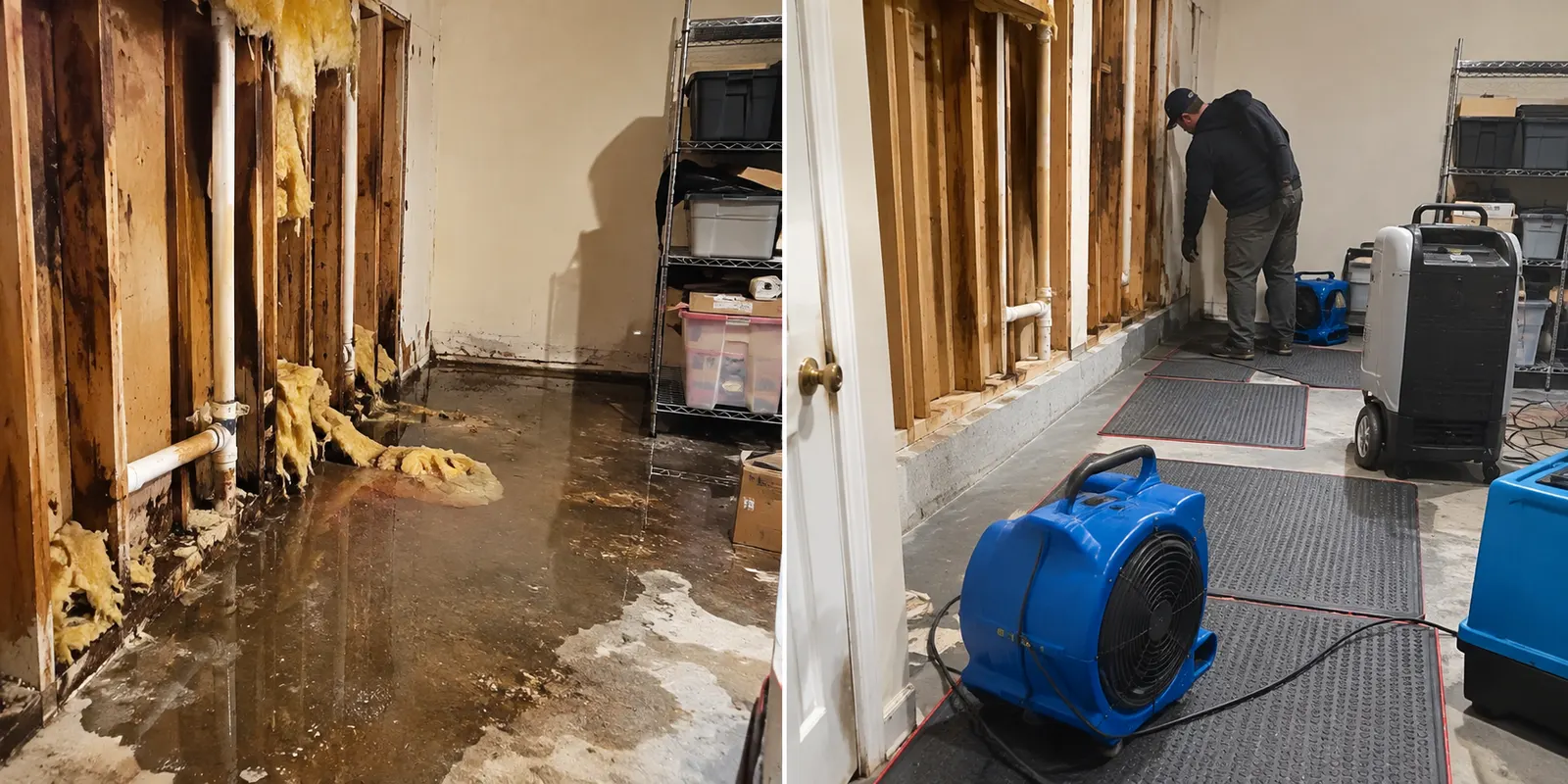
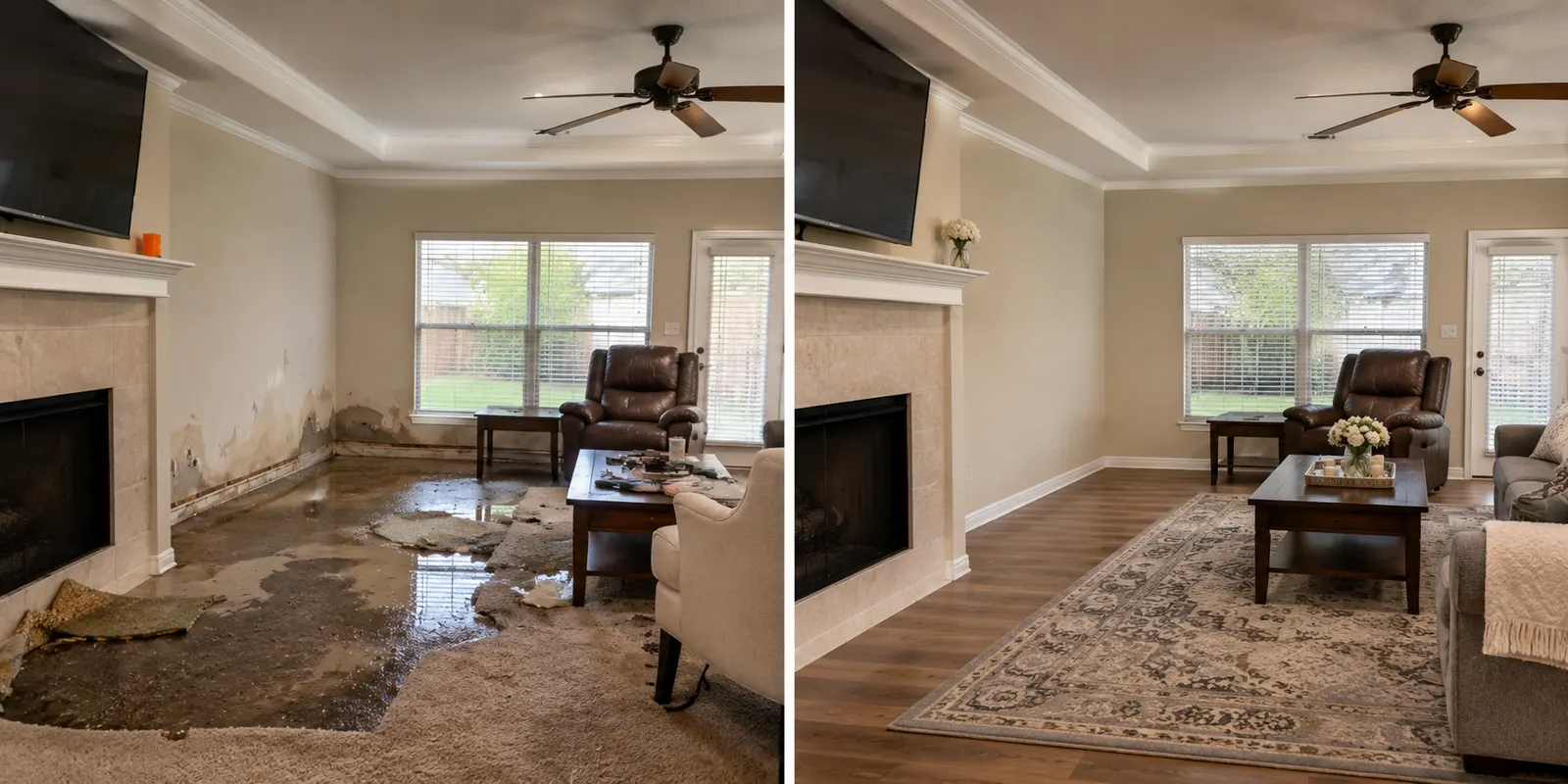
If water is already in the building, call and describe it. Related service: Frozen and burst pipe cleanup.
Read about frozen and burst pipe cleanup →
Sources and further reading
- IBHS, How to prevent interior water damage from plumbing and appliances, know and use the main shutoff
- Triple-I, Protect your home from winter weather, pipe insulation, heating cable, shutoff
- EPA WaterSense, Fix a Leak Week, leak figures, dye test, meter test; updated March 13, 2026
This article is general information from the Dallas Flood Guard editorial team. It is not medical, legal, engineering or insurance advice. Sources are linked above. See the editorial policy for how posts are researched and corrected.