

The town and the lake
Lake Dallas is a small city in southeastern Denton County, roughly ten miles south of Denton, and one of the Lake Cities along Lewisville Lake. Secondary sources citing the city’s history page say the town was incorporated in 1965 and takes its name from the lake’s original name. The 2020 Census counted 7,708 residents. The Census Bureau’s American Community Survey (2024 five-year estimates) lists 7,822 people in about 2.4 square miles and 3,294 housing units, an area small enough that a single storm or a single cold night affects most of it at once.
Lewisville Lake is a reservoir on the Elm Fork of the Trinity River, formed by Lewisville Dam, which is operated by the U.S. Army Corps of Engineers. Its level changes with rainfall and operations. That matters here for one reason: the lake is a visible water body, and people near it tend to attribute any water problem to it.
Three questions Lake Dallas homeowners mix together
Near a reservoir, three questions often run together. Is my property close to the water? Is it in a mapped flood hazard area? Did water get into my house from a pipe, the roof or the ground? They have different answers and different responses.
schematicLake proximity versus mapped flood exposure
Three different questions people mix together when they live near a reservoir.
Most claims that reach a restoration company start with C, not B: interior plumbing, appliance and roof failures far outnumber shoreline events in ordinary neighborhoods. Do not assume a lakefront address is in a mapped zone, or that an inland one is outside it.
FEMA defines the Special Flood Hazard Area as the area inundated by a flood with a 1 percent chance of being equaled or exceeded in any given year, the so-called 100-year flood. Areas outside it are labeled Zone X, shaded for the band between the 1 percent and 0.2 percent chance floods and unshaded for minimal hazard. The mapped status of an address is found in the FEMA National Flood Hazard Layer through the Flood Map Service Center, or by asking the city. It is a regulatory classification at a point in time; it does not describe what happened to a particular building, and many water-damage claims near any lake, including interior leaks, have nothing to do with the lake.
Our water damage restoration process in Lake Dallas, from water extraction to basement drying
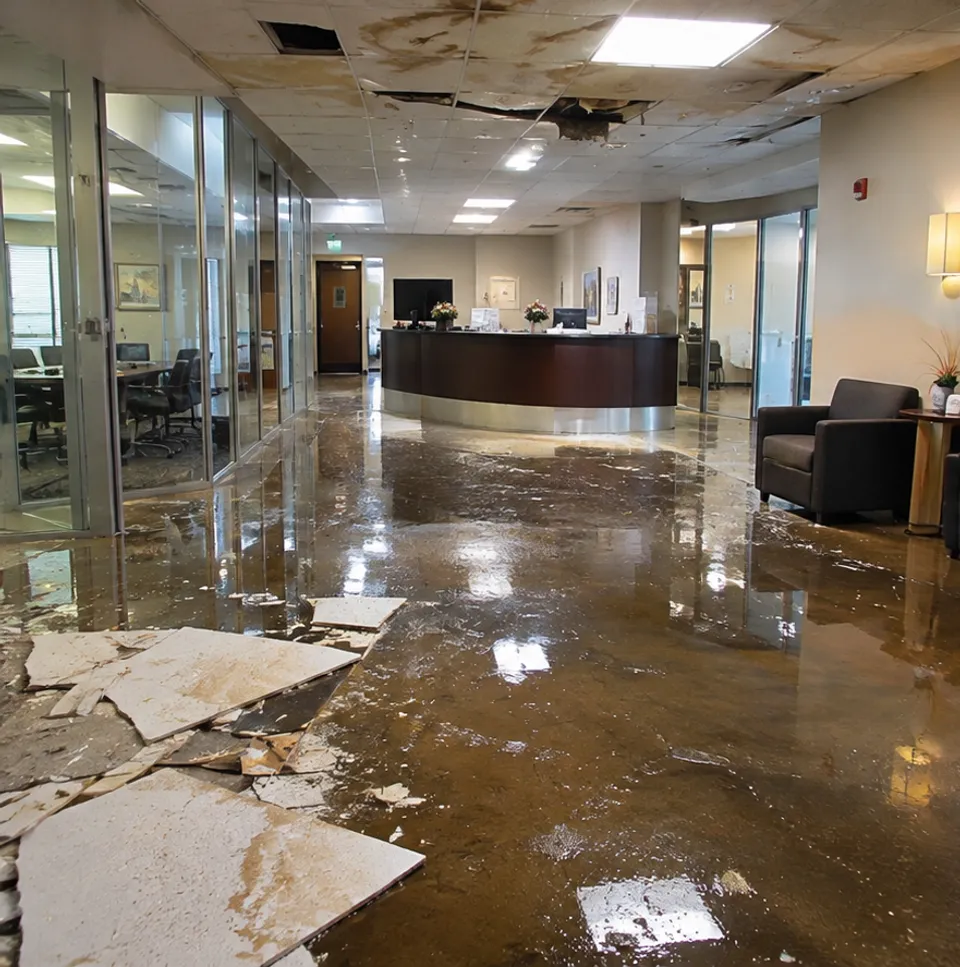
Flood Damage Cleanup
Pump-out, removal of soaked materials and structural drying after heavy rain or storm water enters a property.
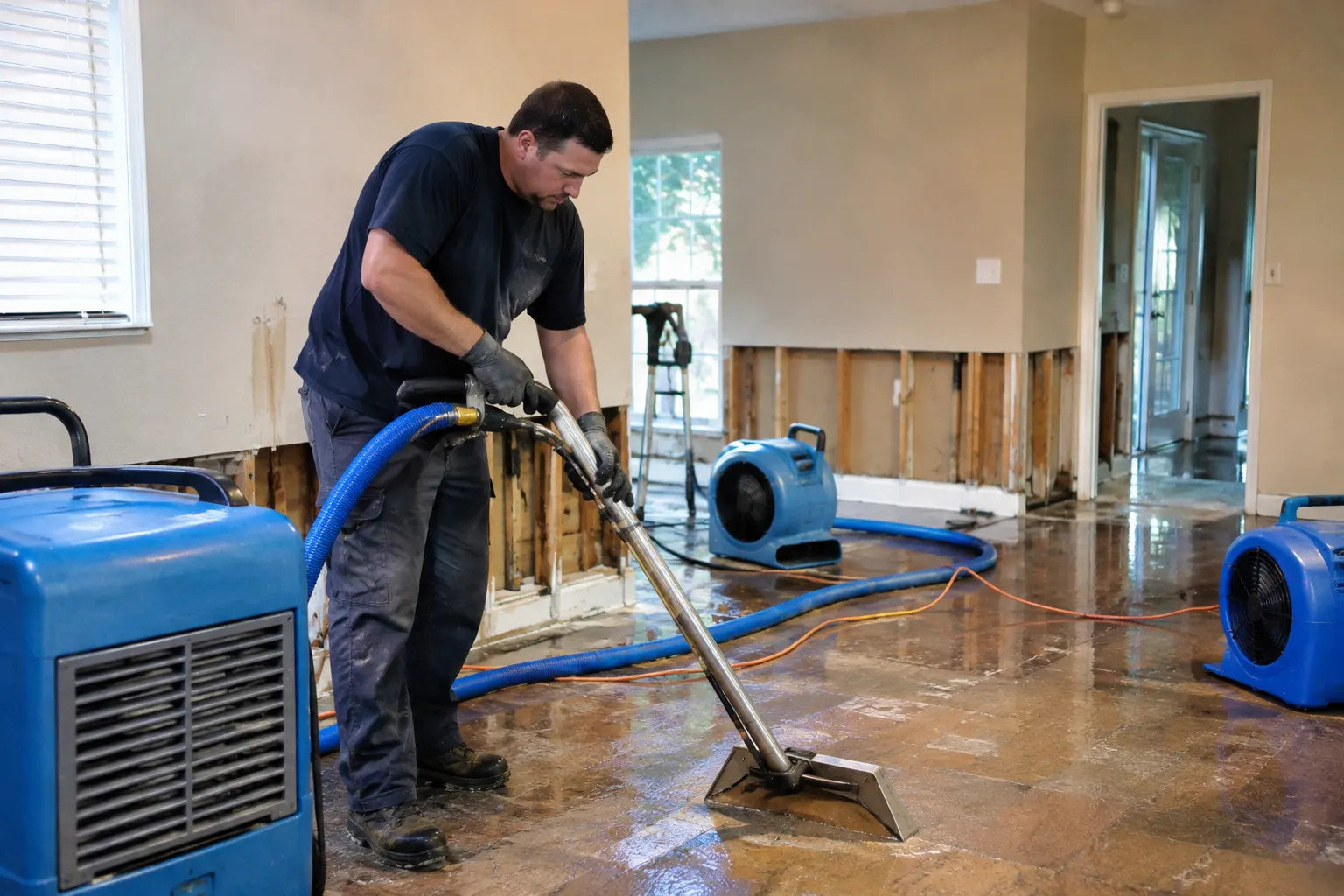
Sewage Backup Cleanup
Contaminated water removal, material disposal and sanitizing after a drain or sewer line backs up.
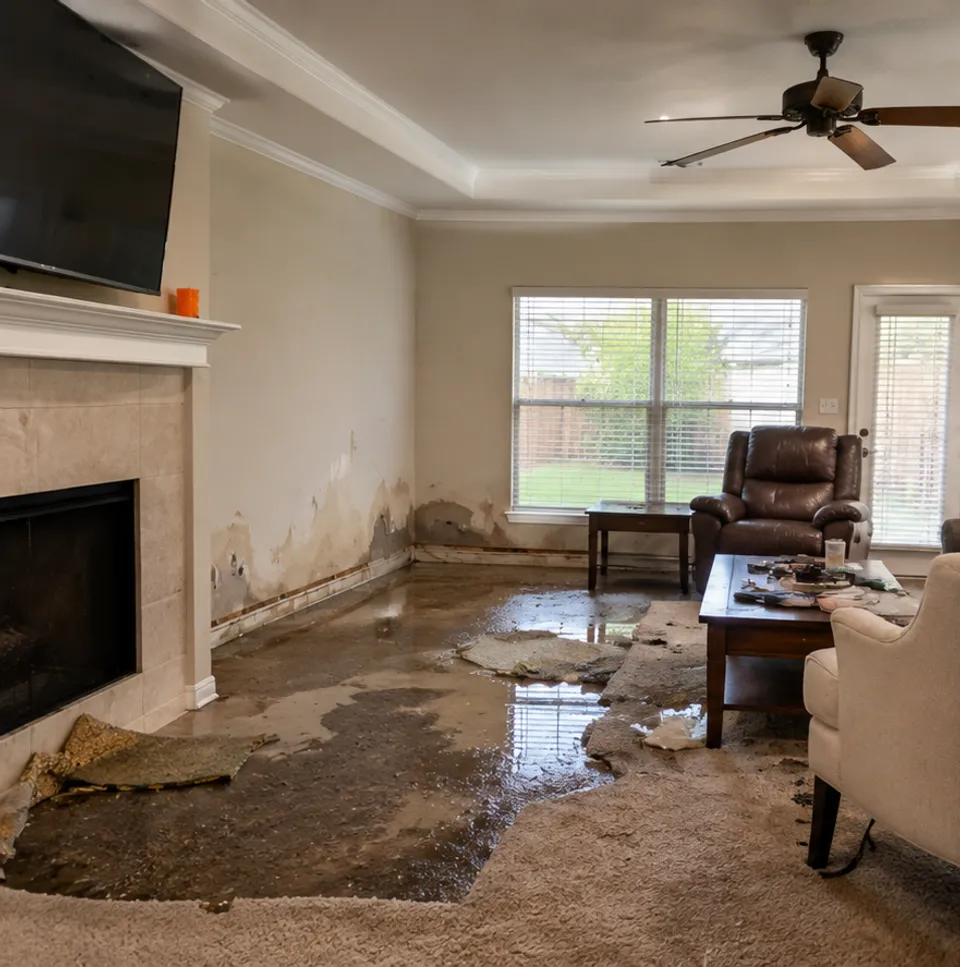
Water Heater and Appliance Leaks
Water extraction and drying after a water heater, washing machine, dishwasher or ice maker leak.
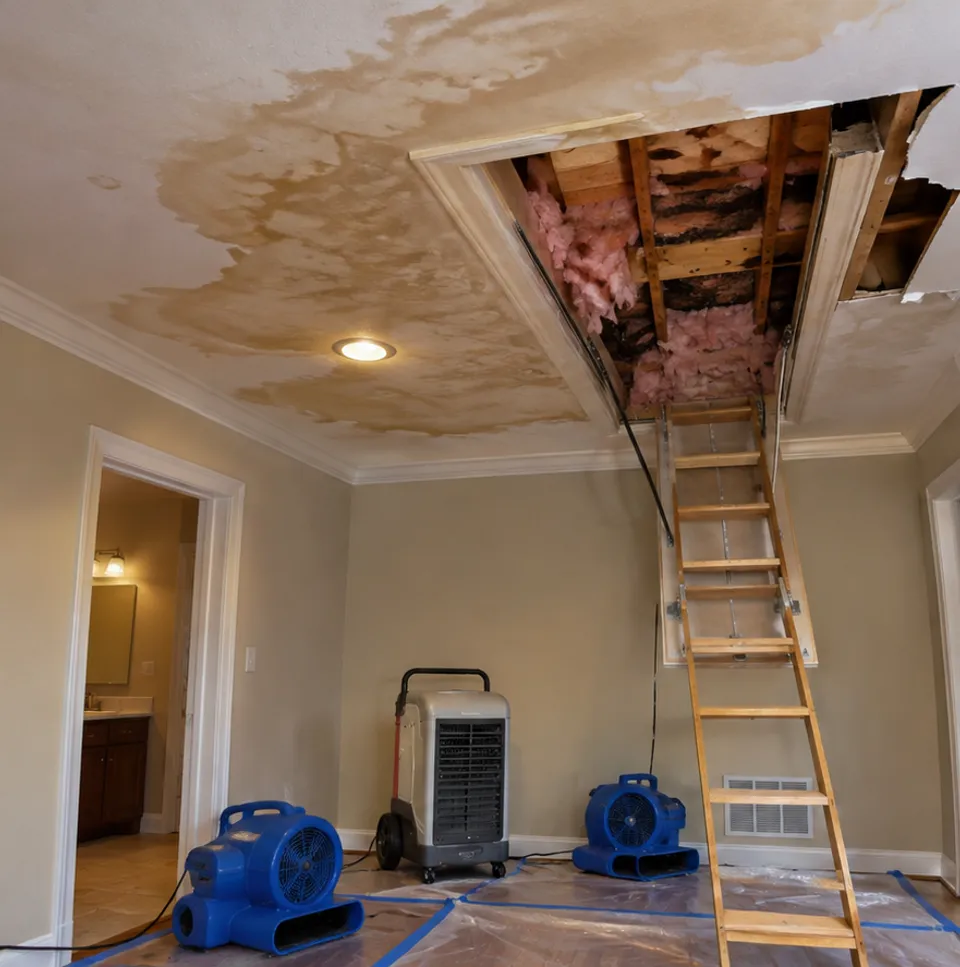
Roof Leak Water Damage
Interior cleanup of wet ceilings, insulation and walls after storm or wind-driven rain gets through the roof.
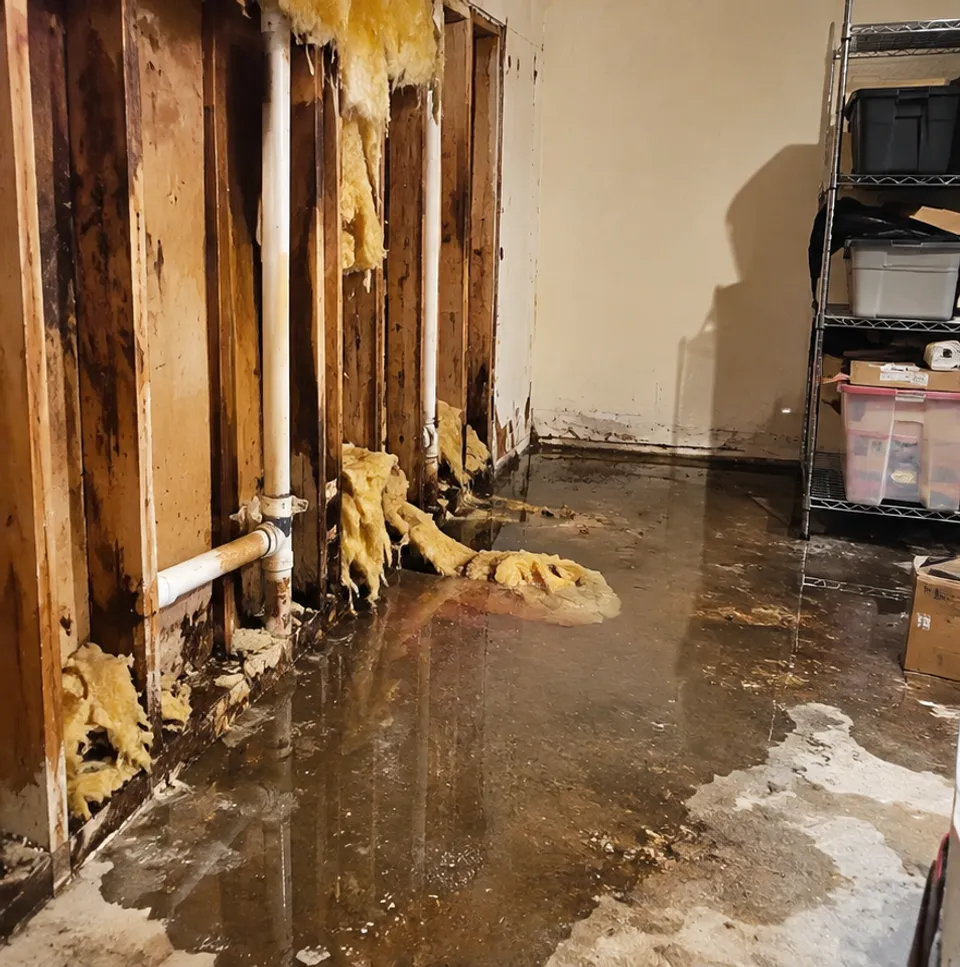
Frozen and Burst Pipe Cleanup
Extraction and deep drying of flooded rooms, ceilings and wall cavities after a plumbing line ruptures.
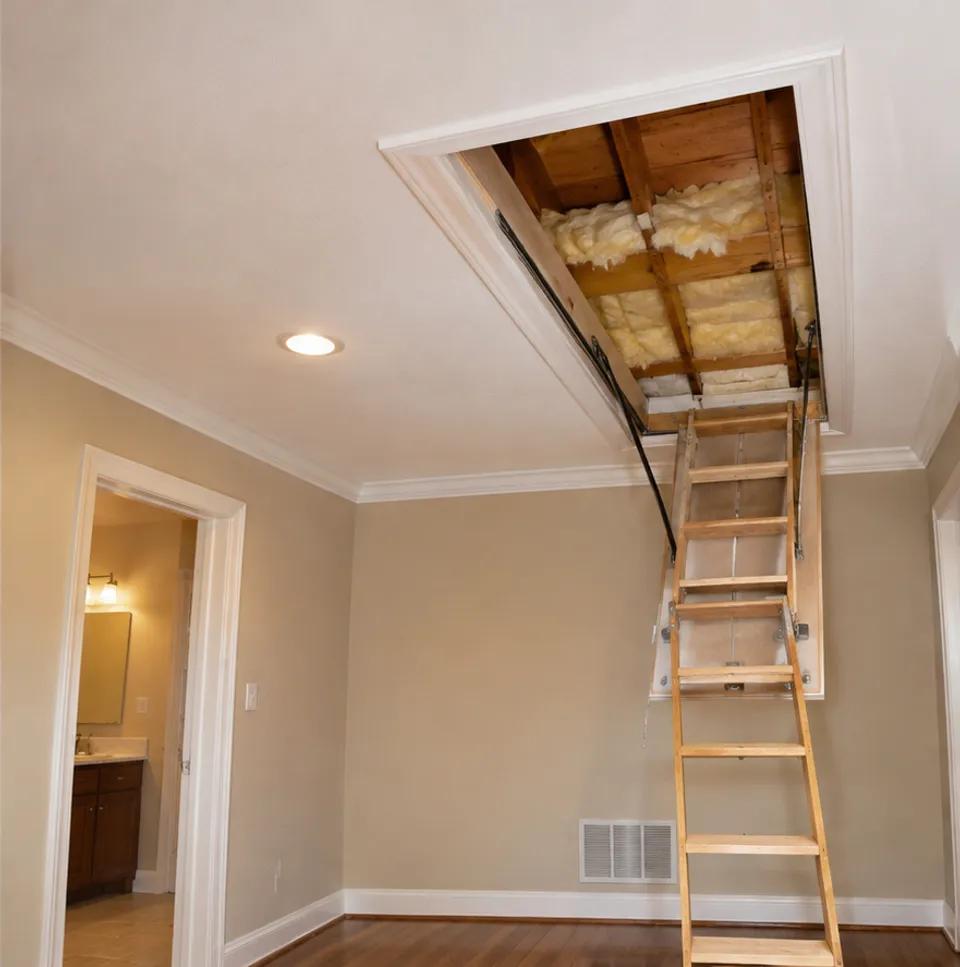
Winter Ceiling and Attic Water Damage
Wet insulation, sagging ceilings and hidden attic moisture after winter leaks.
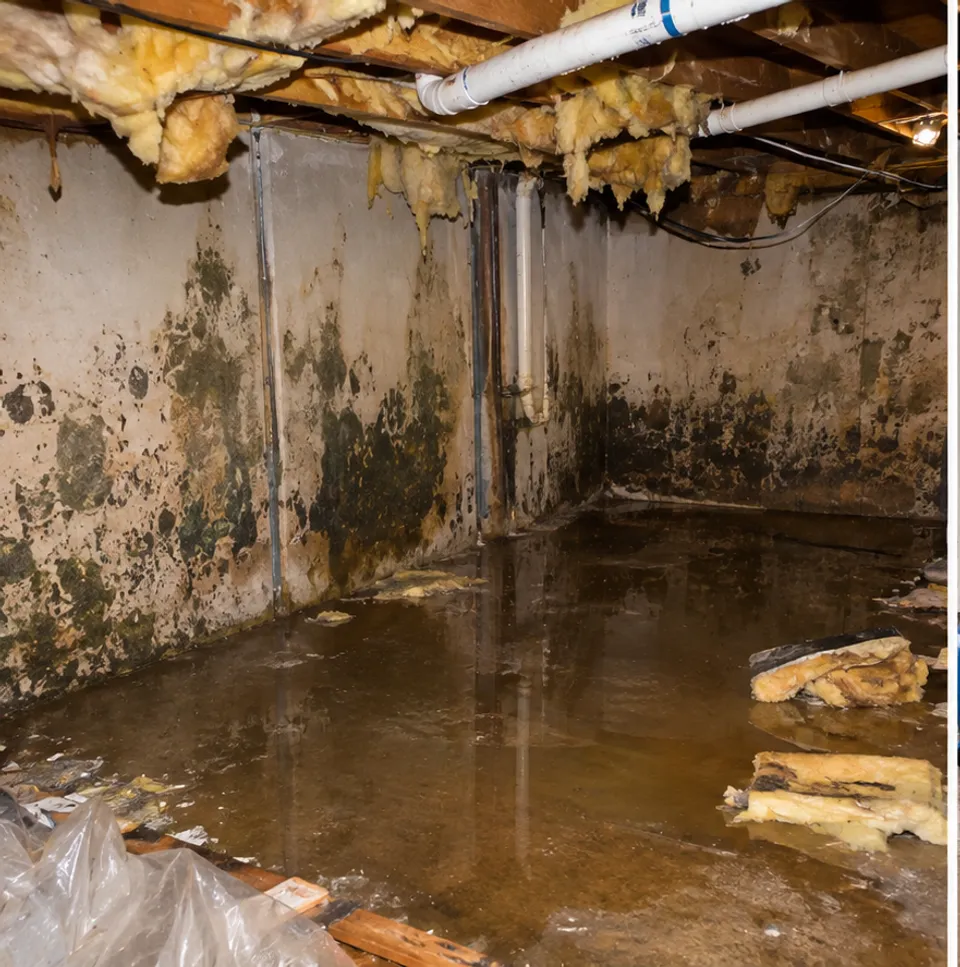
Basement Flooding After Snowmelt
Low-level water cleanup in basements, garages and below-grade rooms when melting snow or rain gets in.
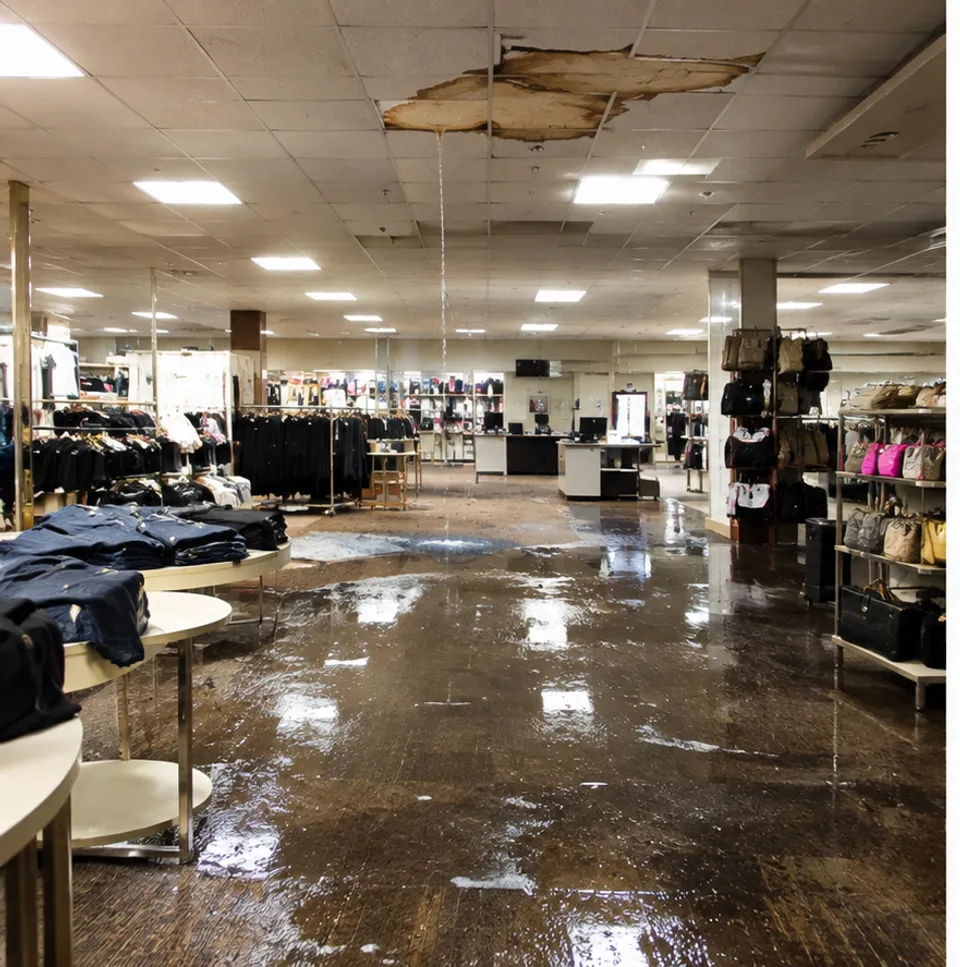
Ice Dam Roof Leak Cleanup
Interior drying and insulation removal after ice at the roof edge forces water inside.
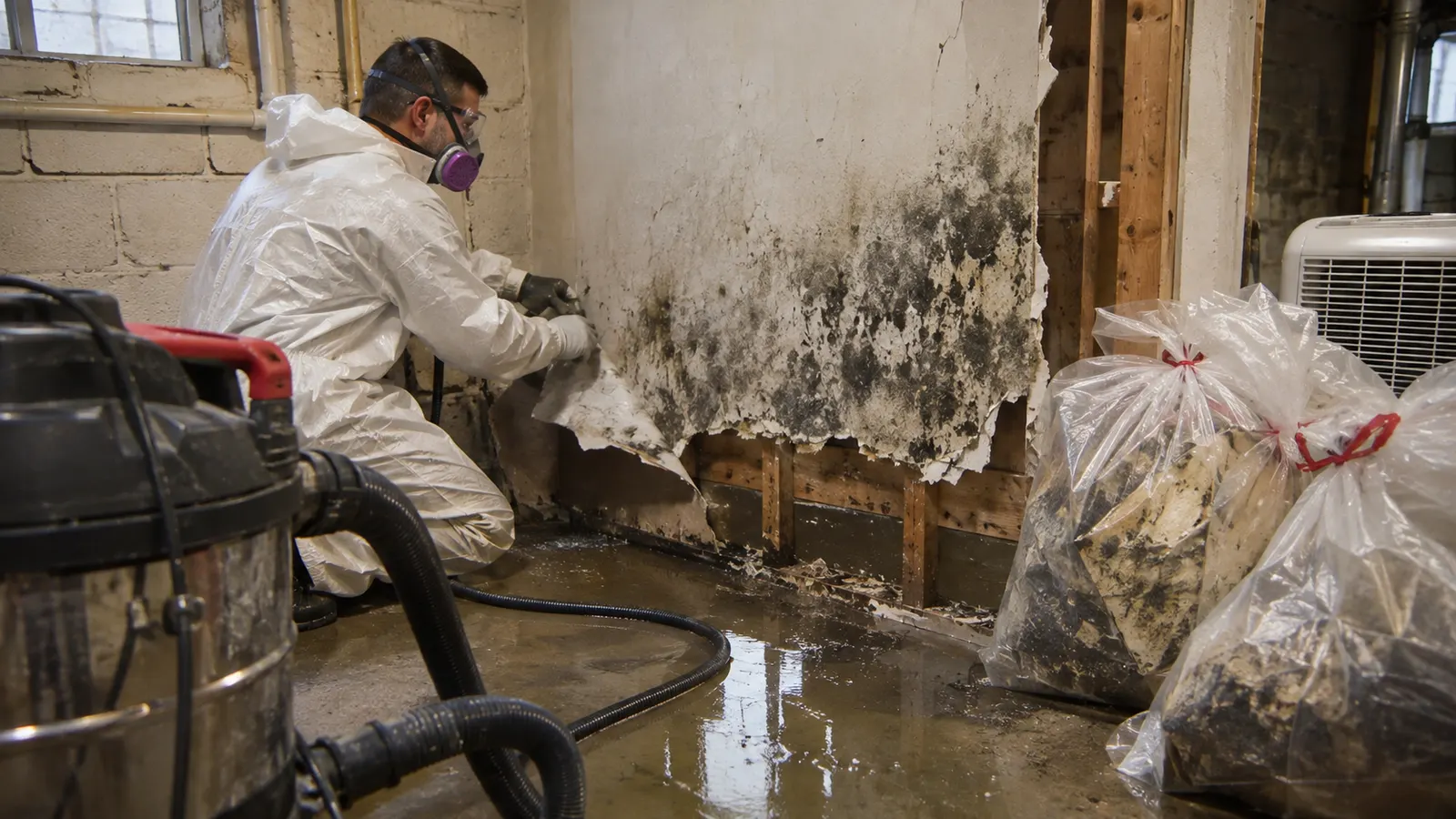
Mold Removal
Moisture-source correction, containment and removal of mold-affected materials after water damage.
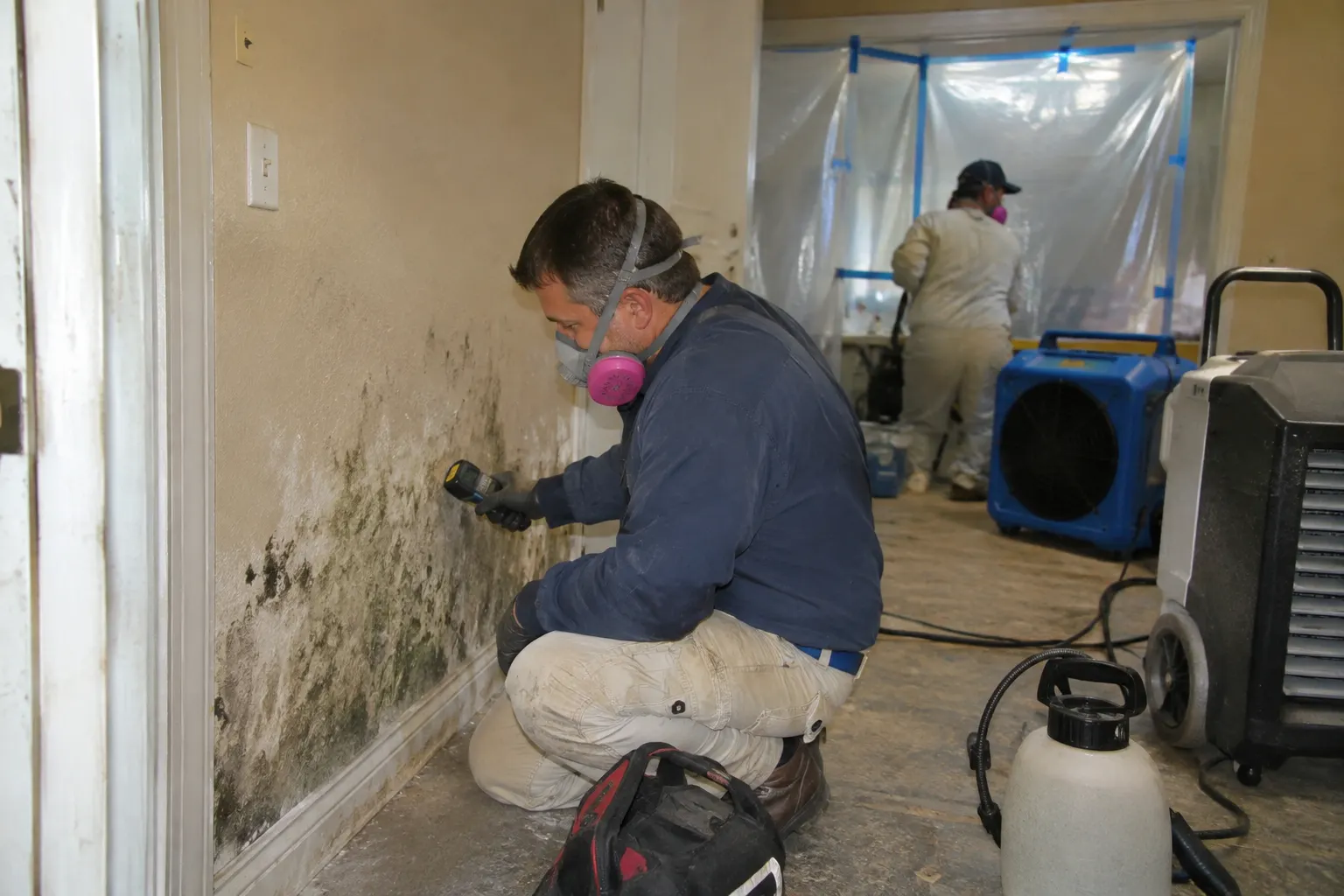
Attic and Crawlspace Mold
Assessment and removal planning for mold in attics, crawlspaces and other concealed, poorly ventilated areas.
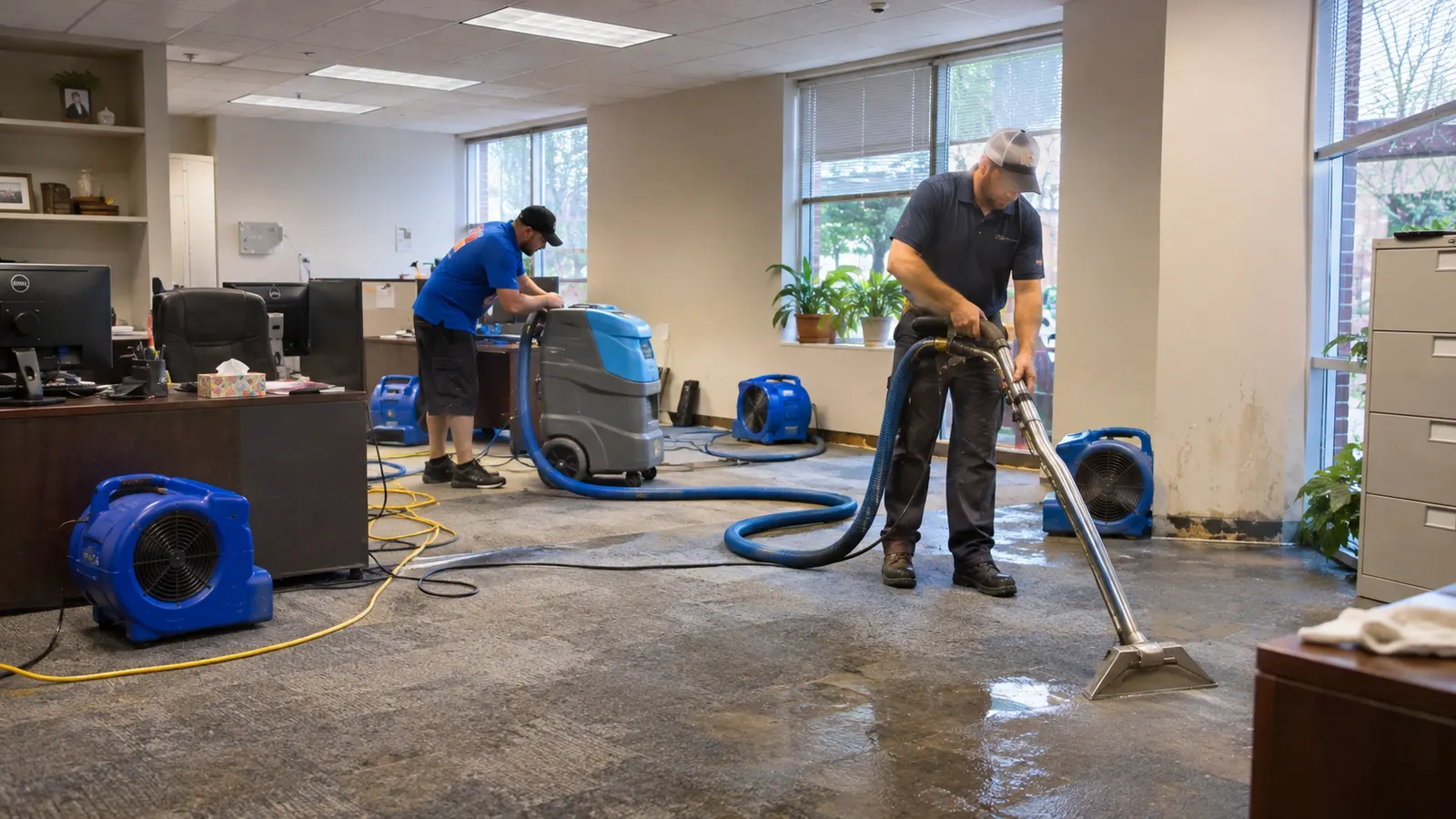
Commercial Water Damage Restoration
Water extraction, drying and tenant coordination for offices, retail units, restaurants and multi-tenant buildings.
A seamless water damage restoration process in Lake Dallas, for your peace of mind
Call and describe the water
Tell us where it is and what it came from. You get safety steps for the next few minutes.
Inspect and map the moisture
Meters and thermal imaging show where the water went, including behind walls and under floors.
Extract and remove what cannot dry
Standing water comes out first. Saturated materials are removed, and you are told which and why.
Dry with recorded readings
Air movers and dehumidifiers run, and readings are tracked so you can see the building drying.
Verify and document
Equipment leaves when readings match dry materials. You keep the readings and photos for your records.
Tell us what is wet, where the water came from and whether the house is occupied year-round.
What the census says about the buildings in Lake Dallas
The ACS puts the median year built for Lake Dallas housing at 1998, and 66% of housing units are single-family detached houses. The decade chart shows why the town reads as mostly late-twentieth-century and early-2000s construction: the largest block was built in the 2000s, with another large block in the 1970s through 1990s and relatively little before 1970. Margins of error are large for a place this small, so treat the bars as approximate.
measuredHousing units by decade built in Lake Dallas
3,294 housing units; median year built 1998. Largest bar in red.
Three practical readings follow, all general rather than property-specific. First, most homes are old enough to have had roof, water heater and appliance replacements but not so old that original supply plumbing from the early twentieth century is the norm, so the usual failures are appliance hoses, water heaters, fixture supply lines and roofs. Second, about a quarter of units are in structures with five or more units, so some water losses involve a shared wall, a floor or a ceiling, and a property manager. Third, roughly 31 percent of occupied units are renter-occupied, so the person who finds the water is often not the person who owns the building, and notice to the owner is part of the first call.
None of that says a particular house has a particular pipe material or foundation. The slab, the plumbing route and the roof structure are checked on site, and a technician decides whether to open walls or dry them in place.
Winter plumbing in Lake Dallas homes and weekend places
Lakeside communities often have a mix of full-time residents and second homes. Vacant or lightly used houses are where a winter pipe failure does the most damage, because water can run for days before anyone notices. The statistics come from DFW Airport, a few dozen miles from the lake, so they describe the region rather than Lake Dallas: the NWS 1991–2020 normals show about 29 days a year with a low at or below 32°F, concentrated in December through February, and the station recorded daily record lows of 9°F, 4°F and −2°F on February 14–16, 2021.
If you leave a house empty in winter, the simplest protections are to keep the heat on at a set temperature, open cabinet doors on exterior walls, shut off the water at the main and drain lines if you will be away for long, and have someone check the house during hard freezes. The burst pipe checklist lists the steps after a failure is discovered, and frozen and burst pipe cleanup explains the extraction and drying.
Interior moisture in Lake Dallas lakeside homes
This page does not claim that lake air raises indoor humidity; no measured figure is available here. What can be said is that houses anywhere in North Texas see the same triggers for indoor dampness: a roof penetration that leaks in wind-driven rain, window flashing that fails, condensate drains that clog, and crawlspaces or low garages that take on surface water. If you see staining, warped trim or a musty smell after rain, find where it starts before treating the symptom. The mold removal page explains why cleaning alone does not hold if the moisture source stays.
Small commercial properties in Lake Dallas
Commercial buildings in town are generally small retail and office units along the main roads. A leak in one unit of a strip building can wet the next through the shared wall or ceiling cavity, and the process follows the commercial restoration page: shutoff, tenant notice and documentation.
Lake Dallas local resources
- City of Lake Dallas, city staff can answer floodplain and building-permit questions for an address.
- FEMA Flood Map Service Center, official flood hazard maps, searchable by address.
- U.S. Army Corps of Engineers, Fort Worth District, operator of Lewisville Lake; lake level and operations information.
- National Weather Service Fort Worth, forecasts, warnings and the climate normals cited above.
Water damage restoration work for buildings like those in Lake Dallas
Typical conditions and equipment for the building types discussed on this page. The photos are not tied to a specific address or project.
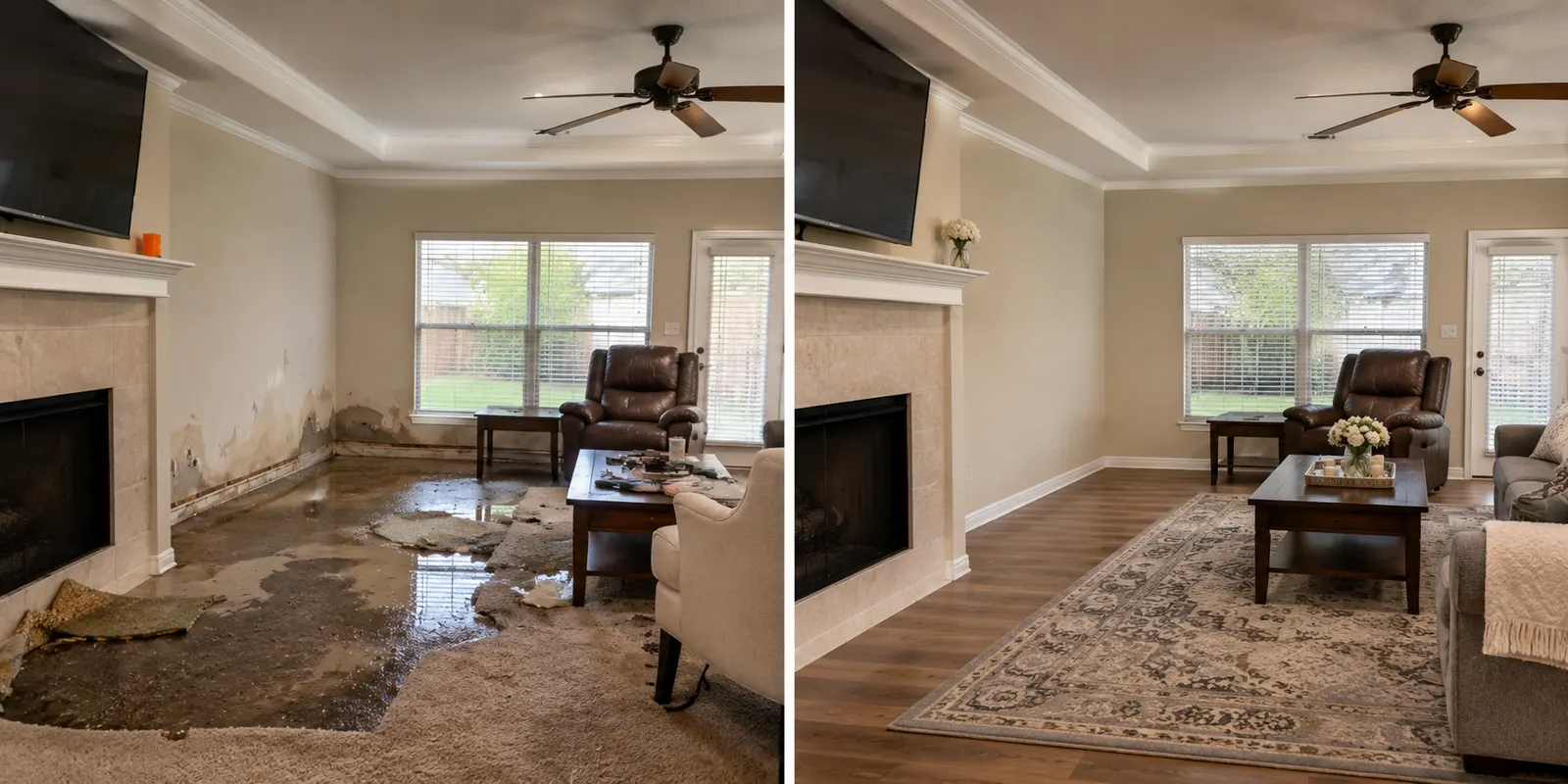
Wet carpet and water-stained walls in a living room, then the restored room with new flooring.
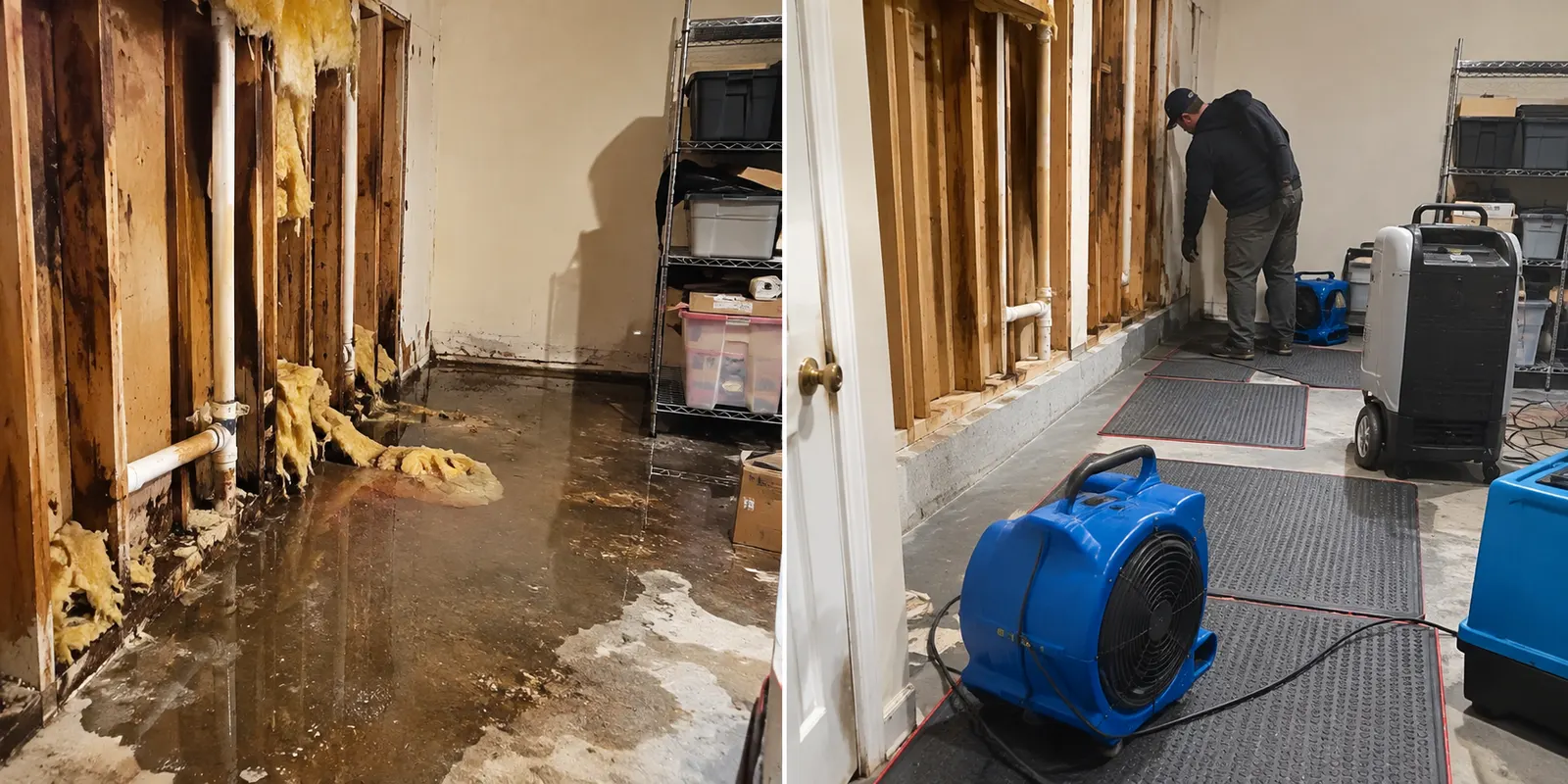
A flooded hallway with stripped walls, then the same space after extraction with a fan on a clean floor.
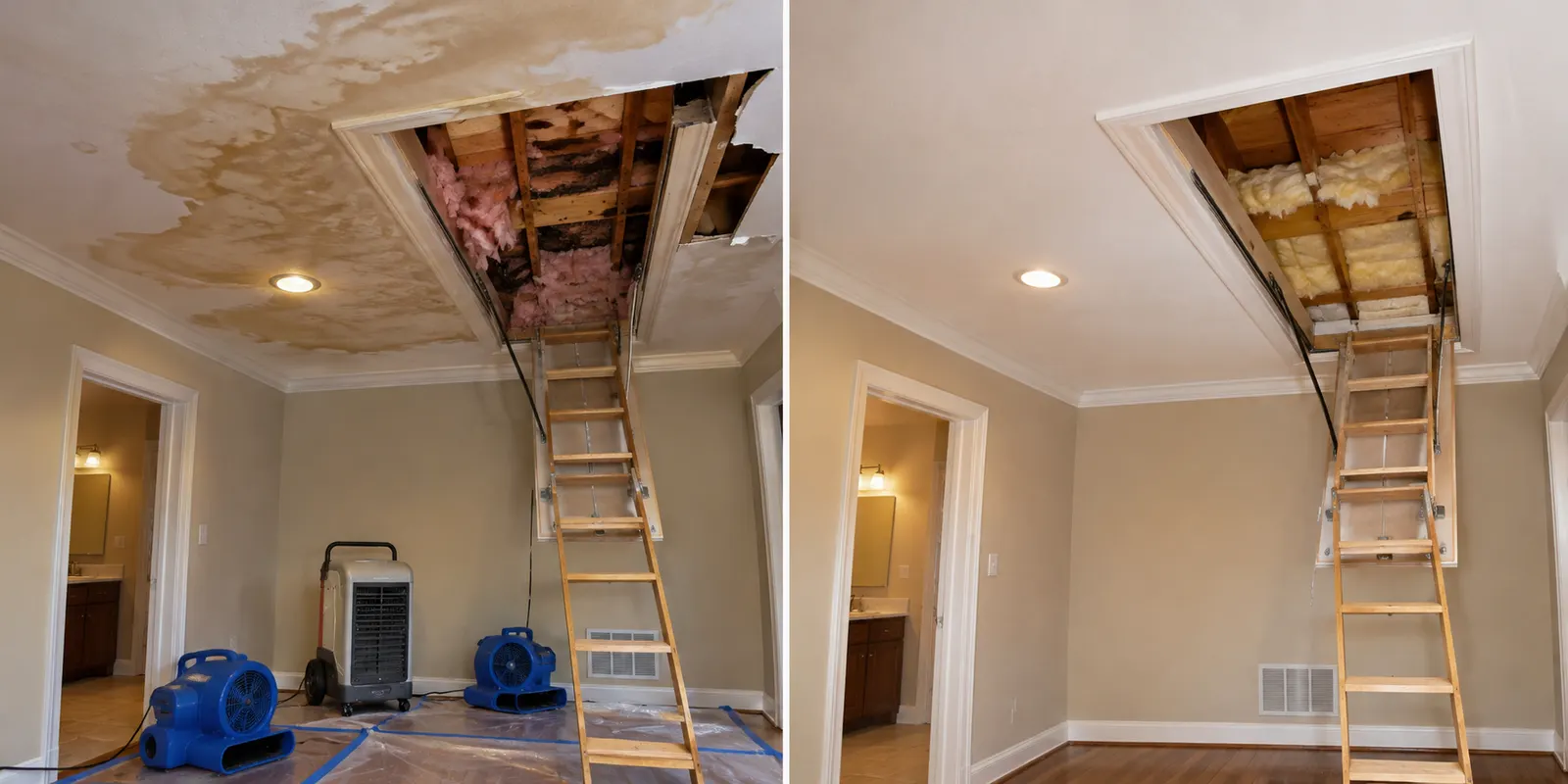
A stained ceiling around an attic hatch with wet insulation, then the repaired opening.
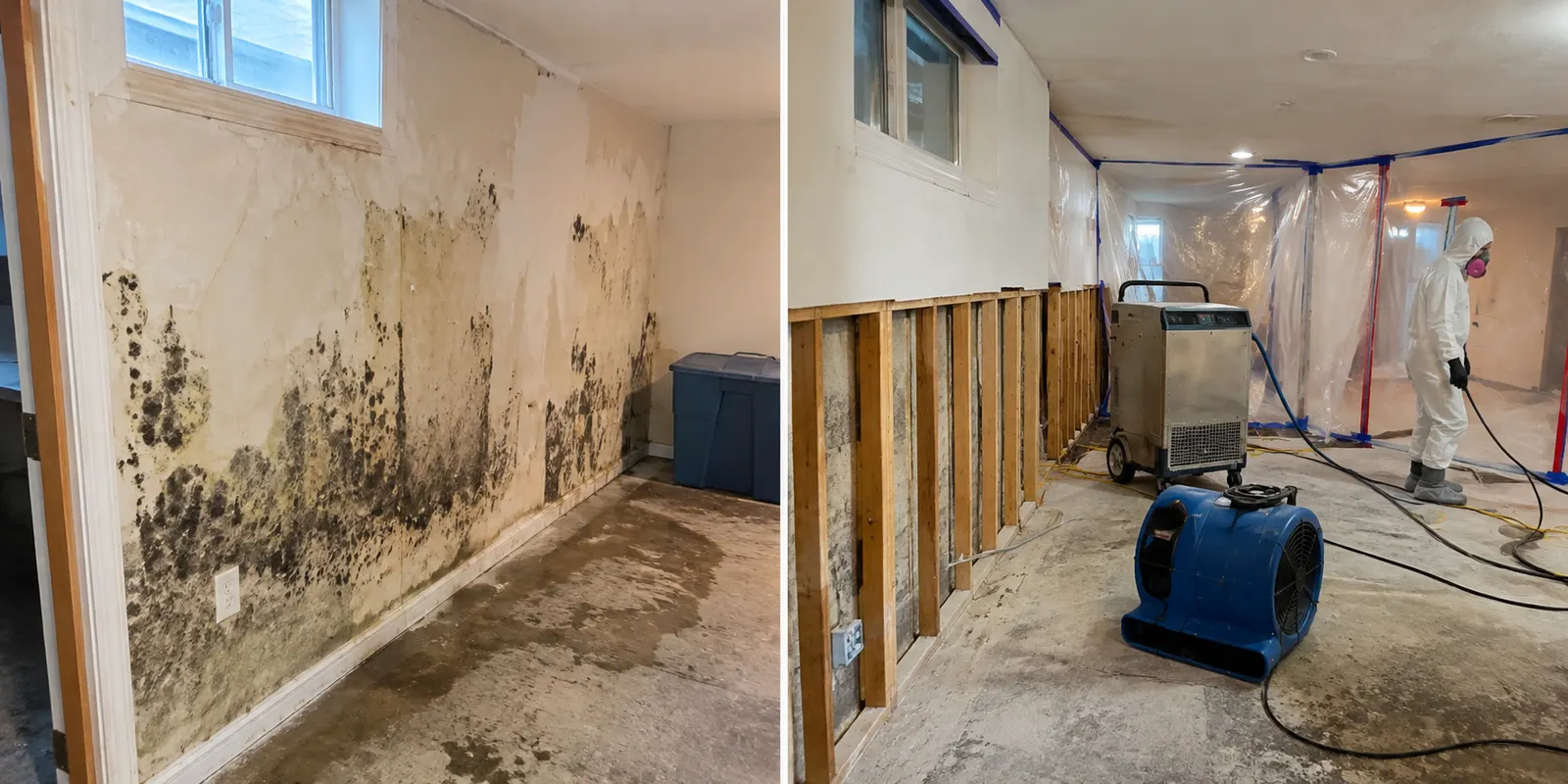
A mold-stained basement wall, then the same wall opened under plastic containment with drying equipment.
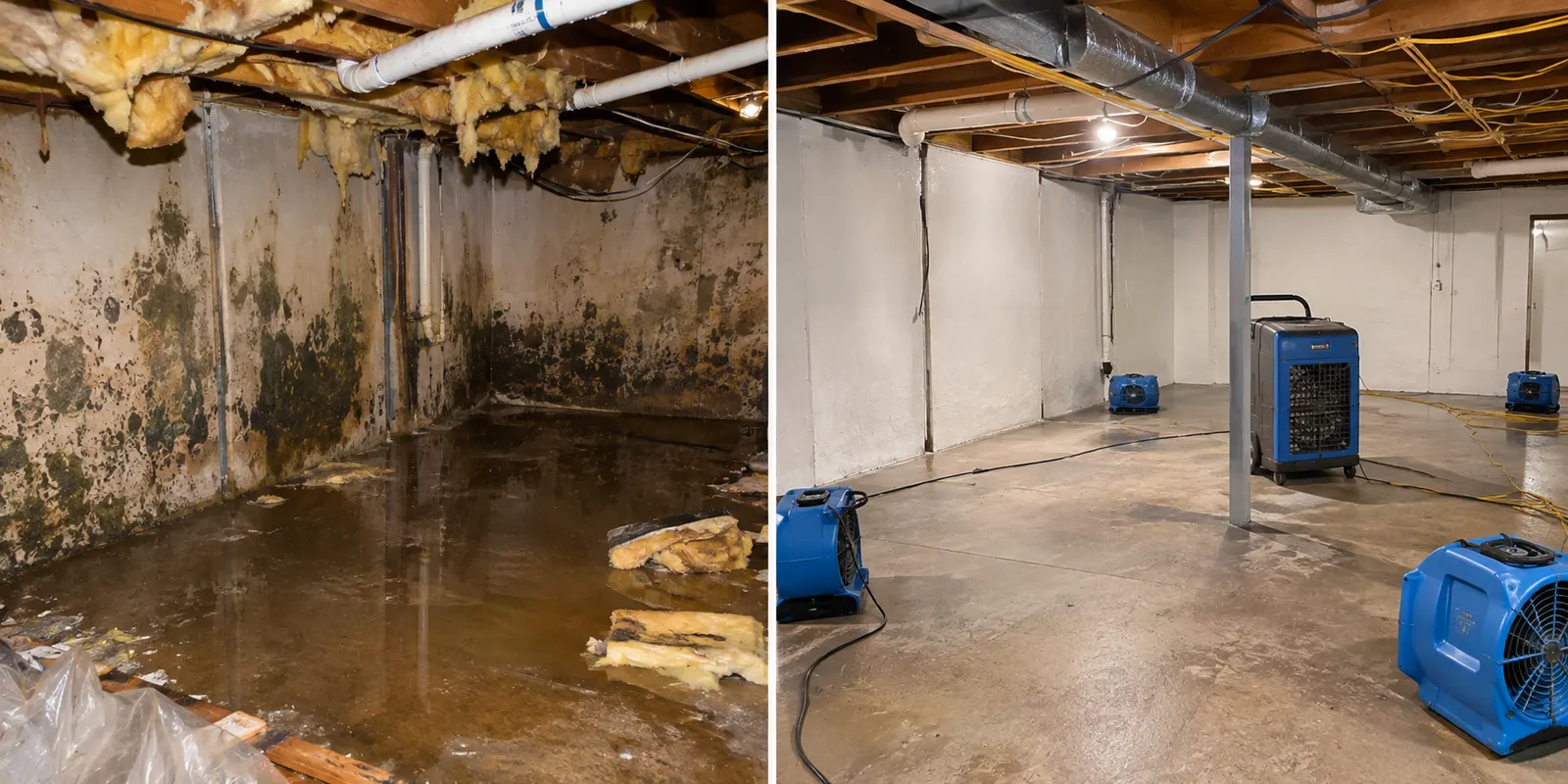
Standing water and sagging insulation overhead, then a clean floor with drying equipment in place.
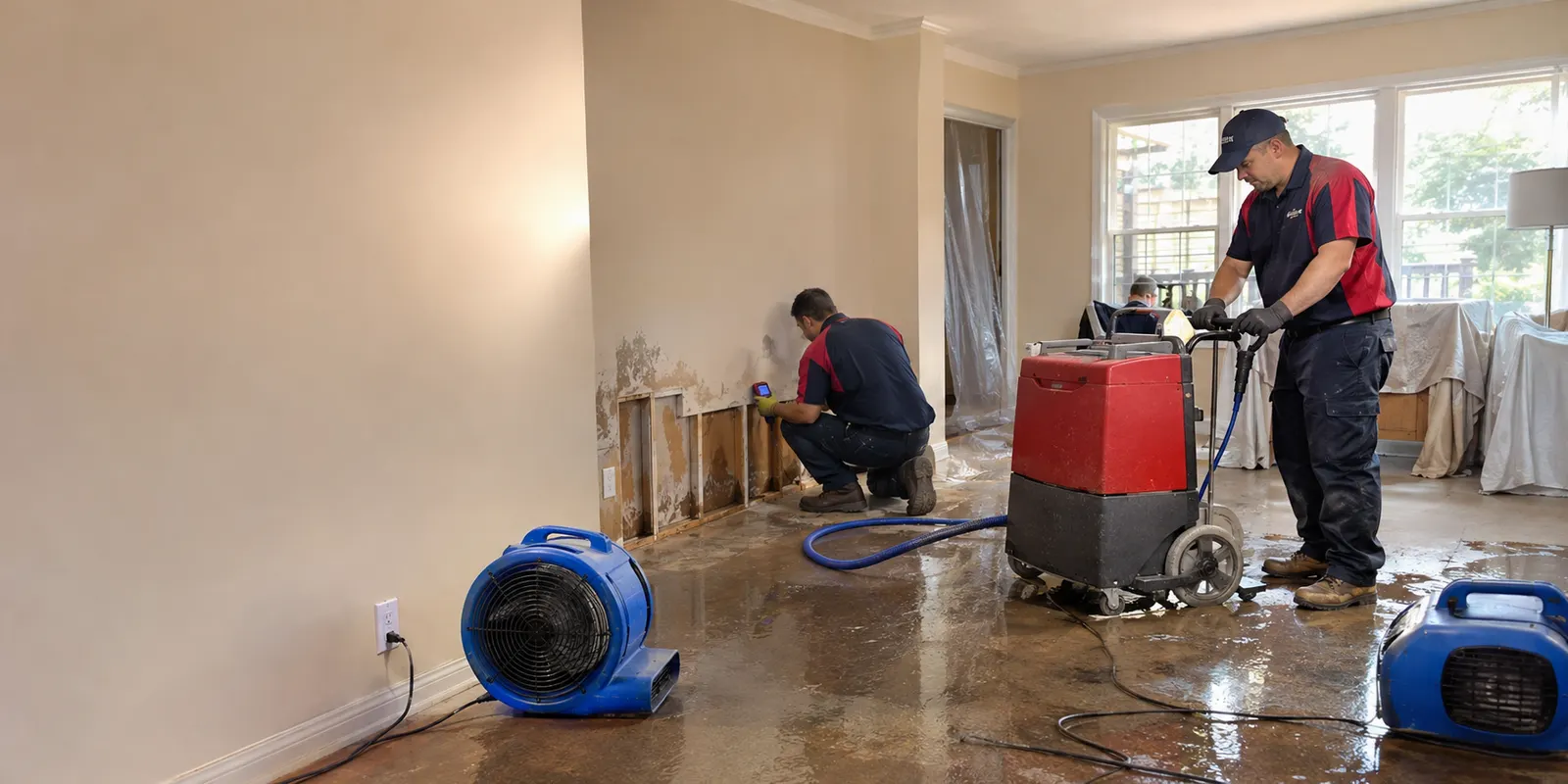
An empty room with an air mover running, then technicians extracting water and cutting out lower wall material.
Water damage questions in Lake Dallas
Is my Lake Dallas home in a flood zone because it is near Lewisville Lake?
Not automatically. Flood zones are mapped by FEMA and administered by the city, and being close to the lake does not by itself place an address in or out of a mapped zone. Look up the specific address at the FEMA Flood Map Service Center or ask the city’s floodplain staff.
Does an address outside a mapped flood zone mean water cannot get in?
No. FEMA describes areas outside the Special Flood Hazard Area as having lower flood hazard on the map, not as immune, and most interior water damage comes from plumbing, roofs and appliances, which maps do not cover.
Does lake humidity make mold more likely indoors?
This page makes no measured claim about lake air. The likelier cause of mold indoors is a moisture source inside the building: a leak, condensation or a wet crawlspace. Check for those first.
Are boat docks and lakeside outbuildings treated differently?
Structures on or near the shoreline raise their own questions, such as lake access rules and electrical safety near water. This page does not cover marine or dock work.
We use the house seasonally. What should we do for winter?
Heat the house enough to protect plumbing, or shut off and drain the water supply if you will be away, and ask someone to check for leaks after a cold snap. Water can run for days in an empty house.
Describe the affected area and what you know about the source.
Source notes
- Census Reporter, Lake Dallas profile and ACS 2024 5-year tables B25034, B25024, B25003, B25035, population, housing units, area, year built, structure type, tenure
- FEMA, Flood zones (glossary), SFHA and Zone X definitions
- NWS Fort Worth, DFW normals (1991–2020), freeze days and Feb 2021 record lows; DFW Airport station
- City of Lake Dallas, History
- Wikipedia, Lake Dallas, Texas, secondary source for 2020 Census count and incorporation year; verify against census.gov and the city