- Typical cause
- A clogged or failed line, roots, a collapse, or a storm overloading the system and pushing water up the lowest drain.
- First move
- Stop using every fixture, keep people and pets out, and avoid touching the water.
- Not included
- Clearing or repairing the line is a plumber’s job. A blockage in the public main is the city’s or utility’s.
Why sewage changes the whole job
Most water losses start clean and get worse the longer they sit. A sewage backup does not start clean. Water from a sanitary line can carry bacteria, viruses and parasites, and restoration standards treat it as the most heavily contaminated category. That drives every decision: protective equipment, containment of the affected area, disposal of anything porous that soaked it up, and cleaning before drying. It is also why EPA’s mold guidance tells homeowners to call in a professional experienced with contaminated water when the cause was sewage.
Backups happen when a line clogs or fails, when roots or a collapse block it, or when heavy rain overloads the system and pushes water back up through the lowest opening in a building. The lowest openings are usually floor drains, a ground-floor shower or tub, and garage or utility fixtures. In multi-unit buildings the lowest unit takes the water, and the cause may be in a shared line, so the property manager has to be part of the call.
What is removed and what is cleaned
| Material | Typical handling |
|---|---|
| Carpet and pad | Removed and disposed of. |
| Drywall and insulation | Removed above the contact line, higher where water wicked; the cavity is cleaned. |
| Baseboards and trim | Removed or cleaned depending on finish and damage. |
| Tile, sealed concrete, metal | Cleaned and sanitized; usually kept. |
| Upholstery, mattresses, cardboard | Usually discarded. |
| Hard furniture, fixtures | Cleaned and sanitized when the finish allows. |
General guidance. The technician decides after inspecting the property.
The sequence
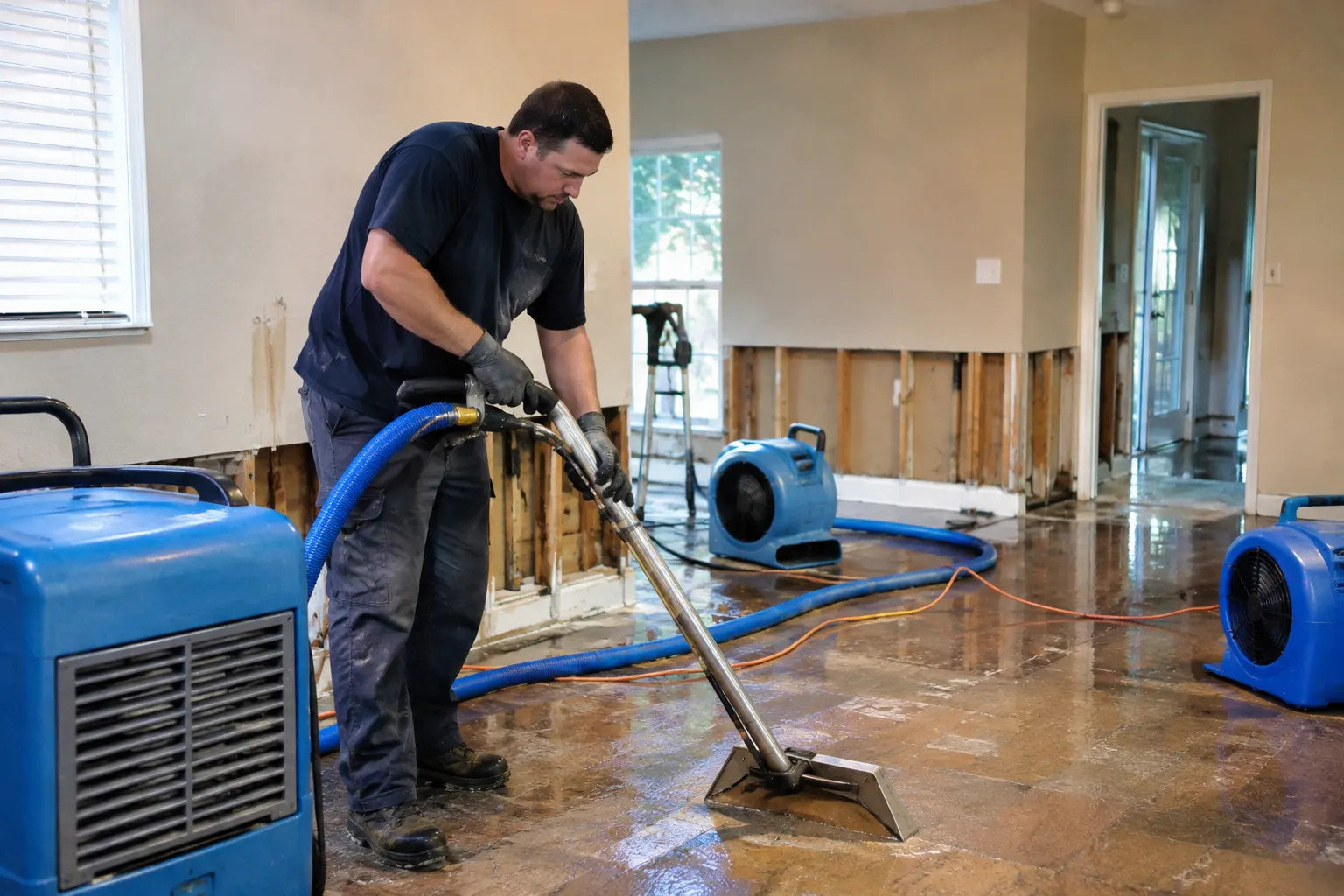
- Assess and protect. Identify the source, set up containment so the rest of the building stays clean, and suit up before touching anything.
- Extract. Pumps and extractors remove the liquid. Waste is handled so it does not track into clean areas.
- Remove contaminated materials. Carpet, pad, wet drywall and insulation are bagged and carried out.
- Clean and sanitize. Remaining surfaces are cleaned, then treated with products suited to each surface.
- Dry. Air movers and dehumidifiers dry framing and floors, and readings are recorded.
- Check. Readings are compared against dry references and odor is checked before the area is released for rebuilding.
Tell us which drains backed up, how far the water spread and whether neighbors are affected.
Who to call, and for what
| Problem | Who handles it |
|---|---|
| Blockage or break in the private line | A licensed plumber. |
| Blockage in the public main or the street connection | The city water or sewer utility. Report it right away. |
| Contaminated water, wet materials, odor | Restoration. |
| Coverage questions | Your insurer. Sewer backup often needs a specific endorsement. |
| Shared lines in a multi-unit building | The property manager or owner. |
Restaurants, offices and apartment buildings
In food service, a sewage backup stops operations until the affected area is cleaned and cleared, and health-department rules decide when a kitchen can reopen, so notify the regulator as the rules require. In offices and apartment buildings, management has to tell affected tenants and residents. See commercial restoration for how coordination works in shared buildings.
Documentation
Photograph the affected rooms, the drains that backed up and any damaged belongings before removal. Note the time you first noticed the water and every call you make. Keep receipts. If the backup followed a storm, say so, because insurers treat storm-driven backups and line failures differently.
Frequently asked questions
Can I clean up a small sewage backup myself?
A small, contained spill on a hard floor can be handled with proper protection by someone who understands the risks. Anything that reached carpet, drywall, a wall cavity or more than one room should go to trained crews. EPA advises calling a professional experienced with contaminated water when damage was caused by sewage.
Why can’t my carpet be saved?
Carpet, pad and low drywall absorb the water and cannot be reliably decontaminated, so they are normally removed and discarded.
Who fixes the blockage?
A plumber clears or repairs the private line. If the blockage is in the public main, the city or utility handles that section. Restoration handles the damage the backup caused.
Will the smell go away?
Odor normally fades once contaminated materials are removed, surfaces are cleaned and the structure is dry. Odor that persists points to material left behind or moisture still present in a cavity.
Is it safe to run the air conditioning or furnace after a backup?
Not if the water reached the equipment or ductwork, or if odor is moving through the vents. Have the system inspected first; running it can spread contamination through the building.
Does homeowners insurance pay for sewer backup?
Many policies exclude it or cover it only with a specific endorsement. Check your policy, call the insurer promptly and photograph the damage before anything is removed.
Describe the backup and keep everyone out of the area until it is assessed.
Source notes
- EPA, Mold Cleanup in Your Home, advice to use a professional experienced with sewage-contaminated damage