
Where the water goes in Carrollton
Carrollton lies north of Dallas and is unusual for spanning three counties: Dallas, Denton and Collin. According to City of Carrollton stormwater documents, drainage flows toward the Elm Fork of the Trinity River, which sits below Lewisville Lake, and five major tributaries drain most of the city: Indian Creek, Dudley Branch, Furneaux Creek, Cooks Branch and Hutton Branch. The Valwood improvement channel is also named in city materials as part of the system.
schematicHow tributaries feed the Elm Fork of the Trinity River
Names and relationships come from the City documents cited below. Positions and sizes are not geographic.
The practical message of the diagram is limited: the city is part of a connected drainage system, and heavy rain upstream or across the region can raise creek levels. Which properties are affected is a mapped, address-specific matter handled by FEMA and the city.
Our water damage restoration process in Carrollton, from water extraction to basement drying
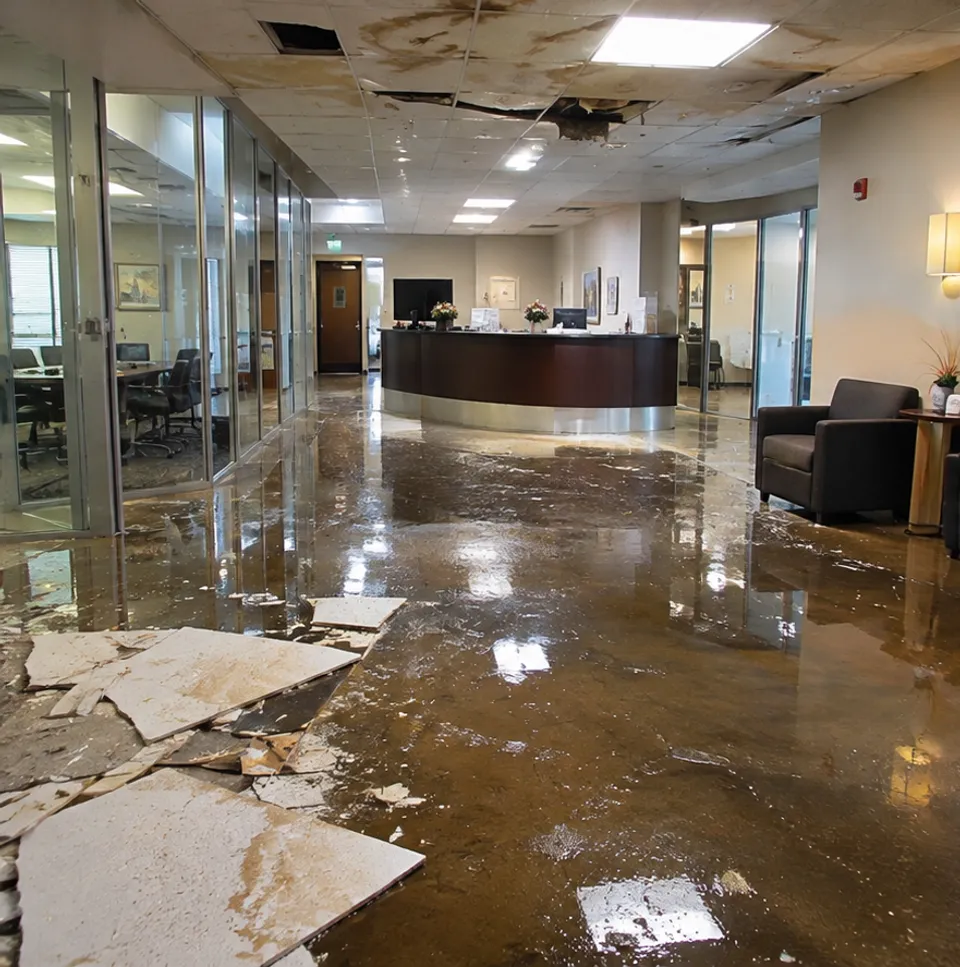
Flood Damage Cleanup
Pump-out, removal of soaked materials and structural drying after heavy rain or storm water enters a property.
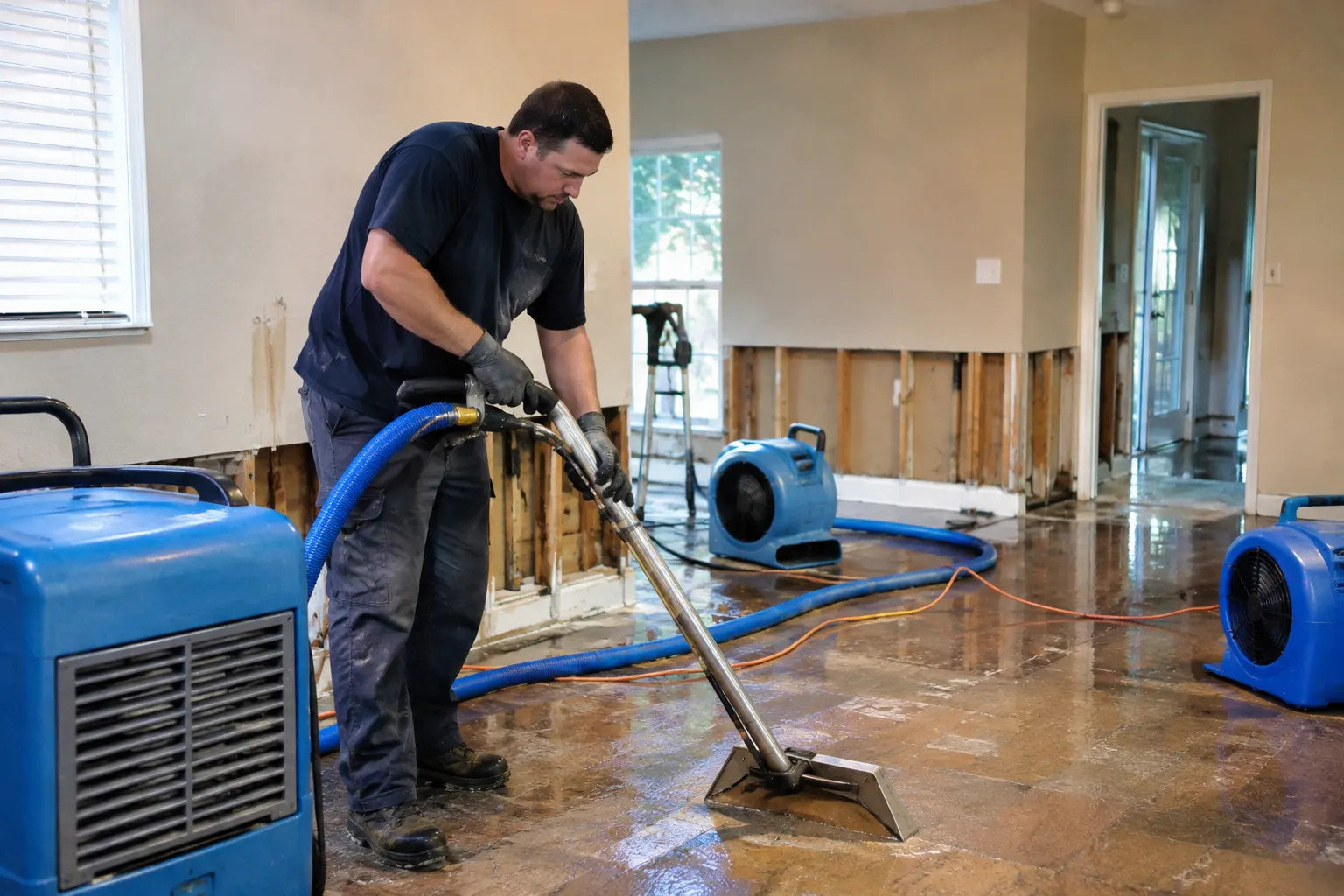
Sewage Backup Cleanup
Contaminated water removal, material disposal and sanitizing after a drain or sewer line backs up.
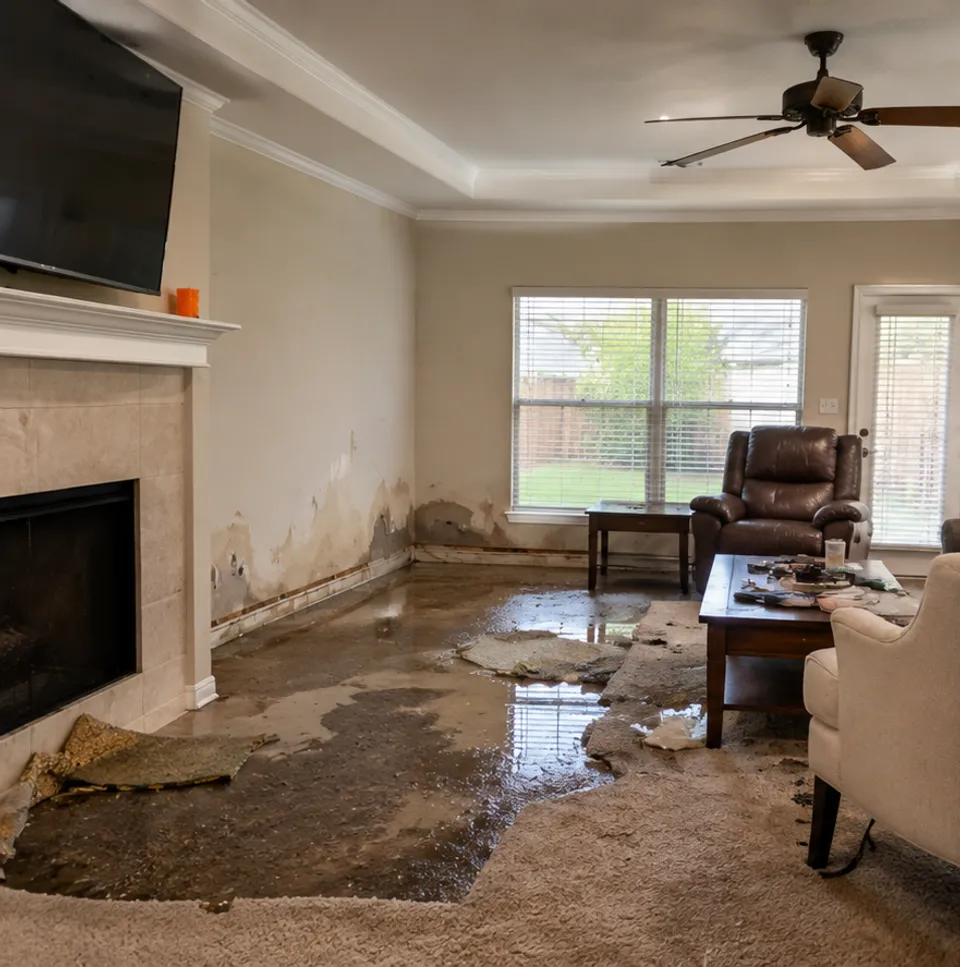
Water Heater and Appliance Leaks
Water extraction and drying after a water heater, washing machine, dishwasher or ice maker leak.
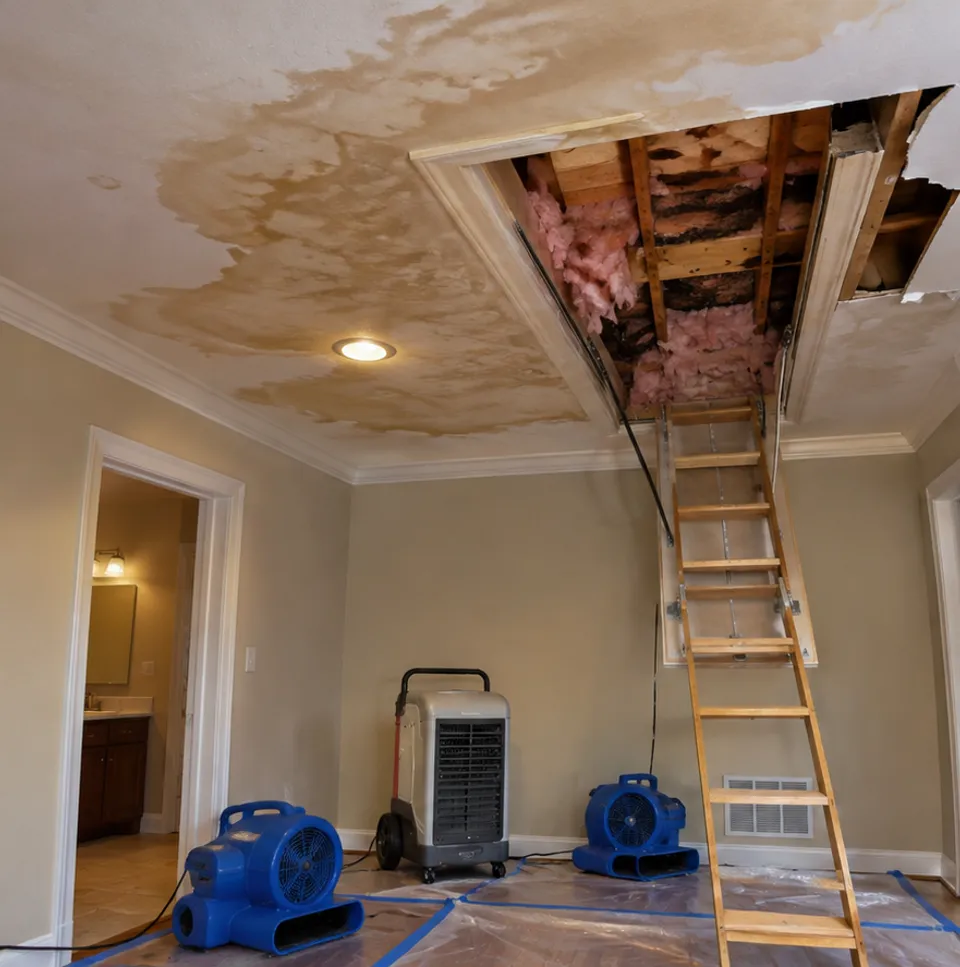
Roof Leak Water Damage
Interior cleanup of wet ceilings, insulation and walls after storm or wind-driven rain gets through the roof.
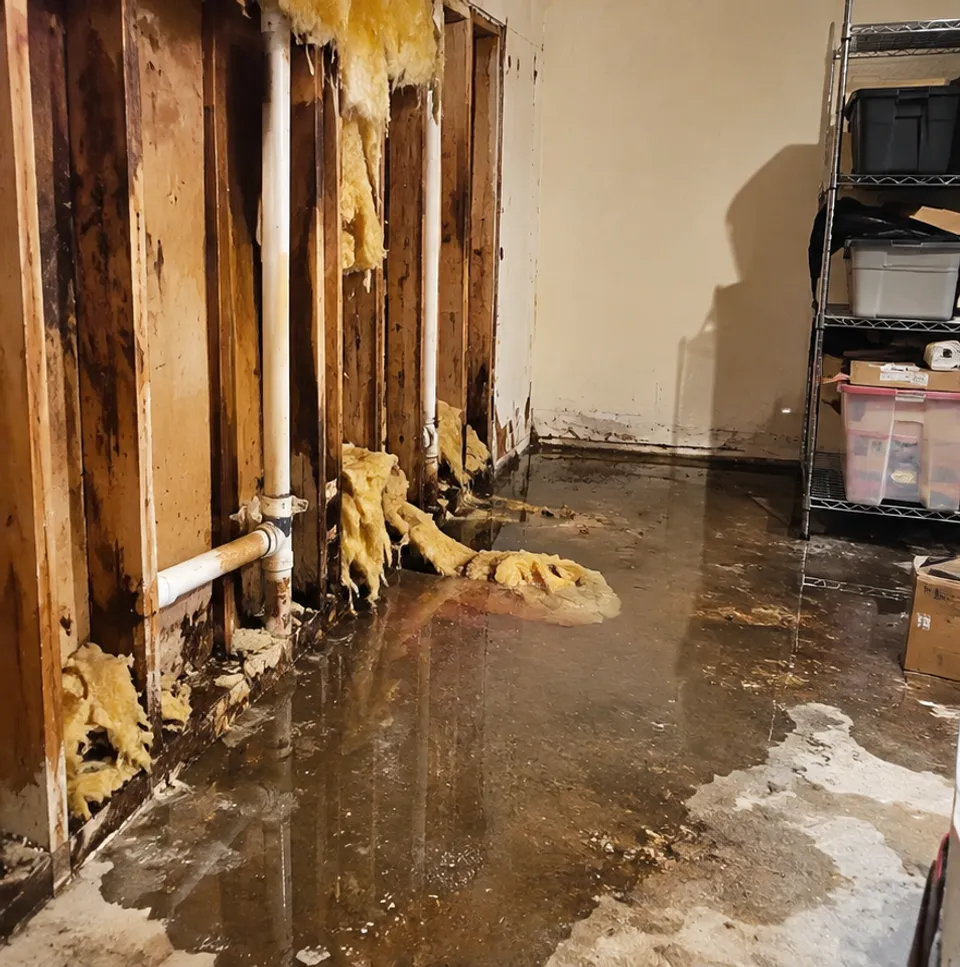
Frozen and Burst Pipe Cleanup
Extraction and deep drying of flooded rooms, ceilings and wall cavities after a plumbing line ruptures.
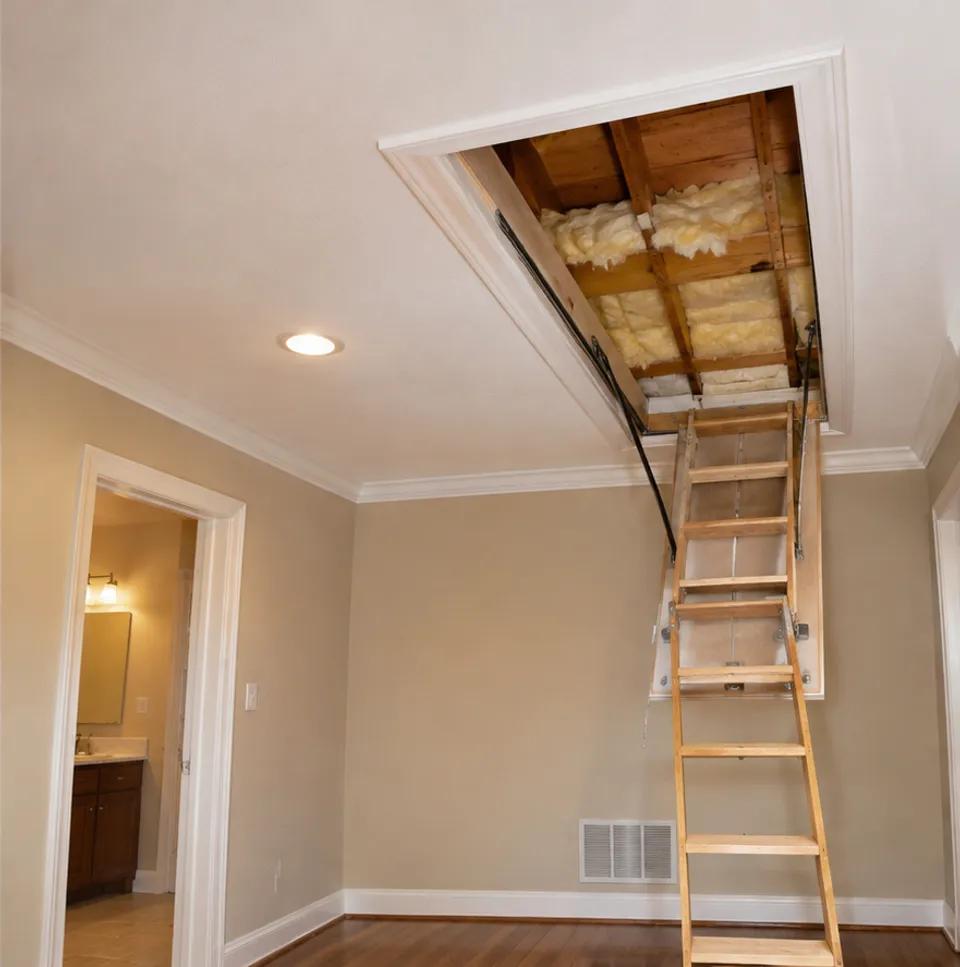
Winter Ceiling and Attic Water Damage
Wet insulation, sagging ceilings and hidden attic moisture after winter leaks.
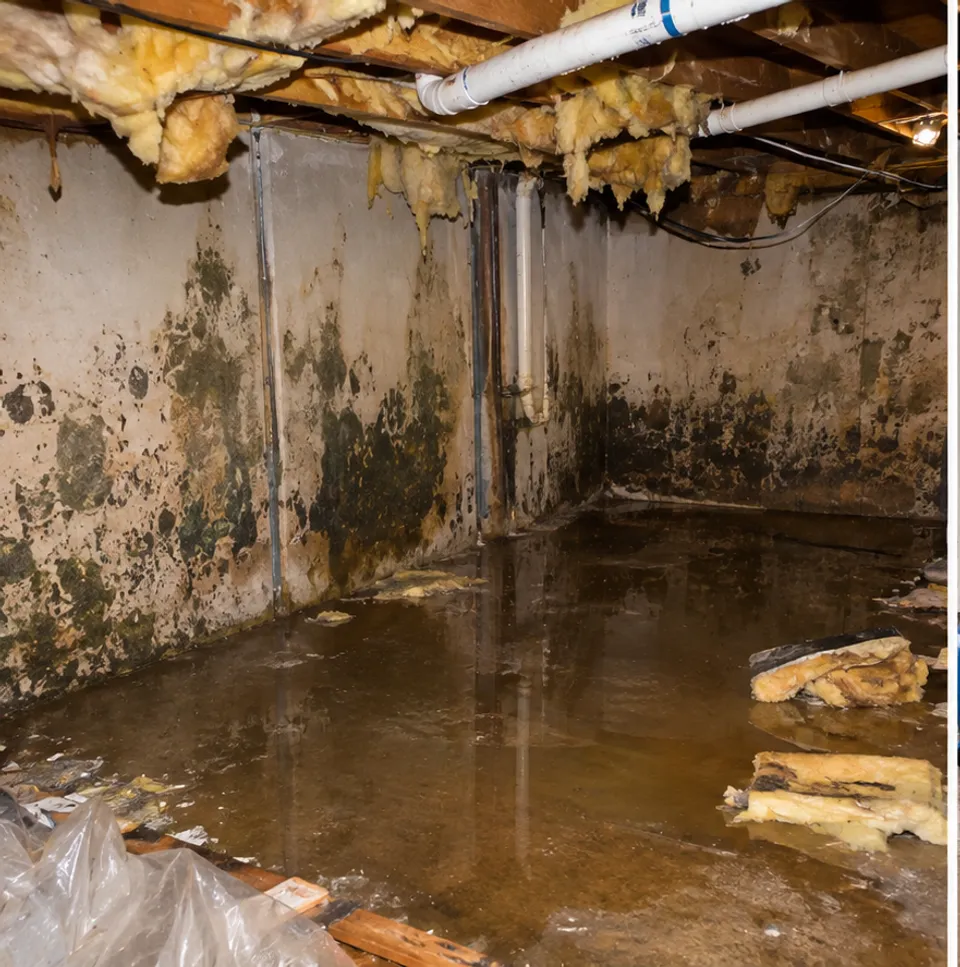
Basement Flooding After Snowmelt
Low-level water cleanup in basements, garages and below-grade rooms when melting snow or rain gets in.
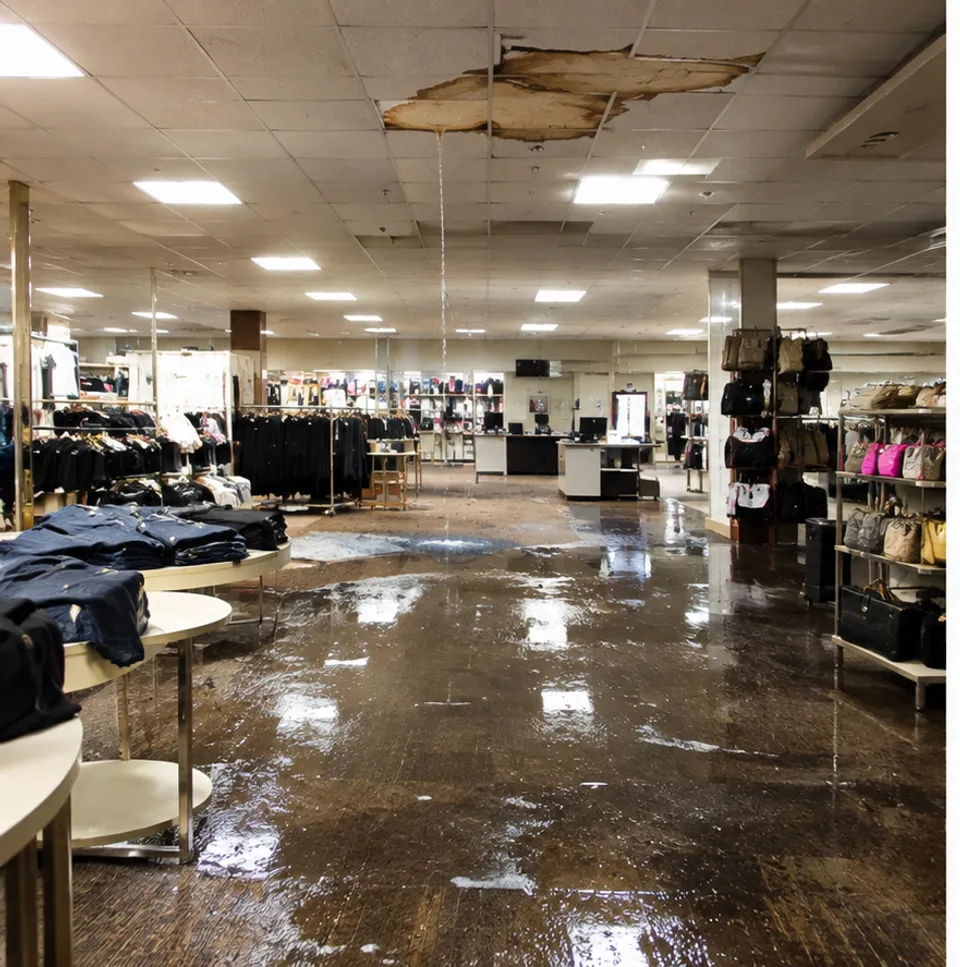
Ice Dam Roof Leak Cleanup
Interior drying and insulation removal after ice at the roof edge forces water inside.
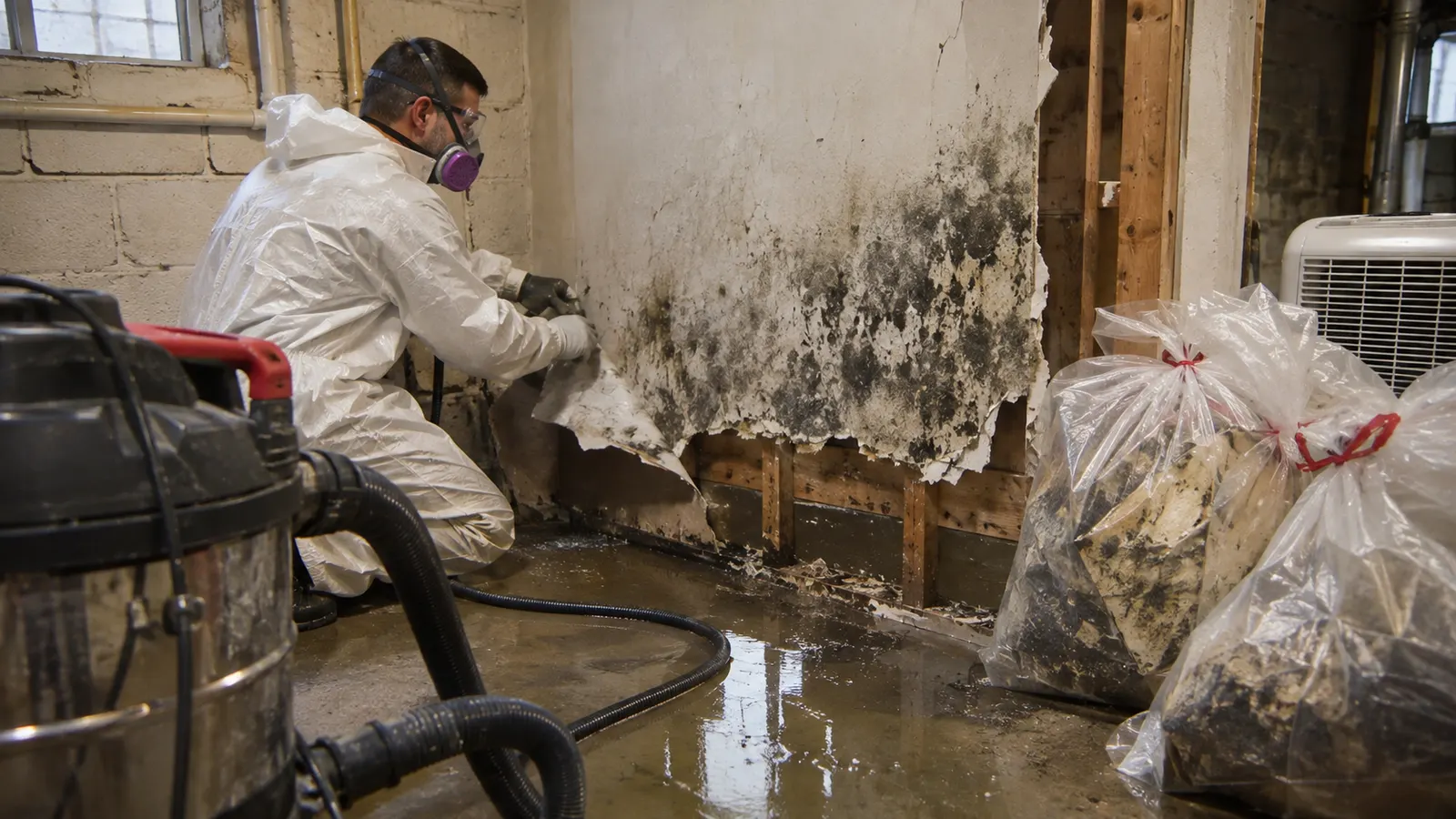
Mold Removal
Moisture-source correction, containment and removal of mold-affected materials after water damage.
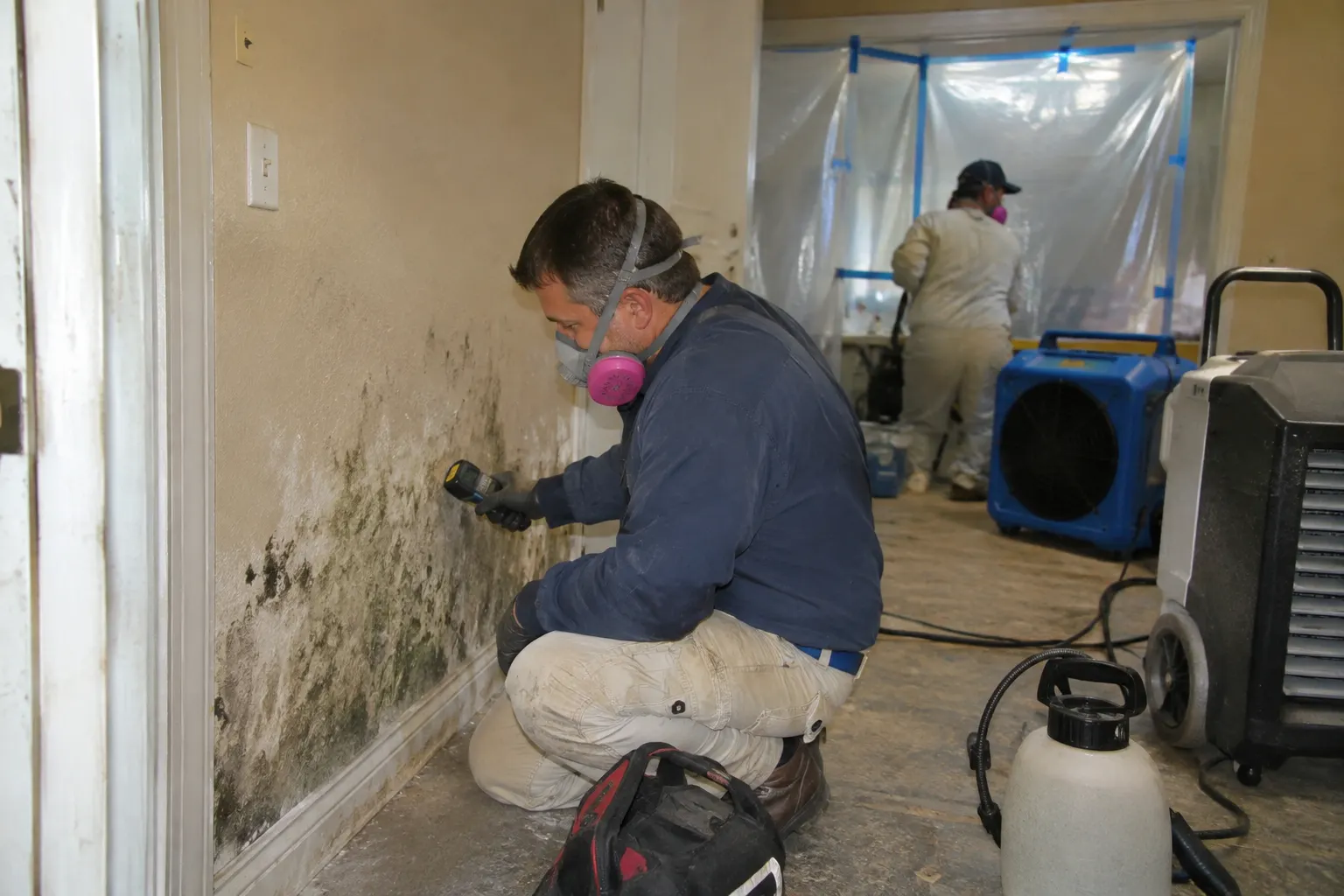
Attic and Crawlspace Mold
Assessment and removal planning for mold in attics, crawlspaces and other concealed, poorly ventilated areas.
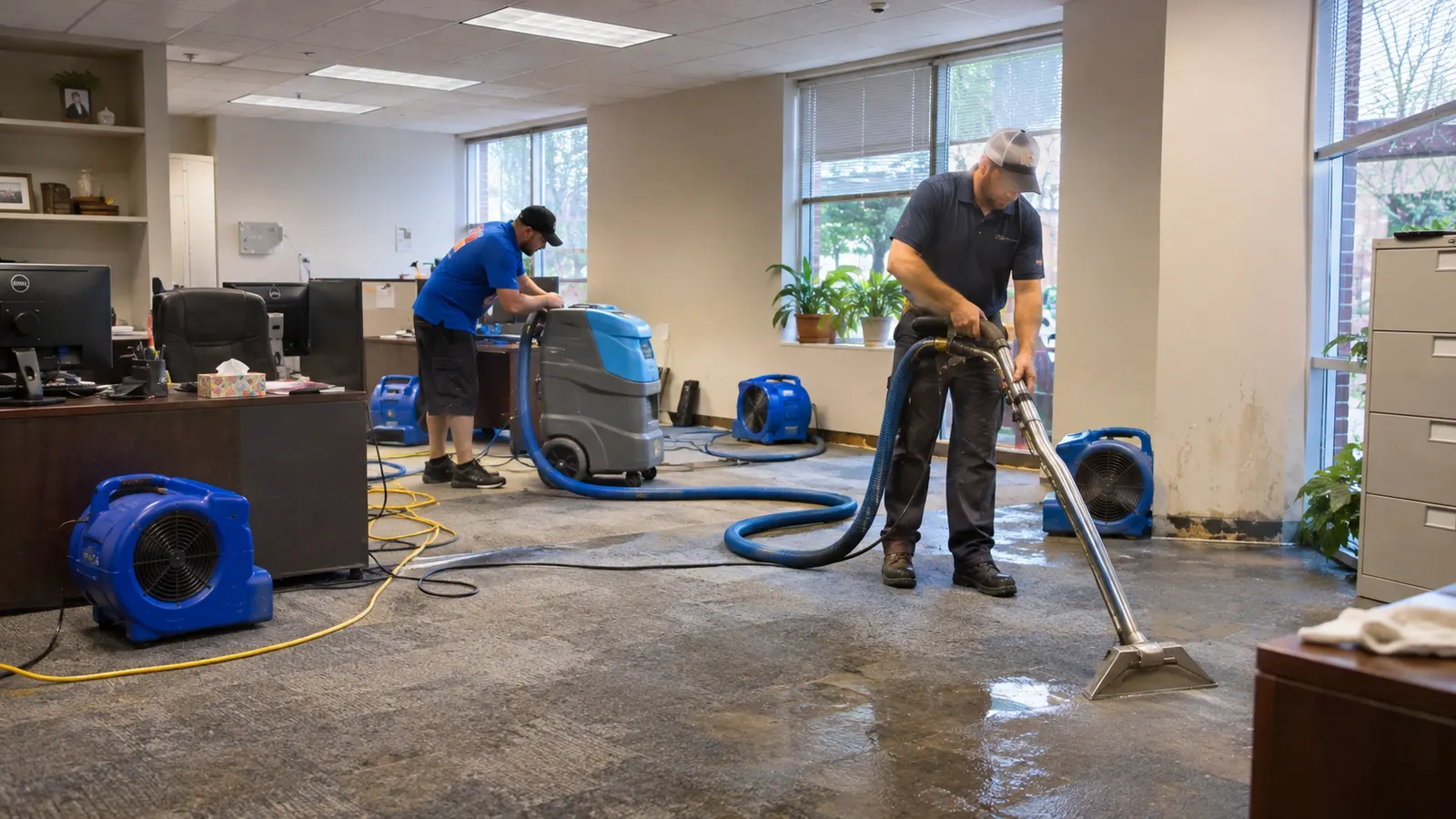
Commercial Water Damage Restoration
Water extraction, drying and tenant coordination for offices, retail units, restaurants and multi-tenant buildings.
A seamless water damage restoration process in Carrollton, for your peace of mind
Call and describe the water
Tell us where it is and what it came from. You get safety steps for the next few minutes.
Inspect and map the moisture
Meters and thermal imaging show where the water went, including behind walls and under floors.
Extract and remove what cannot dry
Standing water comes out first. Saturated materials are removed, and you are told which and why.
Dry with recorded readings
Air movers and dehumidifiers run, and readings are tracked so you can see the building drying.
Verify and document
Equipment leaves when readings match dry materials. You keep the readings and photos for your records.
What Carrollton says about its flood history
A City of Carrollton floodplain permit guide states that the most severe flooding in the city has come from the Trinity River, and it notes that the area around Trinity Mills Road and IH-35 flooded regularly before roadway and drainage improvements reduced the problem. A news report also described heavy inflow overloading the city’s wastewater collection system, with releases along Hutton Branch near IH-35 during a flood event. The city operates under a state small-MS4 stormwater permit and requires permits for development in the floodplain.
Tell us where the water is and whether it came from inside or outside the building.
What the census says about the buildings in Carrollton
The American Community Survey (2024 five-year estimates) counts 54,365 housing units in Carrollton with a median year built of 1988, one of the older medians among this site’s service areas. The 1980s are the largest decade, and the 1970s through the 1990s together account for about three-fifths of the housing. About 58% of units are single-family detached houses, about 10% are in buildings of 50 or more units, and about 41% of occupied units are renter-occupied.
measuredHousing units by decade built in Carrollton
54,365 housing units; median year built 1988. Largest bar in red.
Housing that is thirty-five to fifty-five years old is at the stage where original roofs, water heaters, appliances, supply lines and some flooring have reached or passed their usual service lives. The likely sources of a water loss are therefore the replaceable components: a water heater, a washing machine or dishwasher hose, a toilet or faucet supply line, an air handler condensate line, a roof covering. That is a statement about a typical building of that age, not about any one house. Renovated houses may have new finishes over older subfloors, which holds water between layers; slab foundations and pier-and-beam foundations hide water in different places; and about four in ten households rent, so notice to an owner or manager is part of the first call for many addresses.
Do not treat all Carrollton neighborhoods as sitting on identical soil. The USDA NRCS Web Soil Survey, which provides soil data produced by the National Cooperative Soil Survey, shows the mapped soil units at an address. If you suspect foundation movement is cracking plumbing or letting water in, an engineer or foundation specialist should look; restoration addresses the water.
Commercial corridors and industrial areas in Carrollton
Carrollton has retail, office and industrial areas along its major roads and near IH-35E, and the building types resemble those on the commercial water damage page: large roofs with internal drains, shared walls in strip centers and warehouse slabs. The priorities there are shutoff, access, stock protection and documentation.
Winter risk in Carrollton, plainly
The freeze pattern relevant here is regional rather than local to Carrollton: the NWS normals for DFW Airport show December through February holding most of the roughly 29 annual freeze days. Attic and exterior-wall lines are the usual failure points. See frozen and burst pipe cleanup and the checklist.
Carrollton local resources
- City of Carrollton, Environmental Quality (stormwater) and floodplain administration.
- FEMA Flood Map Service Center and the NCTCOG regional flood management resources.
- USDA NRCS Web Soil Survey, soil units for an address.
- USGS, stream gauge for the Elm Fork near Carrollton (station 08055500).
Water damage restoration work for buildings like those in Carrollton
Typical conditions and equipment for the building types discussed on this page. The photos are not tied to a specific address or project.
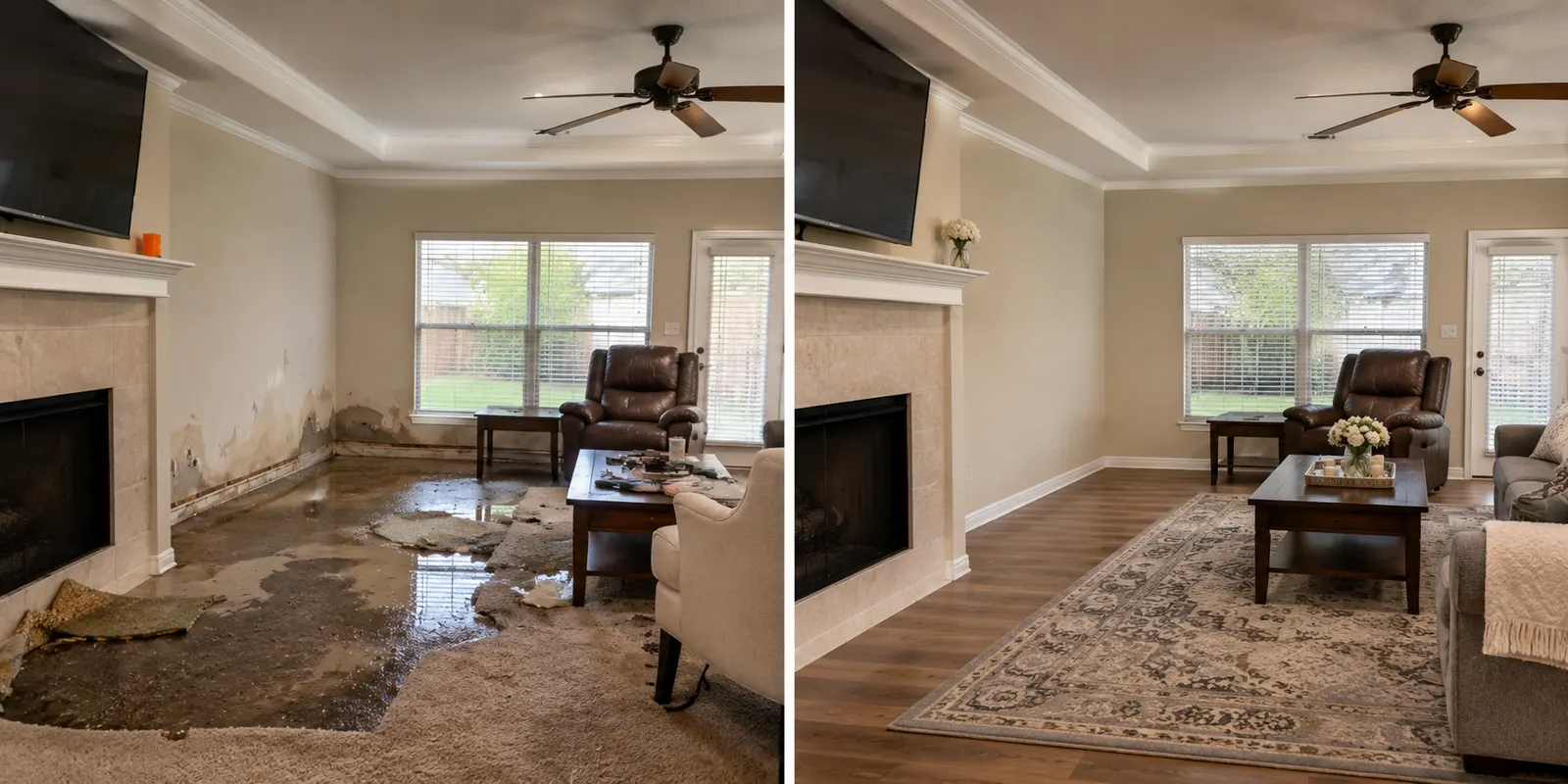
Wet carpet and water-stained walls in a living room, then the restored room with new flooring.
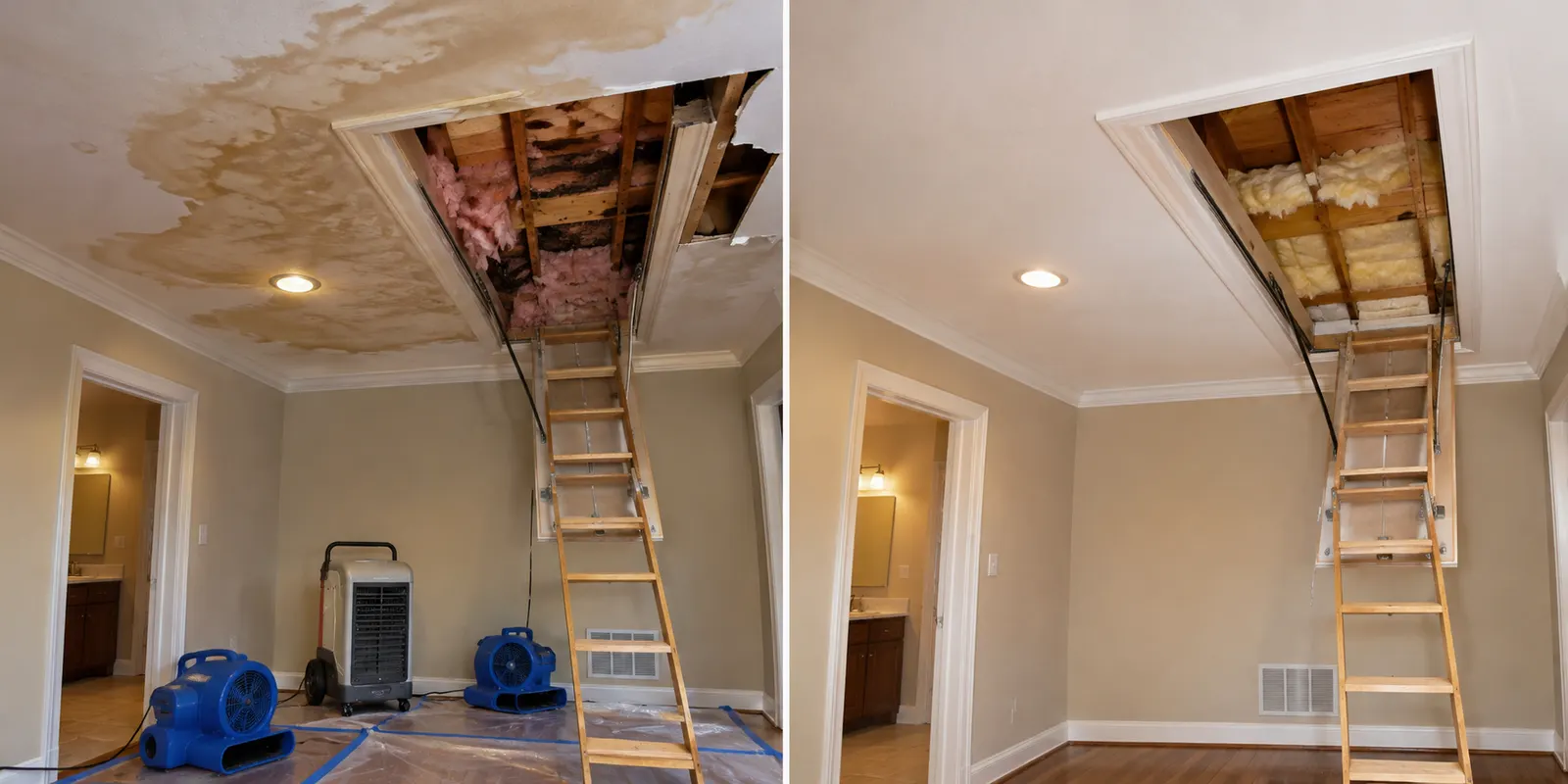
A stained ceiling around an attic hatch with wet insulation, then the repaired opening.
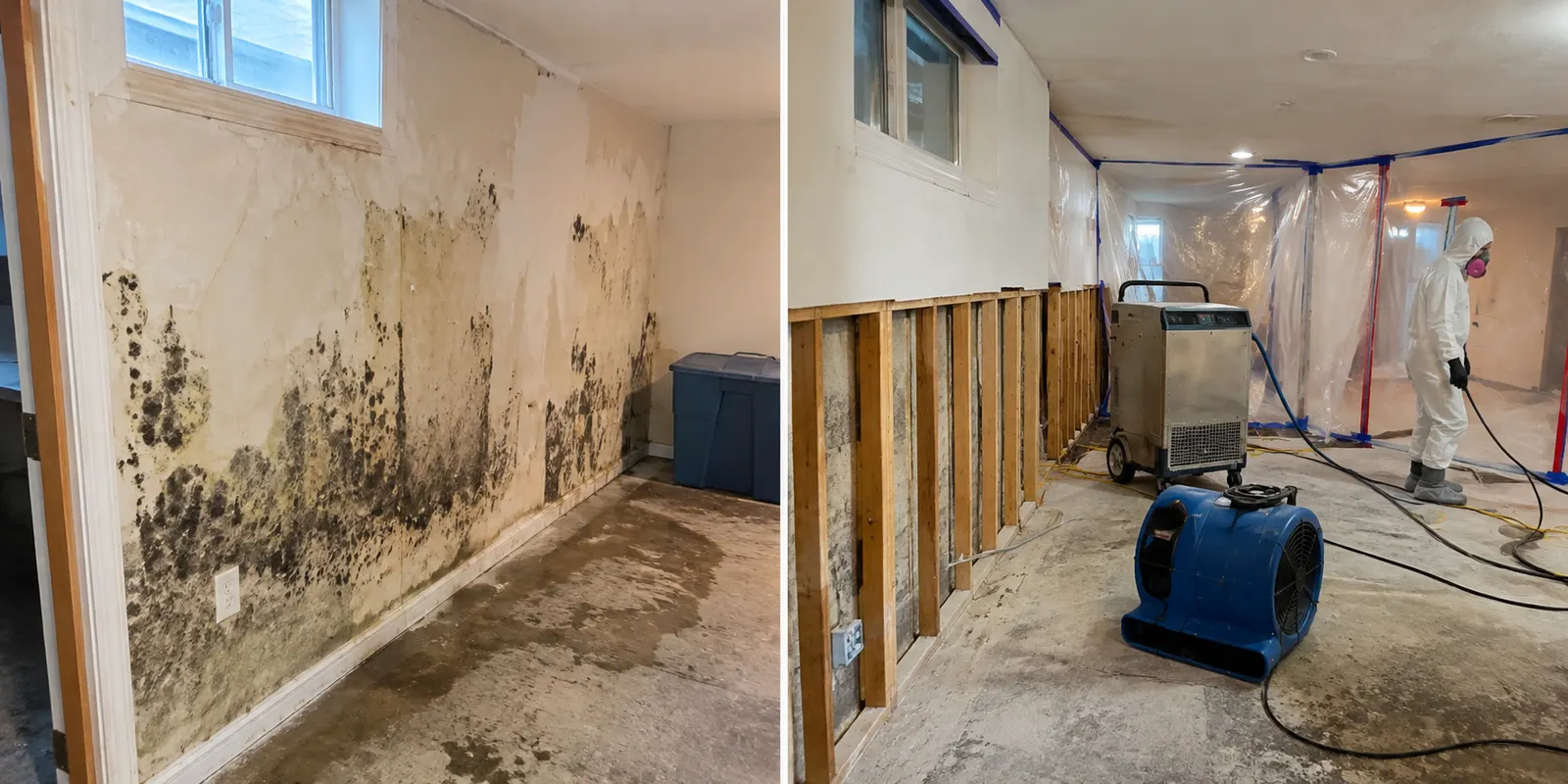
A mold-stained basement wall, then the same wall opened under plastic containment with drying equipment.
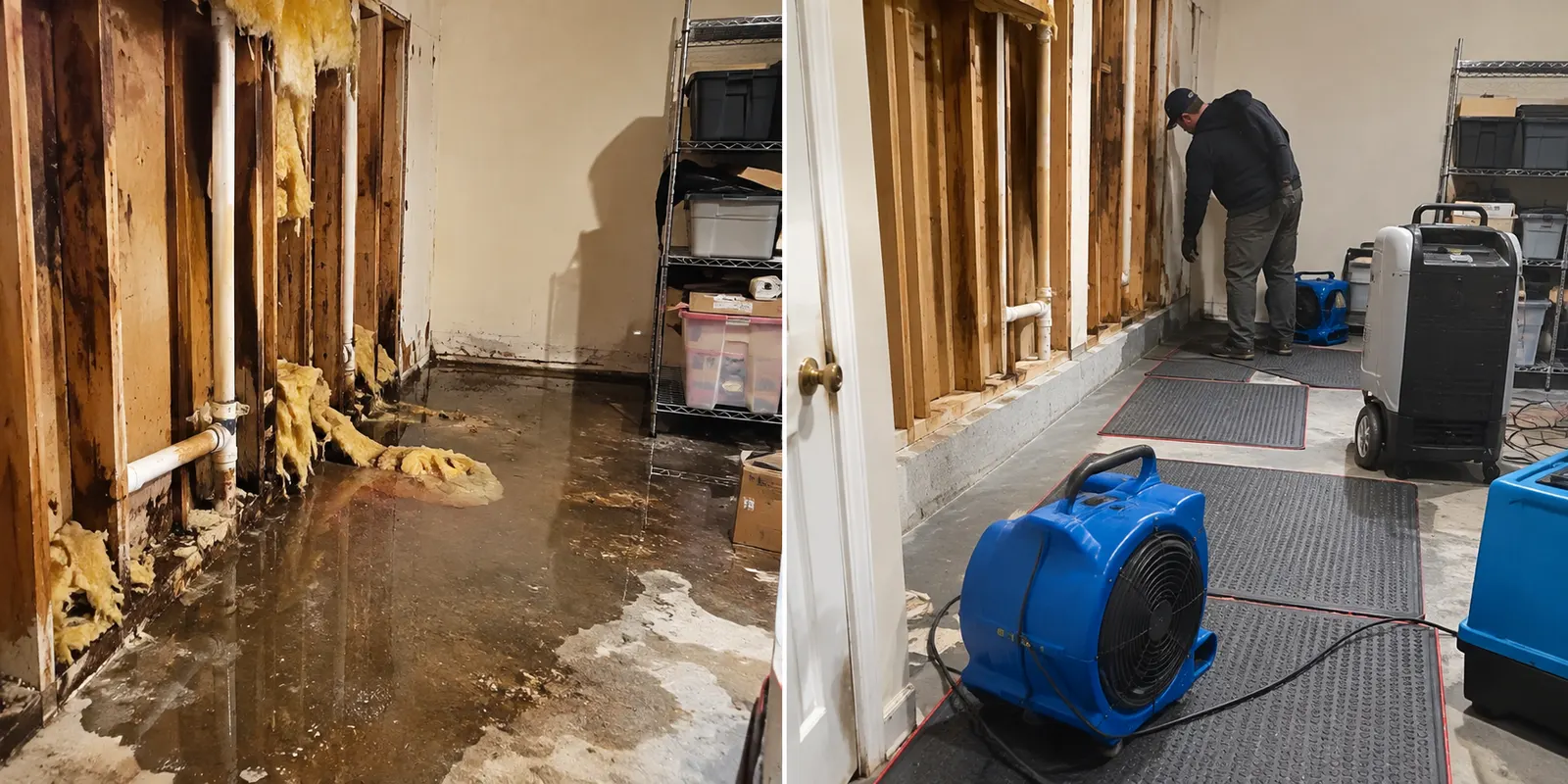
A flooded hallway with stripped walls, then the same space after extraction with a fan on a clean floor.
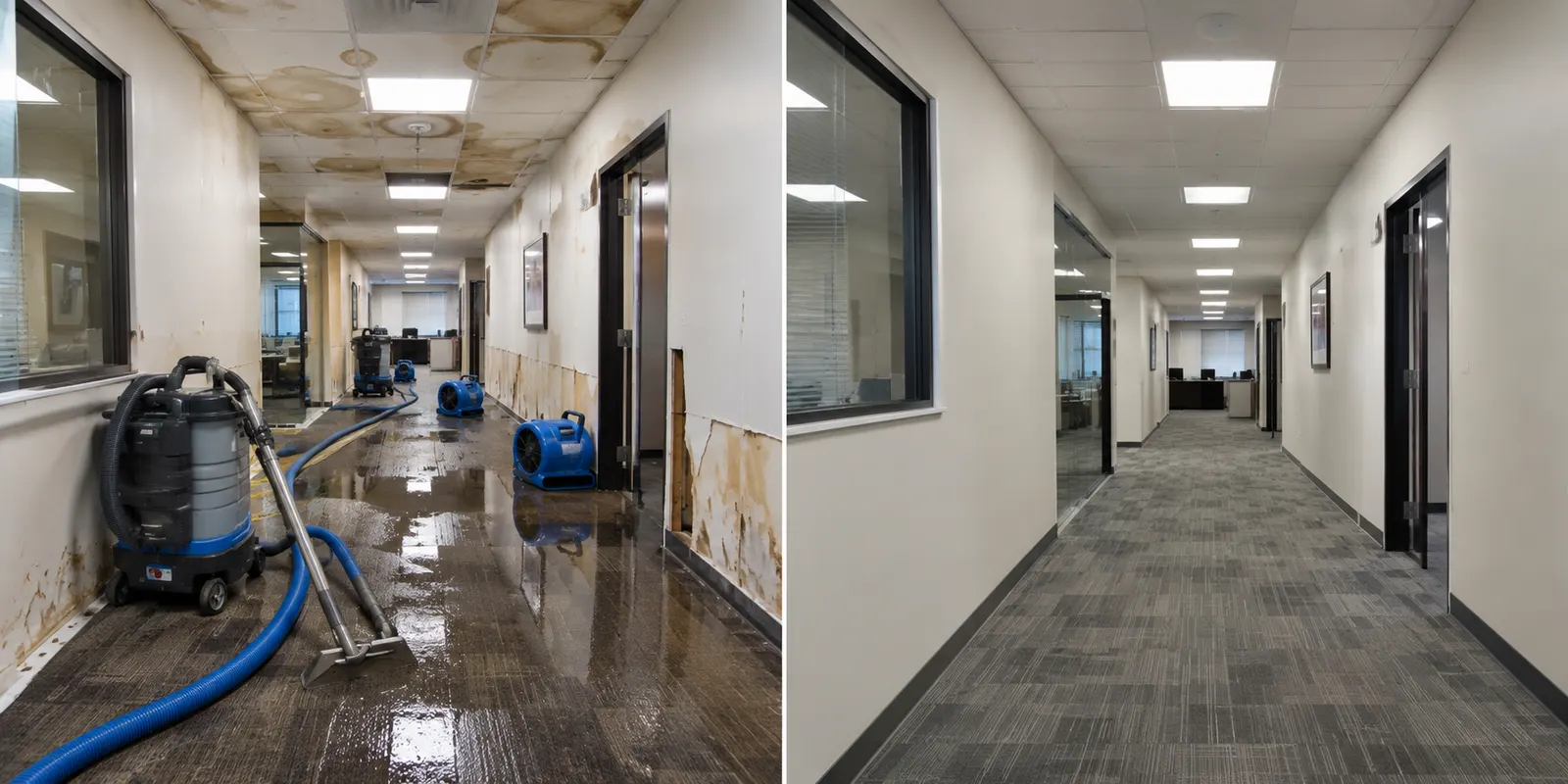
A wet corridor with stained ceiling tiles and a technician extracting water, then the dry corridor.
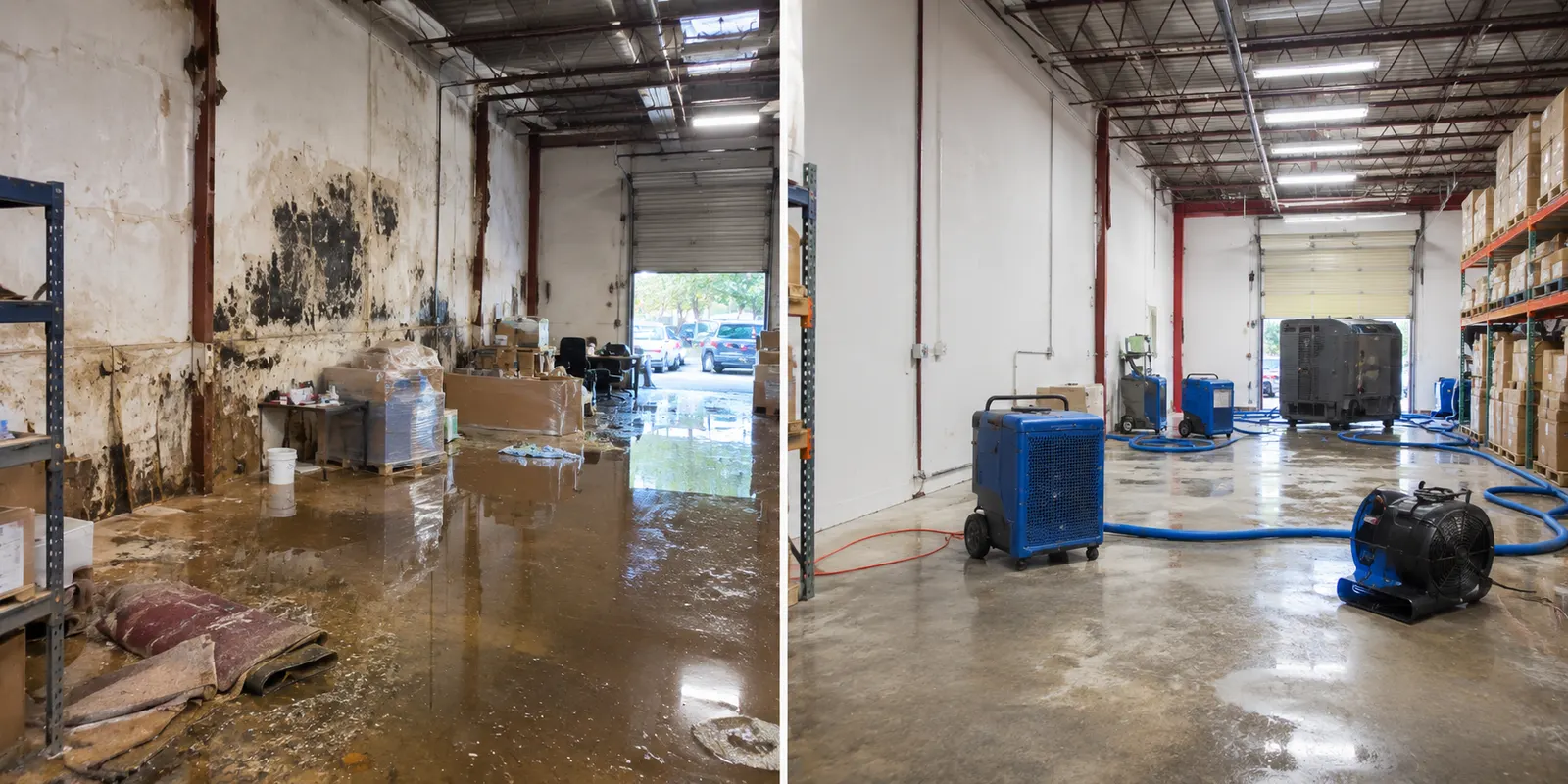
Standing water and damaged goods on a warehouse floor, then the cleared, dry space.
Water damage questions in Carrollton
Which creeks drain through Carrollton?
City stormwater documents list the Elm Fork of the Trinity River as the receiving stream and name Indian Creek, Dudley Branch, Furneaux Creek, Cooks Branch and Hutton Branch among its main local tributaries. One version of the document lists four; check the current city document.
Does living near one of these creeks mean my house floods?
No. Mapped floodplain status, grading and the building’s elevation decide exposure, and the city and FEMA publish the maps. Most water damage that reaches restoration companies starts inside the building.
Are all Carrollton neighborhoods built on the same soil?
No, and this page does not claim that. Soil units vary by location. The USDA NRCS Web Soil Survey shows mapped soil units for a specific address, and a structural engineer is the person to ask about foundation concerns.
Why might county records differ across Carrollton?
The city extends across Dallas, Denton and Collin counties, so which county’s records apply depends on the address.
My house was built in the 1980s. Is that a concern for water damage?
Age alone is not a defect. At that age, roofs, water heaters, appliances and supply connections have usually been replaced at least once, and the condition of those replacements matters more than the original build year.
Have the address type, rooms affected and source ready.
Source notes
- Census Reporter, ACS 2024 5-year tables, Carrollton city, year built, structure type, tenure
- USDA NRCS, Web Soil Survey, description of the survey
- City of Carrollton, Stormwater (Environmental Quality)
- City of Carrollton, stormwater reader / floodplain permit documents
- Fox 4, Carrollton wastewater system overwhelmed by flooding
- USGS 08055500 Elm Fork Trinity River near Carrollton