

- What it is
- Ice at the roof edge that backs meltwater up under shingles and into the attic or wall.
- First move
- Place containers, keep out from under bulges, and call a roofer about the entry point.
- Not included
- Removing ice, repairing the roof and fixing attic ventilation are roofing work.
What an ice dam actually is
An ice dam forms when snow on a roof melts from heat escaping through the roof deck, runs down to the colder eave and refreezes into a ridge of ice. Water that backs up behind the ridge can be pushed under shingles and into the attic or the wall below. It takes three things together: snow cover, sustained freezing temperatures, and a roof that is warmer in some places than the air outside.
In Dallas that combination is uncommon. Snowfall is infrequent and usually light, and it often melts within a day. The NWS normals for DFW Airport list about 1.6 inches a year. An extended freeze with snow cover can still happen, and when it does, the roof conditions matter more than the weather label. Most winter roof leaks here are not ice dams.
Roof repair versus interior restoration
| Roofer | Restoration (interior) |
|---|---|
| Locates and repairs the roof defect | Locates wet interior materials with moisture meters |
| Replaces flashing, shingles or vent boots | Removes wet insulation and drywall that will not dry |
| Assesses attic ventilation and air sealing | Sets drying equipment and monitors readings |
| Provides a roof assessment for insurance | Provides moisture records and a drying log |
This site covers the right column. It does not promise roof repair.
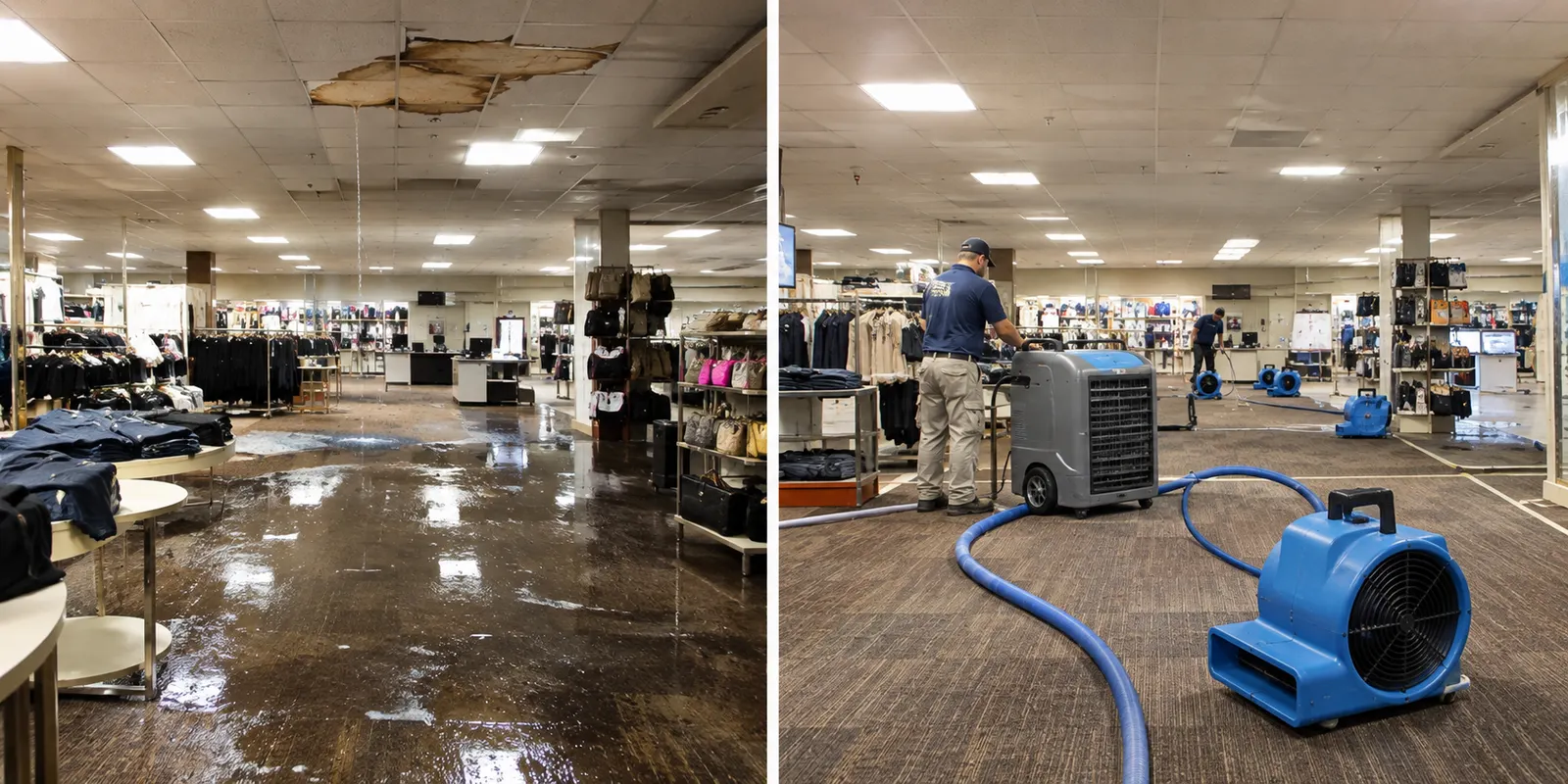
What the inside looks like
Roof water usually shows first as a stain or drip on an upstairs ceiling near an exterior wall, but it started higher. It soaks the insulation, spreads along the top plate and ceiling joists, and then reaches the drywall. The stain is a poor guide to the wet area.
- Ceilings: brown rings, sagging, bubbled paint, peeling seams.
- Exterior walls: staining at the top of the wall, damp insulation in the cavity.
- Attic: dark patches on the underside of the deck, matted insulation, rusty nail tips.
- Fixtures: water in ceiling lights. Leave them off.
Tell us where the stain is, whether it is still dripping and whether there is snow or ice on the roof.
How the cleanup goes
- Contain the water. Containers, protected belongings, and a professional-advised drain point if a ceiling is bulging, to avoid a sudden collapse.
- Check for electrical exposure. Wet fixtures and wiring in ceilings are hazardous.
- Remove wet insulation. Saturated insulation is heavy and holds water against the deck and ceiling.
- Open or remove wet drywall. When it sags, is saturated or will not dry in place.
- Dry the cavity. Air movers and dehumidifiers dry framing and the deck underside; readings track progress.
- Coordinate with the roofer. If the roof is not repaired, the drying gets wet again.
Why the attic matters more than the weather label
When ice dams do form, the root cause is heat leaking into the attic: gaps around light fixtures and attic hatches, thin or uneven insulation, and ductwork running through the attic all warm the roof deck from below. The same conditions also drive condensation, so an attic that stains in winter may have a moisture problem that never involved an ice dam. Wet insulation compresses and loses insulating value, which can make the next cold spell worse. A roofer or an energy-minded contractor can assess ventilation and air sealing. Restoration documents what is wet and dries it.
If the same spot has leaked before, say so when you call. Repeat leaks in one place usually point to a defect nobody has found, and the drying plan should include checking the materials around it.
Insurance notes
Roof and ceiling claims often involve both the roof and the interior. Photograph the exterior and the interior, note when you first saw water, and ask your insurer how it treats storm damage and wear. A restoration provider can document readings and the extent of the wet material; coverage decisions belong to the insurer.
Related pages: winter ceiling and attic water damage, roof leak water damage and frozen and burst pipe cleanup.
Frequently asked questions
Is my winter roof leak an ice dam?
Not necessarily. Ice dams need snow cover, freezing temperatures and enough heat escaping through the roof to melt the snow from underneath. Many winter leaks come from ordinary defects, flashing or wind-driven rain.
Do I need a roofer or a restoration company?
Often both. A roofer repairs the cause. Restoration handles wet insulation, ceilings and drying. What matters most is that water is no longer coming in.
Should I climb up and chip the ice off?
No. Roof ice is a fall hazard, and chipping can damage shingles. Leave it to someone with proper equipment, or let it melt if no water is entering.
The stain stopped growing. Am I done?
Not necessarily. Insulation above the ceiling can stay wet long after the stain stops spreading, which leads to odor and mold. Ask for a moisture reading.
How common are ice dams in Dallas?
Rare. Snowfall here is infrequent and usually light, and the NWS 1991–2020 normals for DFW Airport list about 1.6 inches a year. An extended freeze with snow cover can still produce conditions for one.
We deal with the interior water. A roofer handles the roof.
Source notes
- NWS Fort Worth, DFW Normals, Means, and Extremes (1991–2020), annual snowfall normal