
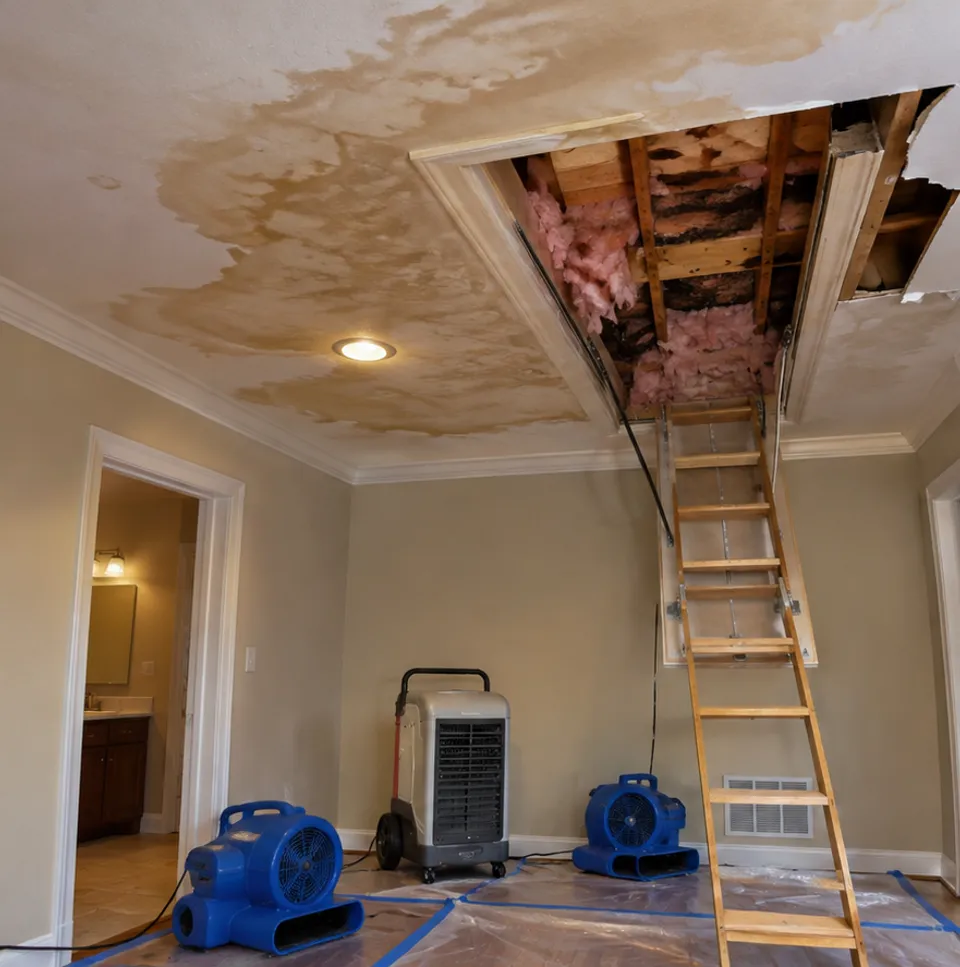
- Typical cause
- Hail or wind damage to shingles, loosened flashing, or a failed seal around a vent, chimney or skylight.
- First move
- Get the opening covered by a roofer. Keep out from under bulging ceilings and wet light fixtures.
- Not included
- Roof repair is a roofer’s scope. Without it, any drying gets wet again.
Why the ceiling stain is the end of the story, not the start
Water that gets through a roof does not fall straight down. It runs along the underside of the roof deck, a rafter, a duct or a wire until it finds a low point, soaks the insulation there and only then reaches the ceiling. A leak at a plumbing vent can show up in a hallway several feet away. This is why fixing the visible stain, or even the visible roof damage, often leaves the wet material behind.
North Texas has a long storm season in spring and early summer, and the NWS normals for DFW Airport list May and October as the wettest months. A roof that survived one storm may let water in during the next, and a leak can show up days after the weather that caused it. The winter version of this problem, with ice at the roof edge, is covered on the ice dam page.
Reading the signs inside
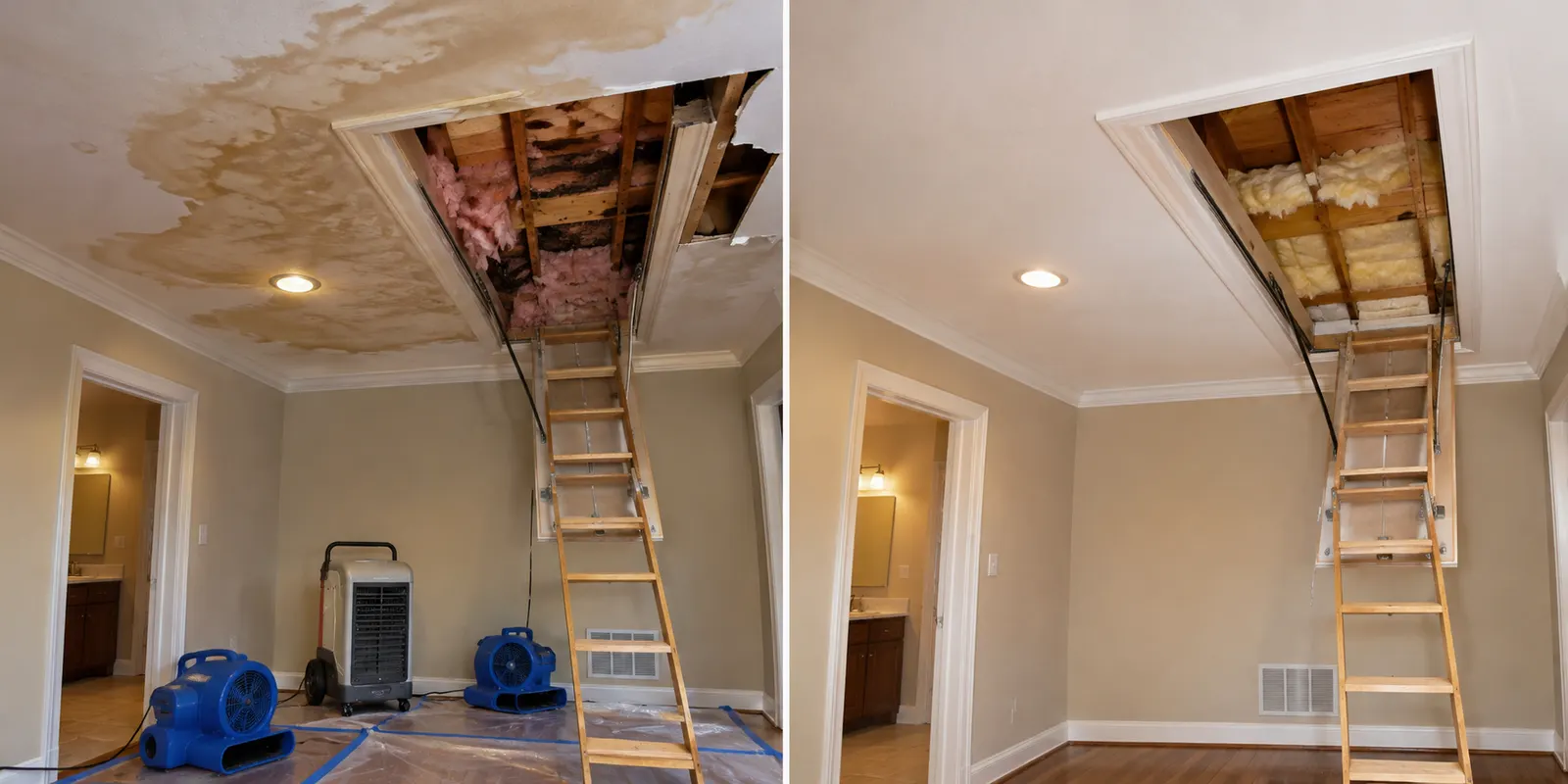
Say where the stain is, whether it is still dripping and whether the roof has been covered.
What the cleanup involves
- Make the room safe. Keep out from under sagging areas, leave wet fixtures off and put containers under drips.
- Stop the entry. A roofer or emergency service covers the opening. Drying before this is wasted effort.
- Map the moisture. Meters and thermal imaging find wet insulation, framing and drywall beyond the stain.
- Remove what will not dry. Saturated insulation and drywall that is sagging or holding water come out. A small controlled opening can relieve a water pocket safely.
- Dry the cavity. Air movers and dehumidifiers dry the deck underside, framing and the back of the ceiling.
- Verify. Readings return to normal before the ceiling is closed.
Drying or replacing wet insulation
Blown-in cellulose that gets wet usually has to go. It clumps, stays wet and holds water against the deck and the ceiling. Fiberglass batts that were wet briefly can sometimes be dried, though compressed and matted batts lose much of their value. Closed-cell spray foam does not absorb water, so the work there is checking the surfaces behind and around it. Which of these you have changes the scope, so say what is in your attic when you call.
Insurance and documentation
Photograph the roof damage from the ground if you can do it safely, then the interior stains and any damaged belongings. Note when the storm happened and when you first saw the leak. Keep receipts for temporary protection. Ask your insurer what it requires before repairs begin; roof and interior damage may be treated as separate parts of the claim. A roofer’s written assessment and the restoration provider’s moisture log both help.
When the same spot has leaked before
Say so. A repeat leak at the same place usually means the cause was patched rather than found, and the surrounding materials have been wet more than once. Tell the roofer and the technician the history; it changes where they look and how much they open.
Frequently asked questions
Should I tarp the roof myself?
No. Roof work during or right after a storm is dangerous. A roofer or emergency tarping service can cover the opening. Inside, you can move belongings and set out containers.
The ceiling stopped dripping. Is the damage over?
Not necessarily. Insulation and framing above the ceiling can stay wet for days, and the stain often keeps spreading as water moves through the materials.
Why is the stain nowhere near the damaged part of the roof?
Water travels along the underside of the roof deck, rafters, ducts and wiring before it drips. A leak at a vent or chimney can show up several feet away.
Does insurance cover a storm roof leak?
Policies often cover sudden storm damage and exclude wear and tear or long-term leaks. A roofer’s written assessment, photos of the roof and interior, and the date of the storm all help. Coverage decisions are the insurer’s.
Can I leave wet attic insulation to dry on its own?
Sometimes dry weather and airflow will do it, but saturated insulation compresses, holds water against the ceiling and can lead to odor and mold. A moisture reading tells you whether it is drying or not.
We deal with the interior water. A roofer handles the roof.
Source notes
- NWS Fort Worth, DFW normals (1991–2020), monthly precipitation
- EPA, A Brief Guide to Mold, Moisture and Your Home, 24 to 48 hour drying guidance