
Key points
- Texas Department of Insurance guidance: file as soon as you can, take photos and videos of all damage and keep receipts for all expenses.
- Temporary repairs to protect the property are generally fine. Do not make permanent repairs until you have talked to your insurer.
- Your insurer has 15 business days to say it received the claim, and 15 business days after it has what it needs to say whether it will pay.
- Do not throw things away until the adjuster says so. If wet material is a health or safety problem, photograph it and tell the adjuster before removing it.
- This article describes what TDI publishes. Coverage depends on your policy and on the cause of the loss.
A claim is easier to approve when the evidence is complete and timed. Most of what an adjuster needs can be gathered in the first hour with a phone, and most of what goes wrong later comes from throwing out evidence or making repairs before the insurer has seen the damage. This post is built from the Texas Department of Insurance’s consumer guidance and adds a practical shot list.
The first rule is to protect the property
TDI’s storm and claim guidance says to make only temporary repairs to protect your house and belongings, such as covering an opening with a tarp, and not to make permanent repairs until you have talked to your insurance company. Stopping the source and removing standing water are protective steps. TDI’s recovery tips list removing standing water. Rebuilding, replacing flooring and repainting are permanent repairs and wait.
A shot list
TDI says to take photos and videos of all damage. A useful set follows a pattern, so nothing is missed and an adjuster who was not there can follow it.
| Shot | What it shows |
|---|---|
| The source | The failed pipe, fitting, appliance, roof opening or drain, and the closed shutoff valve. |
| Each room, wide | All four walls, ceiling and floor, from a doorway, before anything is moved. |
| Each damaged surface, close | Stains, swelling, sagging, peeling paint, wet carpet and flooring edges. Include a coin or tape measure for scale. |
| Water level marks | Any visible line on walls, furniture or appliances. |
| Belongings | Furniture, electronics, clothing, documents. Photograph labels and serial numbers. |
| A video walk-through | Each affected room while you narrate what you see and when you discovered it. |
| Moisture readings | Meter readings or the technician’s logs, with dates. |
Take them before moving anything if it is safe. If you must move something for safety, photograph it first and photograph where it went.
The paperwork to keep
- Receipts for all expenses. TDI says to keep them: fans, tarps, hotel nights, meals, emergency plumbing.
- A list of damaged property. TDI’s home insurance guide says to make a list. Include what each item is, roughly how old it is and what it cost.
- The timeline. When you found the damage, when you shut off the water, whom you called and when.
- Names and numbers. Adjuster, plumber, restoration company, contractor.
- Estimates. TDI says to get estimates from more than one contractor and to compare them with the adjuster’s report.
- The deductible. TDI says to save proof that you paid it.
The Texas claim clock
measuredThe claim clock, as TDI publishes it for home claims
Business days. Deadlines can be extended in the situations TDI describes.
- Day 0File as soon as you can.
- Within 15 business daysYour insurer must say it received the claim.
- 15 business days after it has what it needsThe insurer must tell you whether it will pay.
- ExtensionThe company can extend by 45 days if it tells you why. TDI can extend 15 more days after a weather catastrophe.
- After it agrees to payIt must pay within five business days.
- Mortgage checkThe mortgage company must contact you within 10 days of getting payment.
Stated by a cited sourceTypical practice, not a cited figure
The clock does not start until the insurer receives the claim, which is why filing early matters. TDI’s guide also says the company may ask for a signed, notarized proof of loss form. If it does, return it promptly and keep a copy.
Removing wet materials
There is a real tension here. TDI’s recovery tips say not to throw anything away until your insurance adjuster tells you. EPA and CDC guidance says to dry water-damaged areas within 24 to 48 hours, and CDC says to throw away items that cannot be disinfected after floodwater, including drywall, rugs and cloth. Both are reasonable, and the way through is communication.
- Tell the insurer what is wet and that materials need to come out to stay safe and to limit mold. Ask for a response time.
- Photograph and measure the materials before removal. Keep a representative piece, such as a square of carpet or drywall, if the insurer asks.
- Document the removal, including what came out, how much and why.
- Keep the paperwork from the contractor who did it, including moisture logs.
Replacement cost, actual cash value and the second payment
TDI’s claim guidance says that for home claims you might get two payments if you have replacement cost coverage. The reason is how that coverage commonly works: the first payment reflects the item’s depreciated value, and the second pays the difference once you have repaired or replaced it and submitted proof. The details are in the policy, so ask your insurer how it handles it.
- Keep every receipt for repair and replacement, because the second payment usually depends on them.
- Ask whether there is a deadline to complete repairs and claim the second payment.
- Ask how the insurer values contents. A list with age, brand and purchase information helps.
- Save proof that you paid the deductible, as TDI advises.
- If the payment goes to a mortgage company, TDI says it must contact you within 10 days of getting it. Ask your lender how it releases funds.
Contractors and estimates
TDI’s guidance is to get estimates from more than one contractor, not to pay in full upfront and to be careful about promises. TDI also notes that a Texas law makes it illegal for contractors or roofers to offer to waive a deductible. Public adjusters, who represent you, must have a TDI license. For insurers, restoration contractors are often asked for drying logs and photographs. Give them access to the claim number and the adjuster’s name.
The first call to your insurer
Have these ready, and write down who you spoke to and when.
- Your policy number and the address.
- What happened, when you discovered it and what you did: closed the main, removed standing water, covered an opening.
- Which rooms and which belongings are affected.
- Whether anything has to be removed right away for safety or to stop mold, and what you propose to photograph first.
- A question: what do you need from me, and by when?
Ask for the claim number and the adjuster’s name and contact details. TDI says the company has 15 business days to say it got your claim, so if you have not heard by then, call.
What a restoration company adds
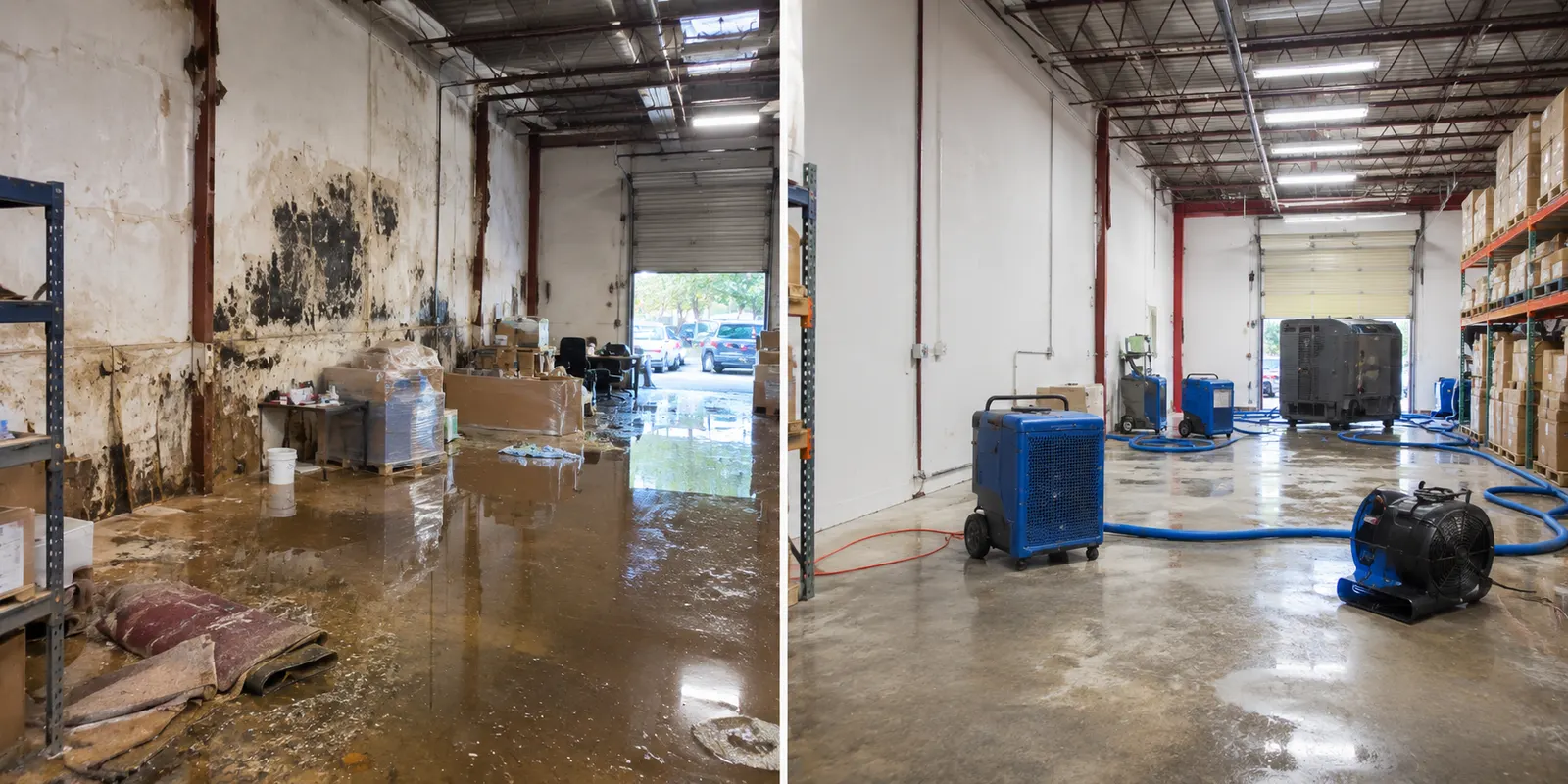
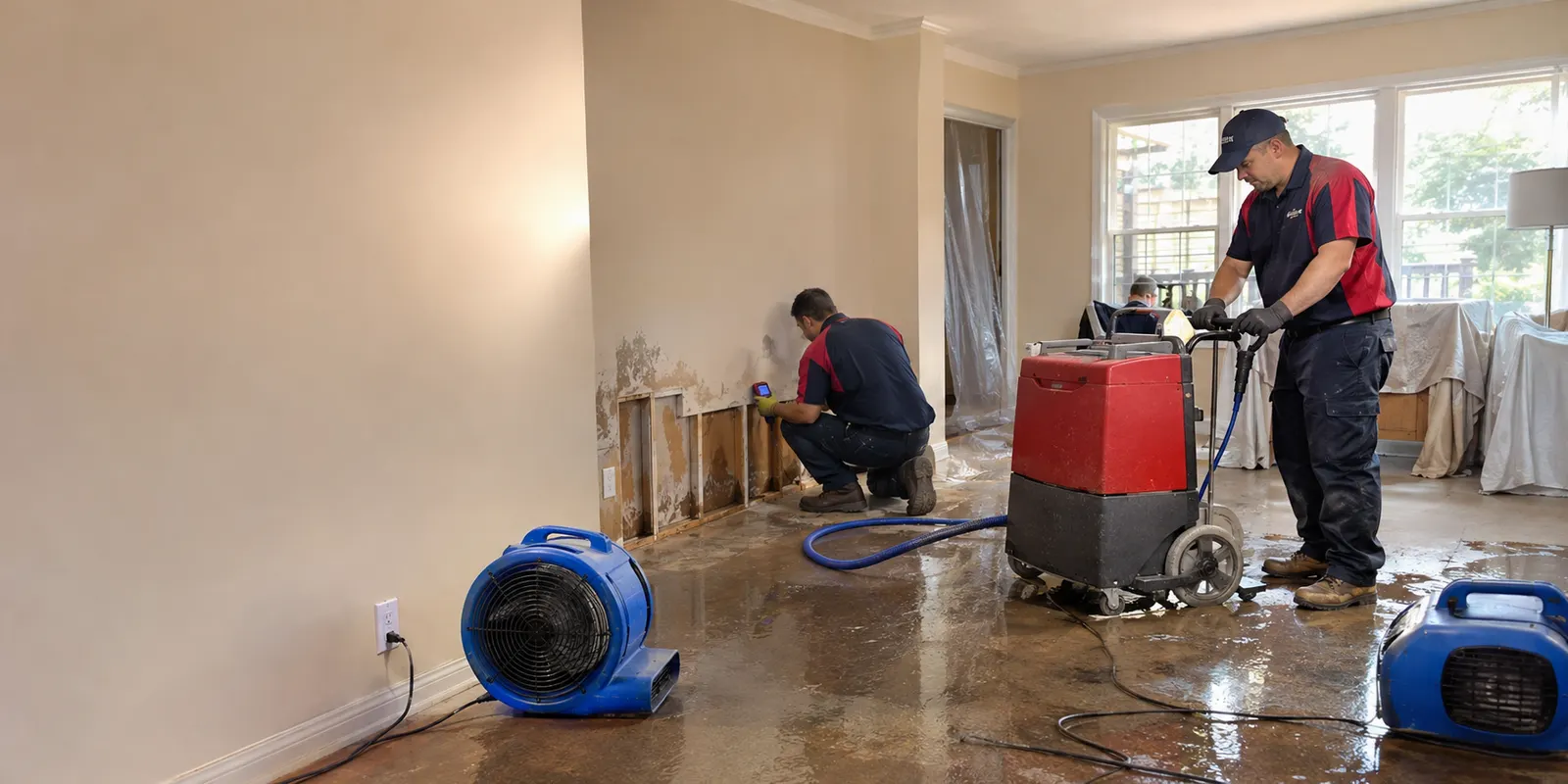
A restoration company documents what it finds with photographs and readings, writes down which materials were removed and why, and keeps the drying log. These records show the extent and the response, and an insurer decides coverage from the policy and the cause, not from a contractor’s opinion. The drying guide describes the readings and the log. If the water was contaminated, the categories postexplains why more is removed.
If you disagree
TDI’s guide describes steps if you disagree with the insurer, including appraisal for disputes over the amount, and says that if your claim is for less than a stated amount you can use Justice Court. It also says you must tell the company in writing at least 61 days before you sue. Those details change, so read the current TDI pages. For what is covered in the first place, see the coverage post.
Common questions
Do I have to wait for the adjuster before starting cleanup?
No. TDI says it is generally fine to make temporary repairs and to protect the property, and says not to make permanent repairs until you have talked to your insurance company. Ask your insurer what it requires before you remove anything.
How long do I have to file a claim?
TDI says to file as soon as you can, that most companies have deadlines for you, and that some policies have a one-year deadline unless you can show good cause for delay. Check your policy.
Will my insurer pay for temporary repairs?
TDI says to keep receipts for all expenses. Whether they are reimbursed depends on your policy. Ask before you spend.
What if the insurer rejects my claim?
TDI says that if the company rejects your claim it must say why in writing. TDI also describes processes for disputes. See the TDI pages linked below.
If water is already in the building, call and describe it. Related service: Water heater and appliance leaks.
Read about water heater and appliance leaks →
Sources and further reading
- TDI, Getting your insurance claim paid, claim steps and deadlines; updated April 16, 2025
- TDI, Home insurance guide, what policies cover and exclude; updated June 1, 2026
- TDI, Storm recovery tips, updated September 29, 2026
- TDI, Home damaged by a storm: FAQ, frozen pipes, sudden vs gradual water damage; updated September 15, 2025
This article is general information from the Dallas Flood Guard editorial team. It is not medical, legal, engineering or insurance advice. Sources are linked above. See the editorial policy for how posts are researched and corrected.