Key points
- Extraction removes liquid water. Drying removes the water held inside drywall, framing, subfloor and concrete.
- Air movers speed evaporation off surfaces. Dehumidifiers take that moisture out of the air. One without the other does not finish the job.
- Moisture meters measure materials, and thermal cameras show temperature differences that point to wet areas. Neither replaces the other.
- Drying ends when wet materials read like comparable dry materials, not after a set number of days.
- EPA and CDC guidance is to get water-damaged areas dry within 24 to 48 hours.
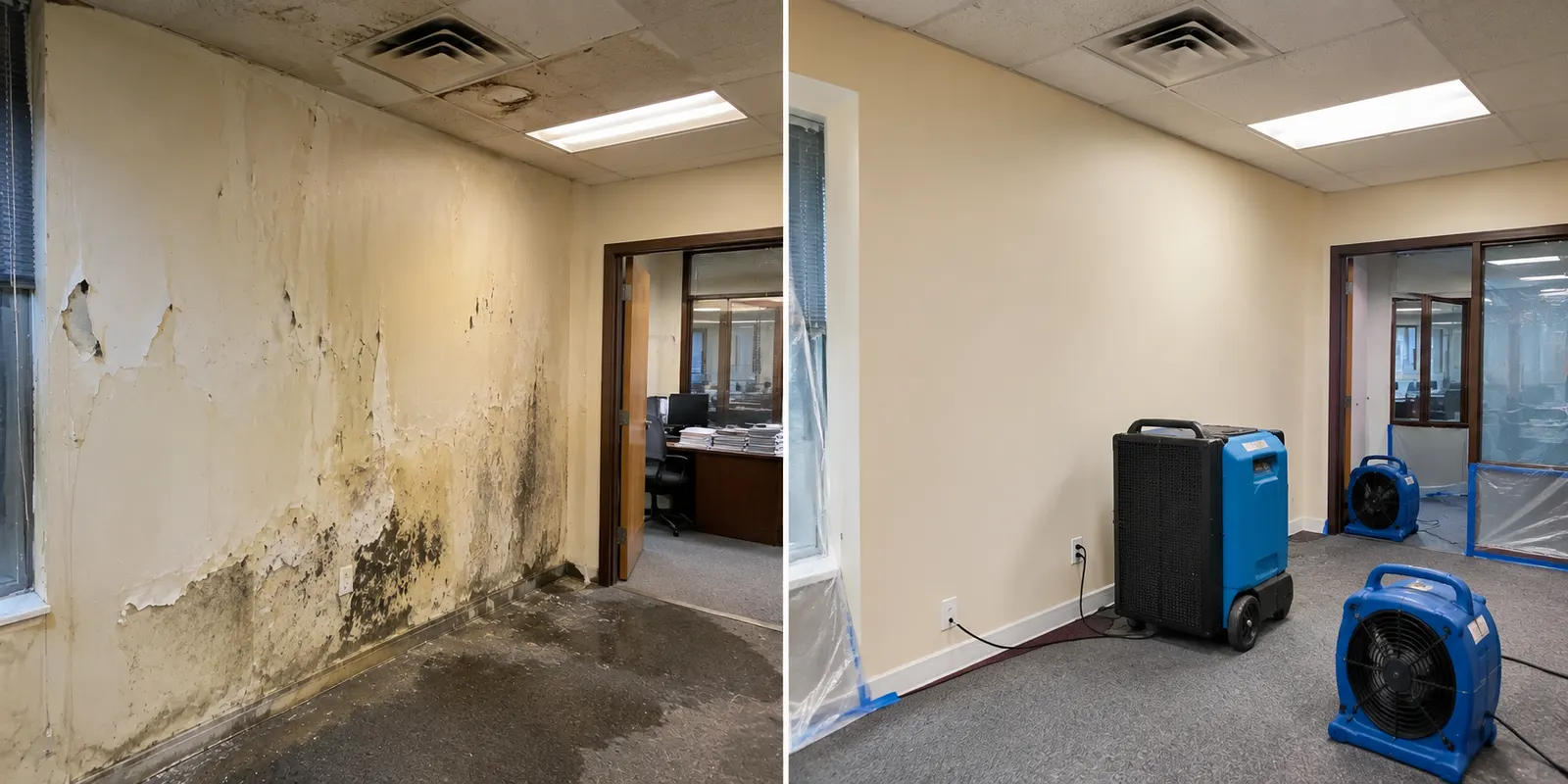
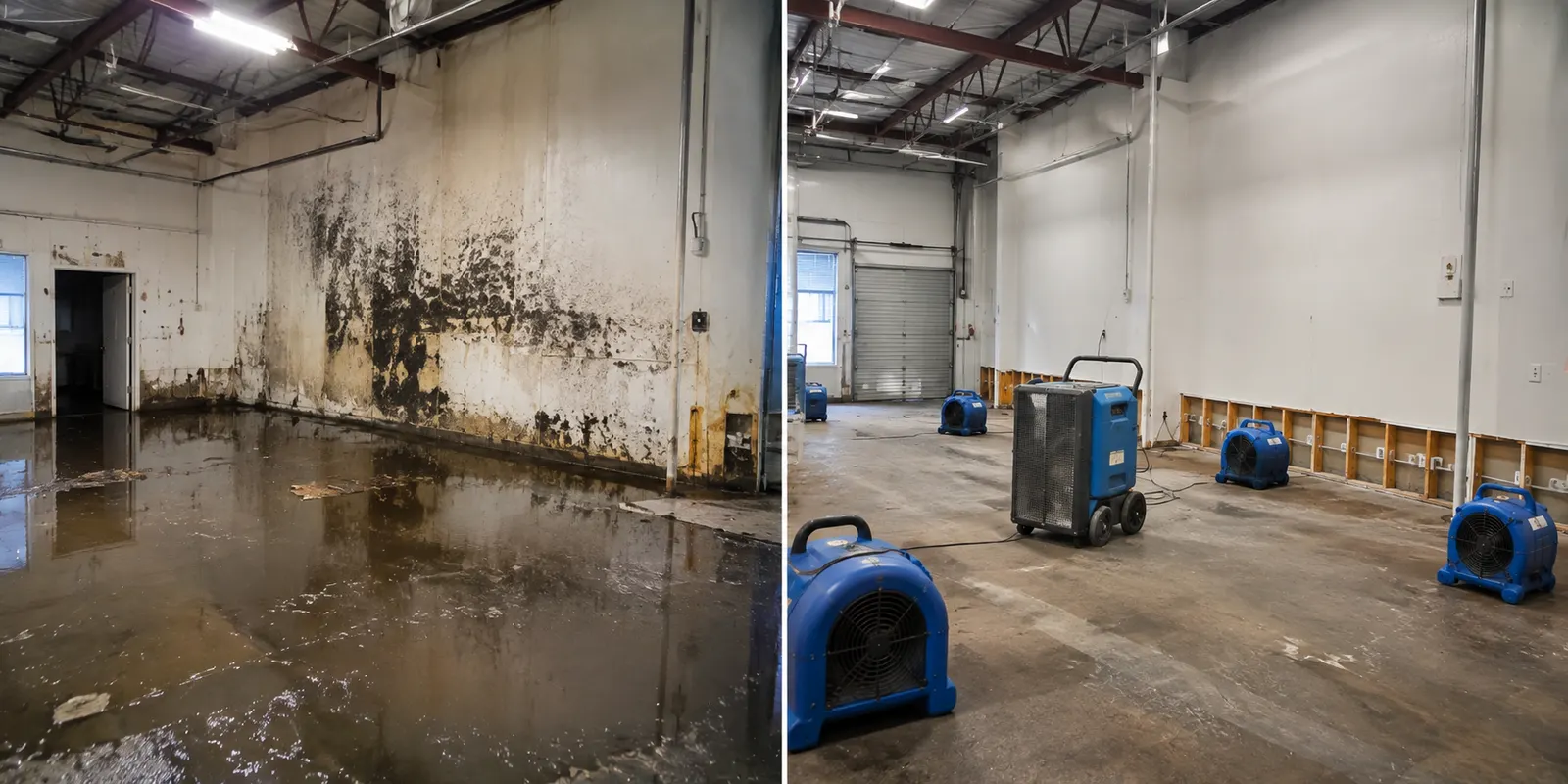
A floor that looks dry is not a dry building. Water that has soaked into drywall, framing, subfloor and concrete does not leave by itself in any useful time, and the wet material behind a finished surface is what turns into odor, warped flooring and mold. Structural drying is the part of a restoration that deals with that hidden water, and it is a controlled process with numbers attached.
Extraction is not drying
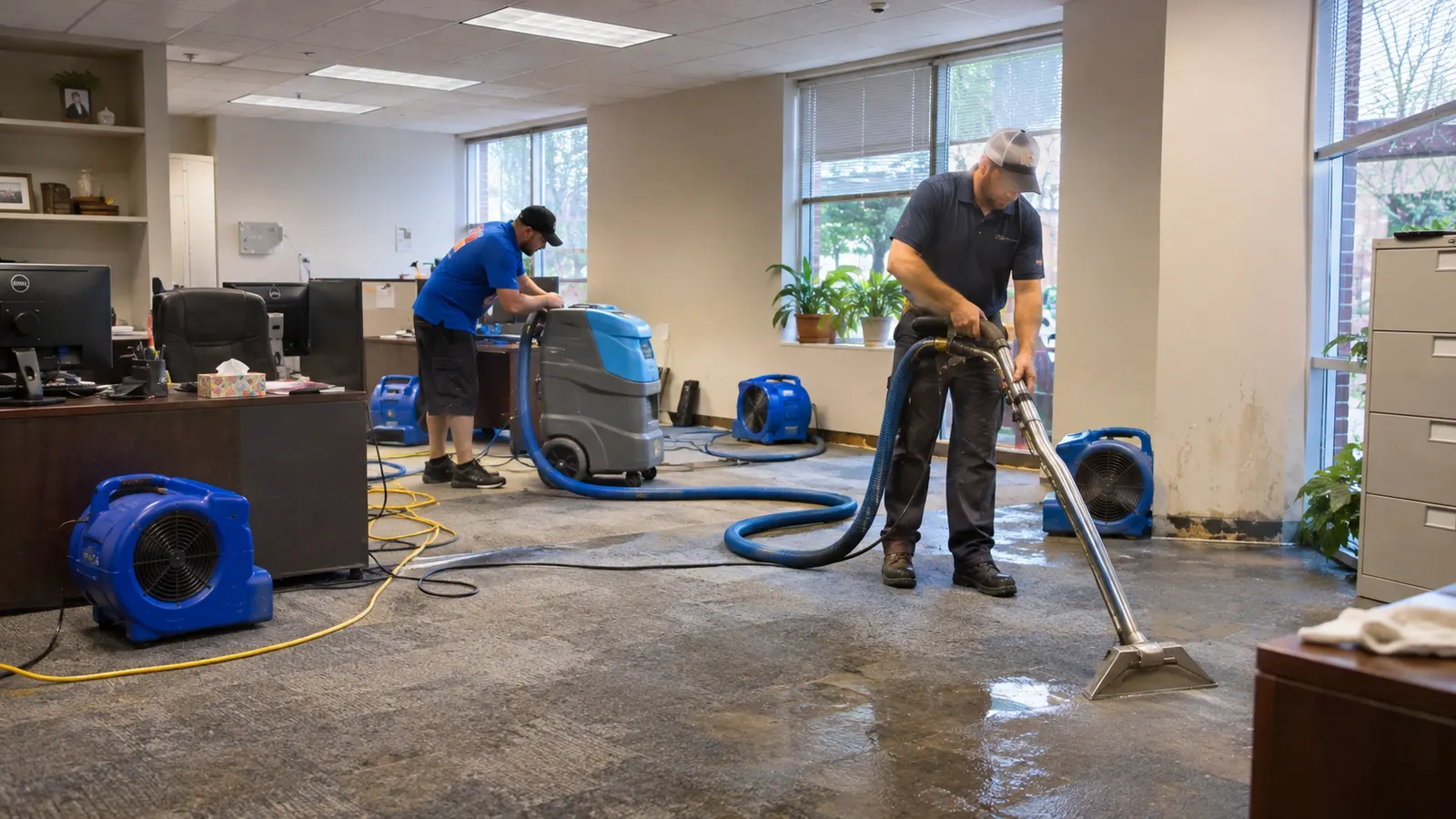
Extraction pumps and vacuums liquid water out of floors and soaked soft goods. It is fast, visible and necessary, and it is the first thing that happens. What it leaves behind is water bound inside materials. Drywall wicks water upward from a wet floor, insulation holds it in the cavity, and a concrete slab keeps it in its pores. Drying takes those out by turning the water into vapor and removing the vapor from the air.
The physics in one paragraph
Water leaves a wet surface as vapor when the air next to it can take more moisture. Air takes more moisture when it is warm, when it is dry and when it is moving. Drying equipment manipulates those three: moving air across surfaces so the layer of saturated air at the surface is swept away, and removing moisture from the room air so it can keep absorbing. If the room air stays humid, evaporation slows to a crawl no matter how many fans are running.
The equipment loop
schematicHow drying equipment moves water out of a wall
Evaporation, air movement and dehumidification work as one loop.
An air mover is a high-velocity fan that pushes air along a wall or floor. A dehumidifier pulls in humid air, condenses or adsorbs the moisture and returns drier air. Together they form the loop in the diagram: wet material gives up moisture, air carries it to the dehumidifier, the dehumidifier removes it, and drier air goes back to pick up more. A good setup keeps that loop running continuously, which is why the equipment runs around the clock.
The tools and what each can and cannot do
| Tool | What it does | What it cannot do |
|---|---|---|
| Air mover | Moves air across surfaces to speed evaporation. | Remove moisture from the room. Without a dehumidifier the air saturates. |
| Dehumidifier | Removes water vapor from the air, so evaporation keeps going. | Reach water trapped behind vapor-resistant surfaces without airflow to it. |
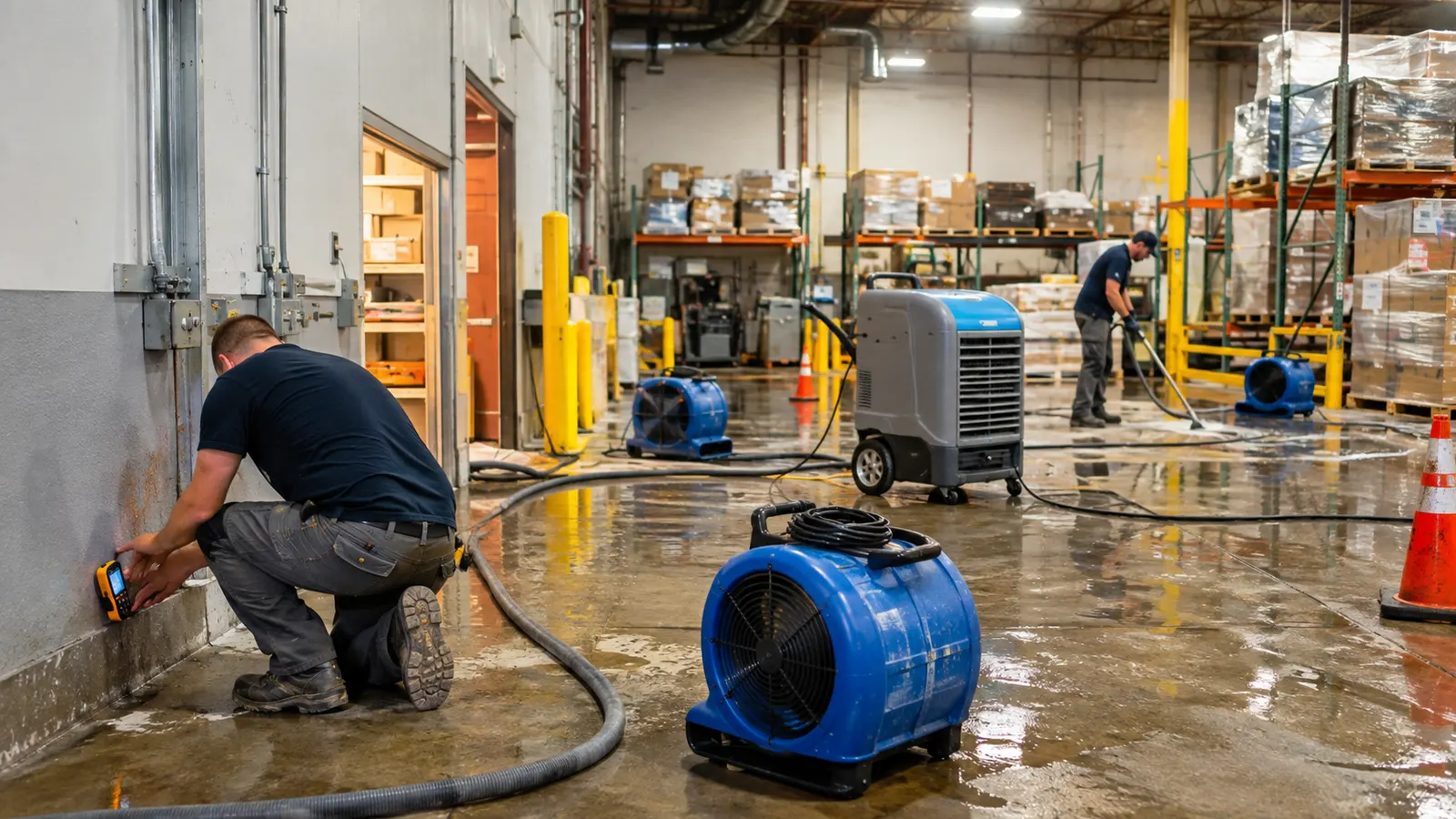
| Pin moisture meter | Measures moisture in a material by probing into it. | Show a whole wall at a glance. It reads where it is placed. |
| Pinless meter | Scans a surface without damaging it. | Reliably read very deep or very dense materials. |
| Thermal camera | Shows temperature differences that often point to wet areas behind finishes. | Measure moisture. A cool spot is a lead, and a meter confirms it. |
| Hygrometer | Measures air temperature and humidity. | Tell you about moisture inside materials. |
Two kinds of dehumidifier
Restoration uses two main designs. Refrigerant dehumidifiers, including the low-grain variety common in the trade, cool the air so water condenses on cold coils. They work well in warm conditions, which is most of the Dallas year. Desiccant dehumidifiers pass air through a drying material that adsorbs moisture, and they can work in cold conditions or where very low humidity is needed. A technician picks the type from the room, the materials and the season, which is part of why the equipment choice is not something to settle over the phone.
Why the room is closed up
Dehumidifiers work best in a closed space. Opening windows lets humid outdoor air in, which works against them, especially in a Dallas summer. Technicians separate the wet area from the rest of the building where they can, using plastic barriers or closed doors, so the equipment dries the wet zone and does not try to dry the neighborhood. They also keep ceiling fans and space heaters off, because moving contaminated or humid air around does not help and can spread dust and spores.
Readings and the dry standard
On the first visit, the technician maps the loss: moisture readings on every affected surface, noted at specific points and often marked on the wall. On each return visit they read the same points. Drying is complete when wet materials read like comparable dry materials elsewhere in the building, which is why a reference reading from an unaffected area matters. The readings are recorded in a drying log. That log is the evidence you hand to an insurer, and it is what separates a verified job from one that simply ended.
EPA says it is important to dry water-damaged areas and items within 24 to 48 hours to prevent mold growth, and CDC repeats the window for flood cleanup. A drying plan is built to meet that goal where it can, and the readings show whether it is working. See how long before mold grows.
What a drying log looks like
The drying log is the record of the job. It is the document that shows the readings fell, and it is what an insurer or a landlord will ask for. A useful one lists the same points on every visit. The rows below are an illustration of the format, not data from a real job.
| Visit | Location | Material | Reading | Dry reference | Equipment |
|---|---|---|---|---|---|
| Day 1 | Kitchen, north wall, 6 in up | Drywall | High | Reading from an unaffected wall | 2 air movers, 1 dehumidifier |
| Day 2 | Same point | Drywall | Lower | Same | Same |
| Day 3 | Same point | Drywall | At reference | Same | Equipment moved to the next area |
Ask what it will include before work starts: the points, the reference readings, the room temperature and humidity, the equipment in each room and the date and time of each visit. A job without a log cannot show it was finished.
When drying stalls
If readings stop falling, something is blocking the water from leaving. The usual causes are a vapor-resistant finish such as vinyl flooring or heavy paint over a wet substrate, a cavity with no airflow, a hidden source that is still leaking, or insulation that is holding water. The response is to open the area, move the equipment, add drying that targets the cavity, or remove the material.
Dense materials are slow by nature. A hardwood floor or a slab can take much longer than drywall, and some hardwood is dried with mats that pull moisture out of the boards. The flooring guide covers which surfaces tend to survive and which do not.
Questions to ask a contractor
- How will you map the moisture, and will I get the readings?
- What equipment goes where, and how will you change it as the readings change?
- What reading counts as dry, and what are you comparing against?
- Which materials are you removing, and why can’t they be dried?
- How often will you return, and what happens if a section is not drying?
These questions work for a house or for a commercial space. The commercial page covers drying in occupied buildings, where noise, cords and heat from equipment add constraints.
Common questions
How many days does drying take?
It varies with the materials, the amount of water and the building. Several days is common for a typical loss, and dense materials such as hardwood and concrete take longer. The readings, not a calendar, decide when to stop.
Why is the house so warm and loud during drying?
Dehumidifiers give off heat as they condense moisture, and air movers are loud. Warm air holds more moisture and speeds evaporation, which is part of why the setup works.
Can I run my own fans and a store-bought dehumidifier?
For a small, clean spill caught early, possibly. For water inside walls or under flooring, consumer equipment usually cannot move enough air or remove enough moisture, and nothing tells you when the structure is dry.
Do I need to keep the windows closed?
Usually yes during active drying, because outdoor humid air works against the dehumidifiers. The technician will tell you which rooms to keep closed.
If water is already in the building, call and describe it. Related service: Commercial water damage restoration.
Read about commercial water damage restoration →
Sources and further reading
- EPA, A Brief Guide to Mold, Moisture and Your Home, drying within 24 to 48 hours, 10 square feet, sampling, biocides, HVAC, sewage
- CDC, About Mold, 24 to 48 hour cleanup guidance, testing, who is affected
- CDC, Reentering Your Flooded Home, electrical safety, mold, generators; updated August 24, 2026
This article is general information from the Dallas Flood Guard editorial team. It is not medical, legal, engineering or insurance advice. Sources are linked above. See the editorial policy for how posts are researched and corrected.