Key points
- Close the main water valve before anything else. The damage is mostly volume, and volume stops when the valve closes.
- Stay out of water that is near outlets, cords or the breaker panel. Call the electric utility or an electrician about power.
- Photograph and film everything before you move it, and keep every receipt.
- Temporary repairs are fine. Texas regulators say to wait on permanent repairs until you have talked to your insurer.
- EPA’s guidance is to dry water-damaged areas within 24 to 48 hours, so the restoration call belongs in the first hour too.
When a pipe bursts, the order you do things in matters more than how fast you move. Close the water, make the room safe to be in, record what happened, and then start the calls that stop the damage from spreading into materials that cannot be saved. The sections below follow one hour in that order.
schematicThe first hour on one page
What to do and when, with the points that come from a published source marked in red.
- 0 to 5 minClose the main water valve. Open the lowest faucet to bleed pressure.
- 5 to 15 minPeople and pets out of wet areas. Power only if the panel and route are dry.
- 15 to 30 minPhotos, video, belongings lifted off wet floors. Standing water removed where safe.
- 30 to 45 minCall your insurer. File as soon as you can.
- 45 to 60 minCall a plumber for the pipe and a restoration company for the water.
- By 24 to 48 hoursWet areas and items dried, per EPA guidance.
Stated by a cited sourceTypical practice, not a cited figure
Stop the water in the first five minutes
The main valve is the one thing that ends the flooding. IBHS’s guidance for preventing interior water damage starts with knowing where it is, and in a burst pipe it is the first place you go. It is usually where the water line enters the house, near the water heater, or in a box at the edge of the property. If you have never closed it, this is a bad time to learn, so read the guide to finding and testing your main shutoff this week.
Close the valve fully, then open a faucet on the lowest floor. That lets the pressure out of the pipes so the break stops pushing water. Two things catch people. First, a tank water heater holds a lot of water by itself, and IBHS notes that tanks holding 40 to 100 gallons can release large amounts if they fail, so a closed main does not make a leaking heater harmless. Second, if the break is in an exterior wall or the attic, water can keep draining out of the cavity after the supply is off. Do not assume it is over because the sound has stopped.
If you cannot reach the valve without wading through water near electrical equipment, do not try. Call your water utility’s emergency line and tell them water is running inside a building.
Handle power and people in minutes 5 to 15
Water and electricity decide who goes where. Get everyone, including pets, out of rooms with standing water. CDC’s flood re-entry guidance says never to turn power on or off yourself if you would have to enter standing water to reach the switch, and to call an electrician instead. That guidance is written for floods, but the physics is the same for a burst pipe in the kitchen. Outlets, power strips, appliance cords and the panel itself are the hazards.
- If the panel is dry and the path to it is dry, switch off the breakers for the wet rooms.
- If you smell gas, leave and call 911 and the gas utility from outside.
- Do not use a household vacuum on standing water. It is an electrical hazard and it ruins the vacuum.
- Do not stand under a ceiling that is bulging or dripping steadily. Wet drywall and insulation are heavy and drop without warning.
Contain and document in minutes 15 to 30
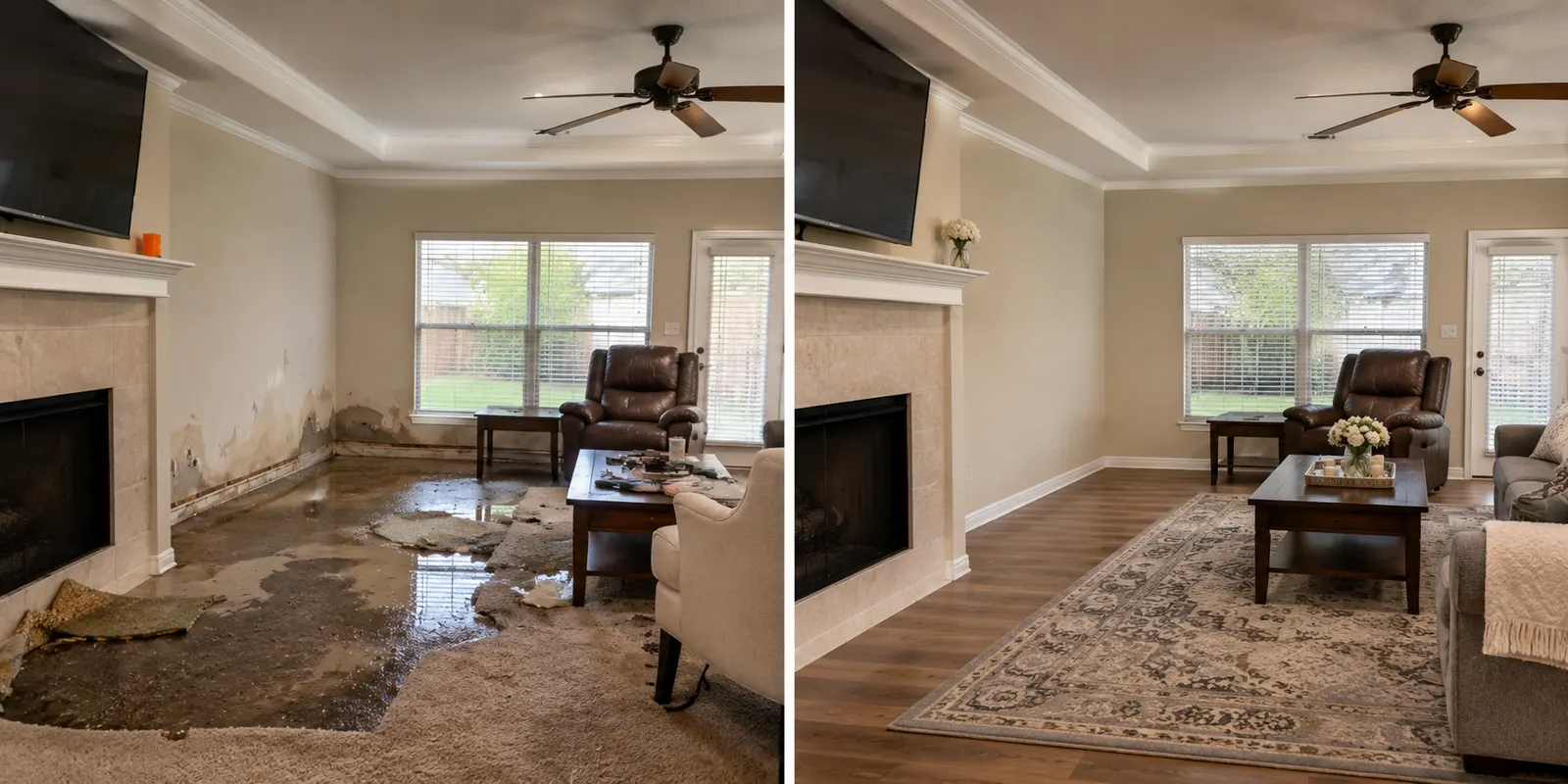
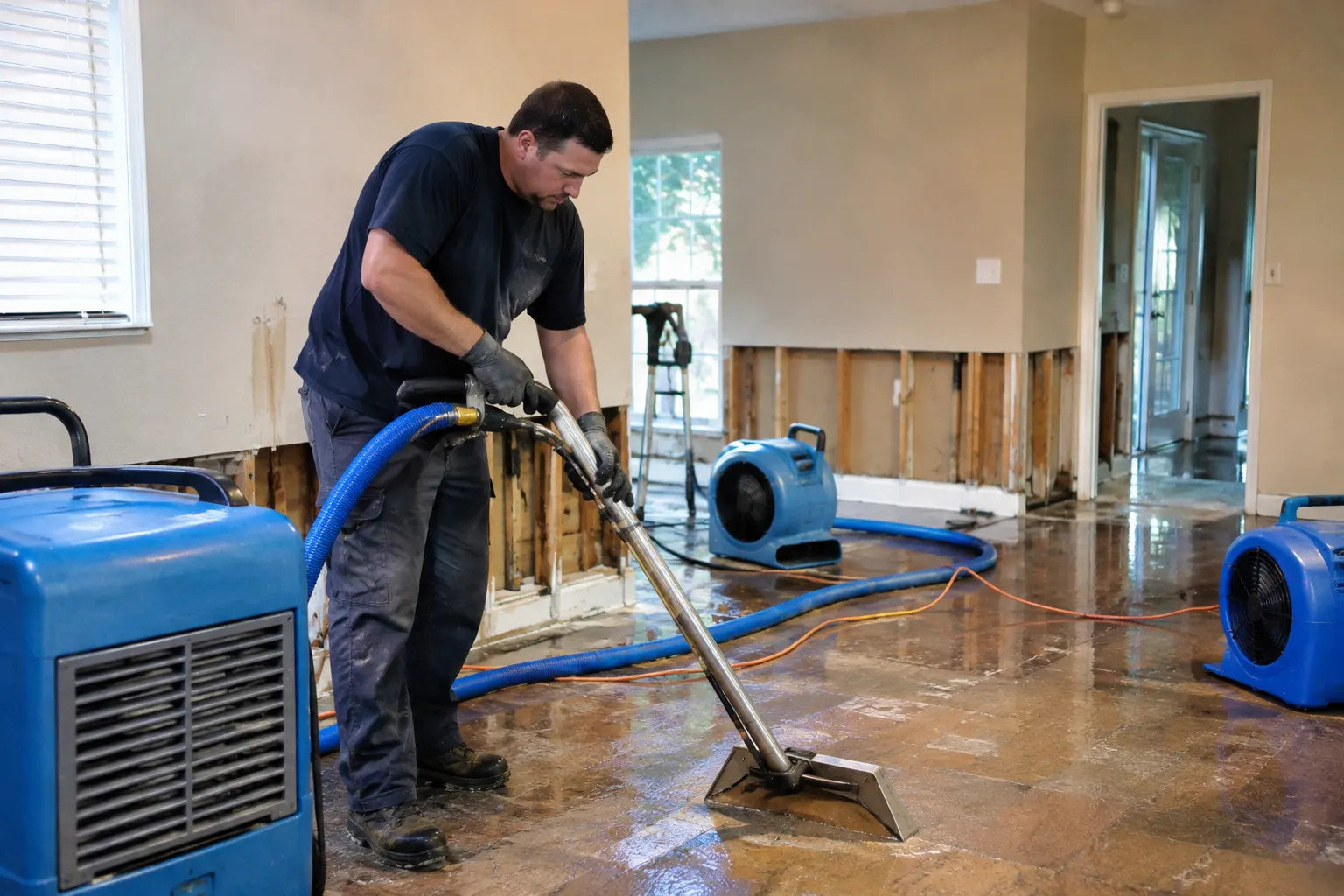
Once the room is safe, protect what you can and record what happened. Lift furniture legs off wet carpet, move rugs and boxes off the floor, and take electronics out of the room. Remove standing water where it is safe to do so with towels, a mop or a wet vacuum rated for water. The Texas Department of Insurance’s storm recovery guidance lists removing standing water as an early step.
Then photograph and film. TDI’s claim guidance says to take photos and videos of all damage and keep receipts for all expenses. A good set includes a wide shot of each room, a close shot of each damaged surface, the failed pipe or fitting if you can see it, the closed valve, and a short video walking through every affected room while you narrate what you see. Write down the time you found the water and the time you closed the main.
Make the calls in minutes 30 to 60, in order
| Call | Why now | What to say |
|---|---|---|
| Your insurer | TDI says to file a claim as soon as you can. The insurer then has 15 business days to acknowledge it. | What broke, when you found it, that the main is closed, and that you are taking temporary steps to protect the property. |
| A plumber | The pipe has to be repaired before drying can be trusted. | Where the break is, whether the main is closed, and that you need a repair and an inspection of other exposed lines. |
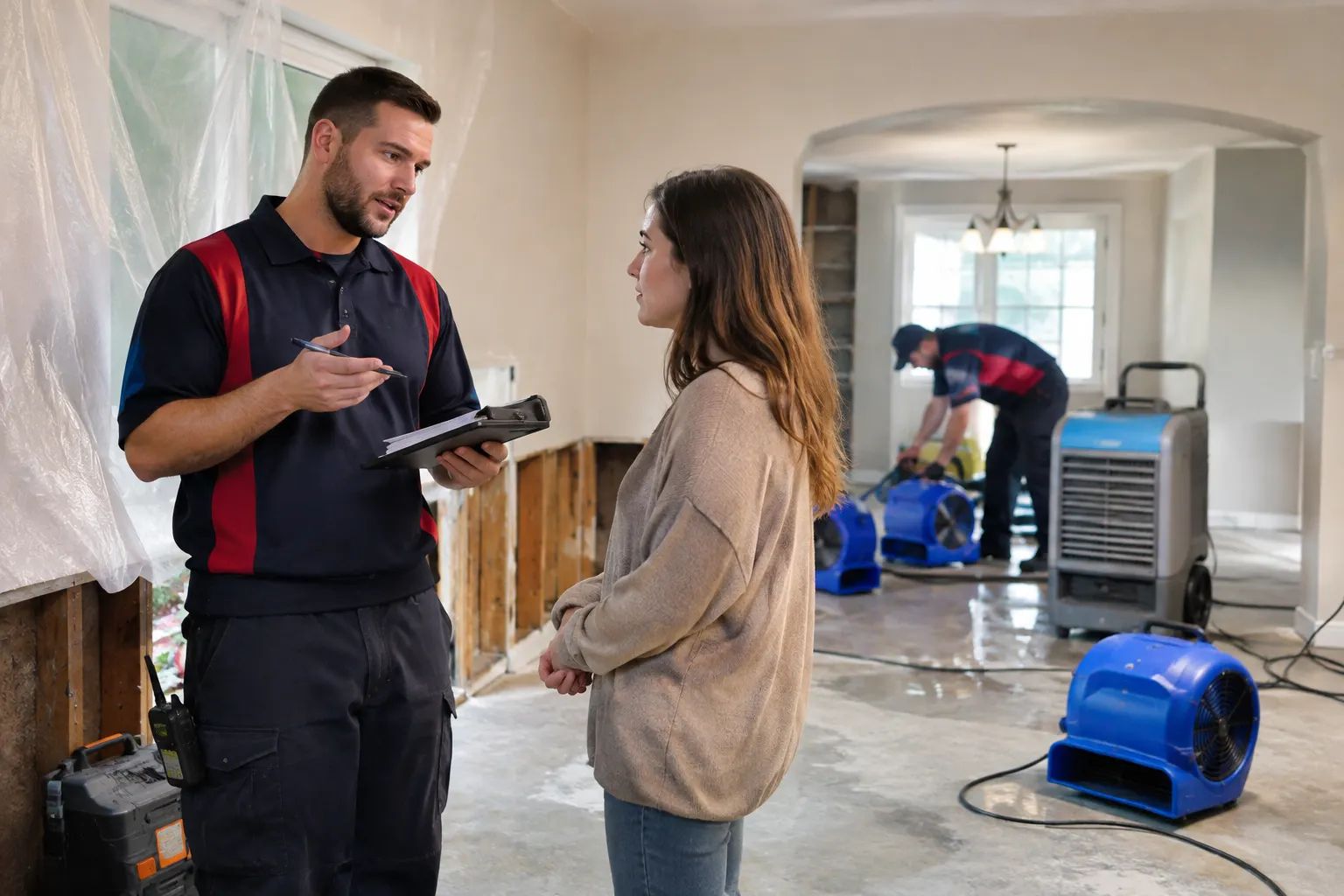
| A restoration company | Materials that stay wet longer are the ones that need to be removed. | Which rooms and levels are wet, what the floors are, whether the water is still running, how long it has been going. |
| Landlord, HOA or manager | In a rental, condo or multi-unit building they decide who may shut off risers and enter shared spaces. | Your unit number, what is wet below and next to you, and that you have photographs. |
If water is coming through a ceiling
A ceiling that is bulging holds a pocket of water. Staying out from under it is the priority. A small controlled hole at the lowest point of the bulge can let it drain safely, but only when you can do it without standing under it and without wiring in the way. If you are not sure, put a bucket where it will land, keep people out of the room and wait for a technician. The winter ceiling and attic page covers how ceilings are judged afterward.
Rentals, condos and after hours
The steps shift when you do not own the whole building, or when it is the middle of the night.
- Renters. Close the unit’s shutoff if you can reach it, then call the landlord’s or manager’s emergency number, not the daytime office line. TDI says most homeowners and renters policies cover sudden and accidental water damage, which for a tenant usually means your belongings. The building is the landlord’s.
- Condo owners. The association may own the risers and the walls. Call the manager or the board’s emergency contact first, then your insurer, and ask which parts of the unit the association insures and which are yours.
- After hours. Most managers and associations keep an emergency line. If nobody answers, close what you can, document, leave a written message with the time and call again. Keep a log of every attempt, because it shows you acted.
- Neighbors below. Knock and tell them. Water you cannot see is probably already in their ceiling.
Whoever you reach, say the same four things: where the water is, what it came from, whether it is still running and whether anyone is in danger.
What makes it worse
- Waiting for the adjuster before starting to dry. Temporary protective steps are normal. TDI’s recovery tips say to remove standing water and also not to throw things away until the adjuster says so. Both are true: photograph, keep a representative piece, tell the adjuster what you are removing and why.
- Permanent repairs too early. TDI’s guidance is to make only temporary repairs and not permanent ones until you have talked to your insurer.
- Painting or laying flooring over wet materials. It hides the problem and traps the moisture.
- Leaving the heat and fans to do the work. A space heater or ceiling fan in a room with standing water does not dry the wall cavity behind it.
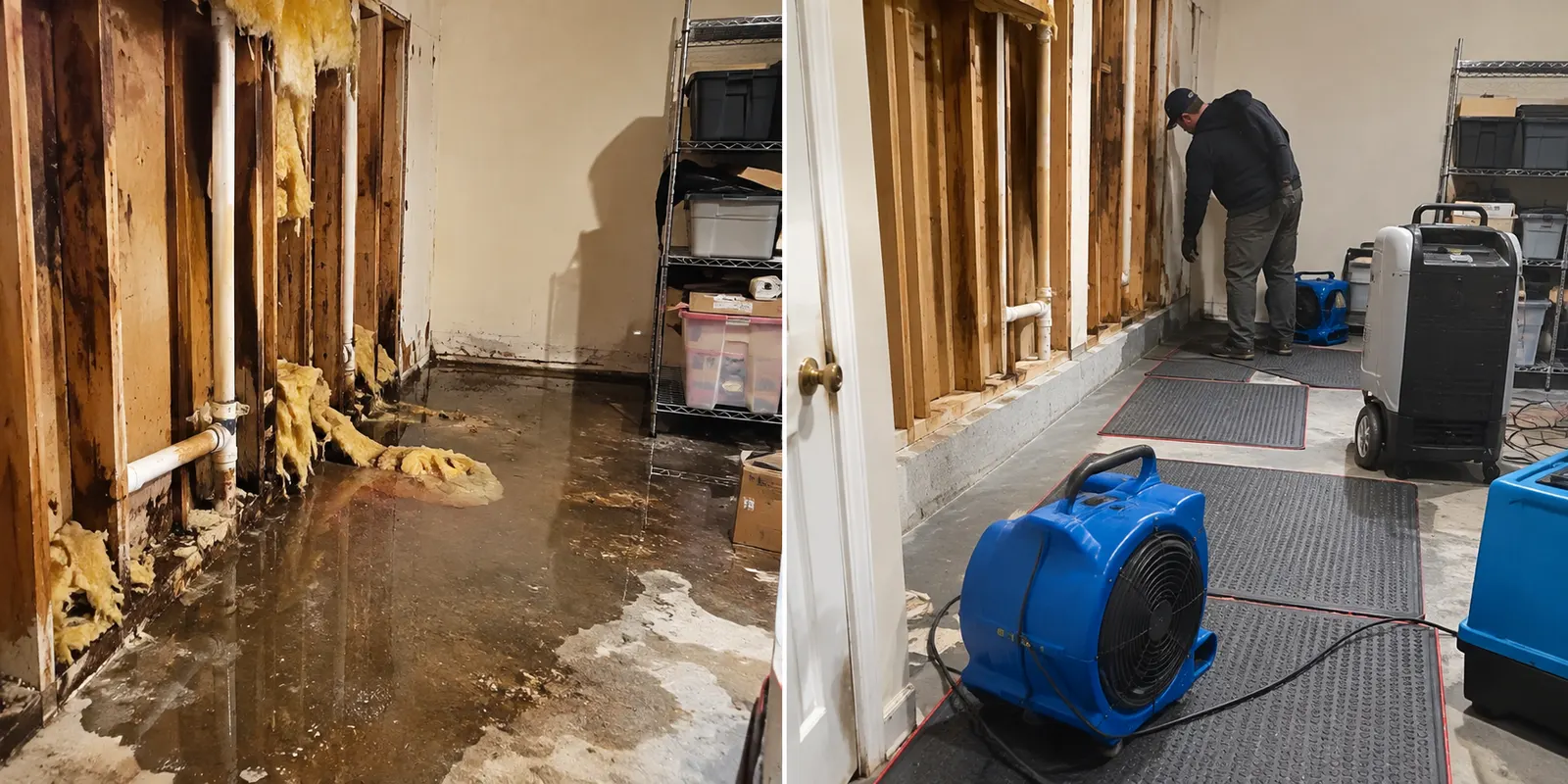
- Assuming a small leak is a small loss. Water inside a wall or attic can be far larger than the stain.
The 24 to 48 hour clock
EPA’s mold guidance says it is important to dry water-damaged areas and items within 24 to 48 hours to prevent mold growth, and that if damp materials are dried in that window mold will not grow in most cases. CDC’s mold guidance gives the same window for cleaning up and drying out after a flood. That is the reason to call a restoration company in the first hour and not the next afternoon: extraction and equipment need to be running before the window closes, and the decisions about what to remove depend on how long things have been wet.
None of this replaces a plumber or an insurer. It sets the order: stop the water, make it safe, record it, call, dry. The first hour is mostly about not losing the next two days.
Common questions
Should I turn off the electricity when a pipe bursts?
Only if the breaker panel is dry and you can reach it without standing in or crossing water. If you cannot, leave the power alone and call your electric utility or an electrician. CDC’s flood guidance is blunt that you should not turn power on or off yourself if you would have to enter standing water.
What if I cannot find the main valve?
Check where the water line enters the house, near the water heater, and the meter box at the edge of the property. If you still cannot close the water, call your water utility’s emergency line and tell them water is running inside a building.
Do I wait for my insurance adjuster before cleaning up?
No. Texas Department of Insurance guidance says temporary repairs to protect the property are generally fine, and that you should photograph the damage and keep receipts. It also says not to make permanent repairs until you have talked to your insurer.
Is a burst pipe an emergency even if the leak seems small?
Treat it as one until the main is closed. A small visible leak inside a wall or attic can be much larger than it looks, and materials that stay wet for more than a day or two are the ones that need to be removed.
If water is already in the building, call and describe it. Related service: Frozen and burst pipe cleanup.
Read about frozen and burst pipe cleanup →
Sources and further reading
- IBHS, How to prevent interior water damage from plumbing and appliances, know and use the main shutoff
- CDC, Reentering Your Flooded Home, electrical safety, mold, generators; updated August 24, 2026
- TDI, Getting your insurance claim paid, claim steps and deadlines; updated April 16, 2025
- TDI, Storm recovery tips, updated September 29, 2026
- TDI, Home damaged by a storm: FAQ, frozen pipes, sudden vs gradual water damage; updated September 15, 2025
- EPA, A Brief Guide to Mold, Moisture and Your Home, drying within 24 to 48 hours, 10 square feet, sampling, biocides, HVAC, sewage
This article is general information from the Dallas Flood Guard editorial team. It is not medical, legal, engineering or insurance advice. Sources are linked above. See the editorial policy for how posts are researched and corrected.