Key points
- Ice can plug a split pipe. The leak starts when the plug melts, which may be hours after the temperature rises.
- February 2021 at DFW Airport had 139 consecutive hours at or below freezing in one stretch, so many pipes were frozen for days before they thawed.
- Check for leaks at the first thaw and again a day later, in the places you cannot see: attics, wall cavities and under floors.
- EPA’s two-hour meter test is the quickest way to tell whether water is moving somewhere.
- When restoring water after a freeze, open a faucet, turn the supply on slowly, and watch.
People are often surprised when the flooding starts on the warm afternoon after a freeze, not during it. That is the normal sequence. A pipe splits while it is frozen, the ice holds the split shut, and the water starts flowing when the ice melts. In an occupied house someone notices fast. In an attic, a rental, or a house whose owners are away, the water can run for a long time before anyone does.
How a freeze breaks a pipe
Water expands as it turns to ice. Inside a pipe, the expanding ice has nowhere to go, so it pushes against the pipe wall, and the pressure builds in the water trapped between the ice and a closed faucet or valve. The split often forms in that pressurized section, not at the spot where the ice sits. Rigid pipes such as copper and CPVC are the most likely to split along their length. Flexible plastic pipe tolerates more, but fittings and connections can still fail.
Why the ice hides the leak
A pipe that has split but is still full of ice does not leak, because the ice is acting as a plug. Once the temperature rises and the ice begins to melt, water flows through the opening. The first flow may be a trickle, and it grows as more ice goes. If the supply is still on, the pipe is now connected to full house pressure.
That is why the order of events can look backward: a freeze overnight, a normal-looking morning, and a soaked ceiling by lunch. It is also why Triple-I’s winter guidance says that if pipes freeze, speed is critical. Acting while the pipe is still frozen, by closing the main or warming it safely, is better than waiting to see what the thaw reveals.
What a long freeze looks like
The NWS Fort Worth summary of the February 2021 event gives a clear picture of how long Dallas-area plumbing can stay cold. At DFW Airport there were 93 consecutive hours at or below freezing, then a short rise to 33°F, then 139 consecutive hours, with a low of −2°F on February 16. Pipes that froze early stayed frozen for days, and then thawed at roughly the same time as thousands of others.
measuredA long freeze and the thaw that follows
DFW Airport, February 2021. Dates and hours are from NWS Fort Worth.
- Feb 9, 5 pmTemperatures drop to freezing and stay there.
- Feb 13, 2 pm93 hours at or below freezing end with a brief rise to 33°F.
- Feb 13, 5 pmFreezing resumes for a second stretch.
- Feb 16Low of −2°F at DFW Airport.
- Feb 19, noon139 consecutive hours at or below freezing end. The thaw begins.
- The hours afterIce plugs melt. Splits start to leak, often unseen.
Stated by a cited sourceTypical practice, not a cited figure
That event proves nothing about a particular house, and the airport is one point. It does show that a freeze in this area can last long enough for pipes in unheated spaces to freeze solid, and that the trouble shows up at the thaw.
How to find the leak
- Look and listen first. Walk each room. Listen for running water in walls and ceilings. Look at ceilings, wall bases, cabinet floors and the area around the water heater.
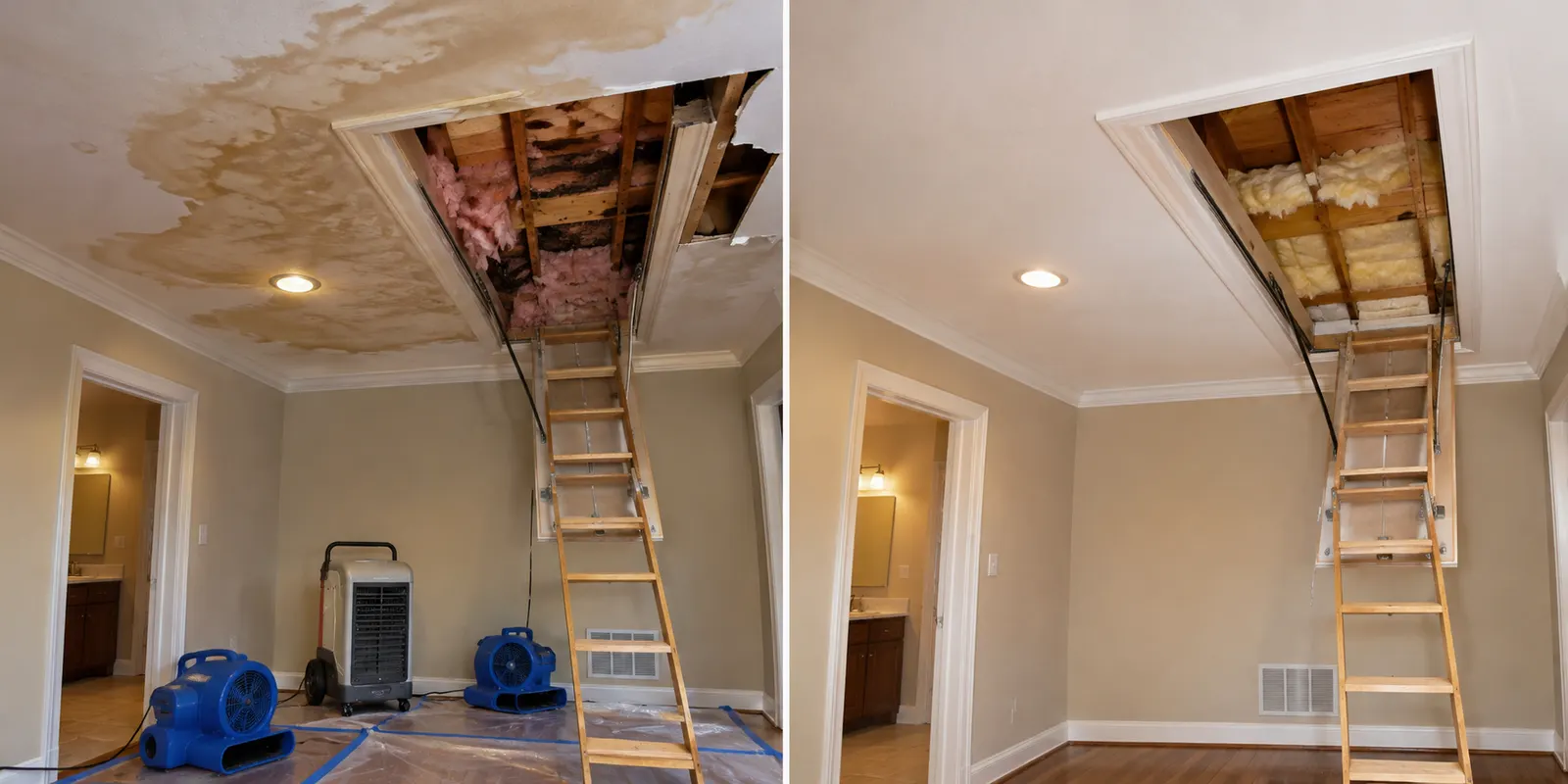
- Check the attic if you can do it safely. Stepping only on framing, look for wet insulation, dripping pipes and dark patches on the underside of the roof deck.
- Run the meter test. Turn off every fixture and appliance that uses water. EPA’s WaterSense guidance says to check your meter before and after a two-hour period when no water is being used, and that if the meter changes at all, you probably have a leak.
- Close the main and check again. If the meter stops moving when the main is closed, the leak is on the house side. If it keeps moving, the problem is the meter or the line before it.
- Check the other lines. A pipe that split has neighbors that had the same exposure.
Turning the water back on
If you closed the main during the freeze, restore the supply deliberately. Open a faucet on the lowest floor. Turn the main on slowly. Walk the house for the first minutes and watch the places that were cold. A split that was sealed by ice can open the moment pressure returns, and the first few minutes are when you want to be standing next to the valve. If any water appears, close the main again and call a plumber.
Water heaters, hose bibs and appliances after a freeze
The supply pipes in walls get the attention. These are the other places that fail after a long cold stretch.
- Water heater closet. Look at the cold inlet, the hot outlet and the relief valve discharge pipe for drips, rust streaks or ice. Water on the pan or the floor is a sign.
- Outdoor faucets. IBHS says homes built before 2010 typically do not have frost-proof faucets. A faucet that froze can split inside the wall, and the leak shows up as a wet wall in a garage or utility room, not at the faucet.
- Washing machine and ice maker lines. Short rubber or plastic lines in cold rooms stiffen and crack. Look behind the machine and the refrigerator.
- Under sinks on exterior walls. Cabinet floors that are wet or swollen are a quick check.
- Attic equipment. Look at any air handler, drain line and pipe that runs near it.
Run the two-hour meter test described above if anything looks suspicious and you cannot find the source. It finds what a walk-through misses.
Signs that show up later
- A brown ring or bubble on a ceiling that was clean the day before.
- Paint that blisters on a wall below an attic run, or a wall that feels cool and damp.
- A musty smell with no visible source, which can point to wet insulation or a wet cavity.
- A water bill much higher than usual. EPA says that a family of four exceeding 12,000 gallons a month could have serious leaks.
The first day after the thaw
A simple schedule beats a vague intention to keep an eye on it.
- First hour: walk the house, look at ceilings and wall bases, listen, check the water heater area and the garage.
- First afternoon: check the attic if it is safe, and run the meter test if you have any doubt.
- That evening: look again. Leaks that began as ice melted in the afternoon often show a stain by night.
- Next morning: look once more before you leave the house for the day.
Vacant units and attics are where this goes wrong, because nobody is looking. Make sure someone is. The vacant house checklist has a card for whoever checks.
What to do when you find it
Close the main, stay out of water near electrical equipment, photograph the damage and call your insurer. The Texas Department of Insurance says many policies will pay for damage from a frozen pipe that burst, with some limitations. The full sequence is in the first hour guide, and the work that follows is on the burst pipe cleanup page. To lower the odds before the next freeze, see how to protect pipes before a Dallas freeze.
Common questions
Why did the pipe break if it was only below freezing overnight?
Pipes in an attic, an exterior wall or a garage can freeze in a few hours when the air around them stays below freezing. What matters is how long the pipe surface stays cold and how much it is exposed, not just the overnight low.
How soon after the thaw should I check?
Right away, and again a day later. Leaks can start as the ice melts in the afternoon, and slow leaks may not show a stain for hours.
Can a pipe leak without any visible stain?
Yes. Water in a wall cavity or above a ceiling can run for a while before a stain appears. That is why a meter check is worth doing.
If I never saw ice, can the pipe still have frozen?
Yes. Most freezing happens inside walls, attics and crawlspaces where you cannot see the pipe.
If water is already in the building, call and describe it. Related service: Frozen and burst pipe cleanup.
Read about frozen and burst pipe cleanup →
Sources and further reading
- NWS Fort Worth, February 2021: Historic Winter Storm and Arctic Outbreak, DFW low of −2°F and hours below freezing
- NWS Fort Worth, DFW Normals, Means, and Extremes (1991–2020), monthly precipitation, freeze days, snowfall, record lows
- EPA WaterSense, Fix a Leak Week, leak figures, dye test, meter test; updated March 13, 2026
- IBHS, How to prevent interior water damage from plumbing and appliances, know and use the main shutoff
- Triple-I, Protect your home from winter weather, pipe insulation, heating cable, shutoff
This article is general information from the Dallas Flood Guard editorial team. It is not medical, legal, engineering or insurance advice. Sources are linked above. See the editorial policy for how posts are researched and corrected.