Key points
- CDC says it does not recommend mold testing.
- EPA says that in most cases, if visible mold growth is present, sampling is unnecessary, and that there are no federal limits for mold or spores.
- EPA says surface sampling may be useful to judge whether an area has been adequately cleaned or remediated.
- In Texas, clearance after remediation is a licensed assessor’s post-remediation assessment, not a do-it-yourself test kit.
- A test cannot tell you how much to remove. The moisture source and the visible and hidden damage do that.
Mold testing is one of the most sold and least needed services in the field. The two federal agencies that publish homeowner guidance take a skeptical line, and the reasons are practical: visible growth does not need a lab to confirm it, a spore count has no government limit to compare against, and neither tells you what to do next. There are narrower cases where sampling helps. They are worth knowing.
What the agencies say
- CDC’s mold page says it does not recommend mold testing.
- EPA’s brief guide says that in most cases, if visible mold growth is present, sampling is unnecessary.
- EPA also says no EPA or other federal limits have been set for mold or mold spores, so sampling cannot be used to check a building’s compliance with federal mold standards.
- EPA says surface sampling may be useful to determine whether an area has been adequately cleaned or remediated.
- EPA says sampling should be done by professionals who have specific experience.
Taken together, the guidance is not “never test.” It is that testing answers narrower questions than most people expect, and that you should not pay for a test to find out something you can already see.
What testing can and cannot answer
A sample can tell you what is in a particular place at a particular time: which types of mold grew from a swab or tape, or how an indoor air sample compares to outdoor air that day. It cannot tell you how sensitive any particular person is, whether the house is “safe,” or how much material has to come out. Those answers come from the moisture readings and the physical condition of the building.
Air samples are also noisy. Spore counts swing with the weather, the time of day, whether a door just opened and how the sample was taken. Without an experienced assessor to interpret the result, a number on a page is easy to misread in either direction.
Common questions, and whether a test helps
schematicDoes testing help with this question?
A summary of the EPA and CDC statements above, applied to common situations.
| Situation | Would a test help? | What does help |
|---|---|---|
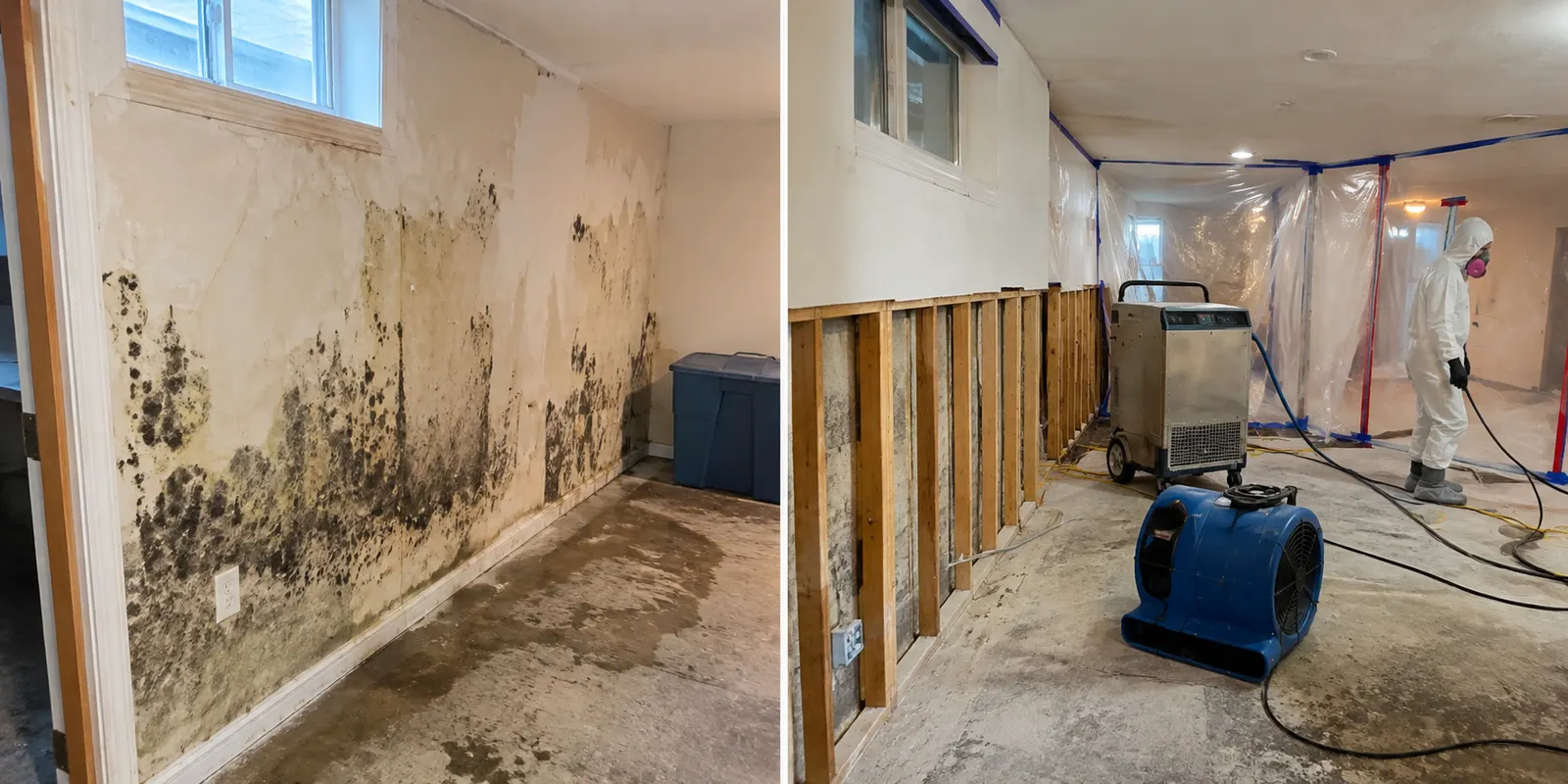
| I can see mold on the wall | Usually not | Find and stop the moisture; remove affected materials |
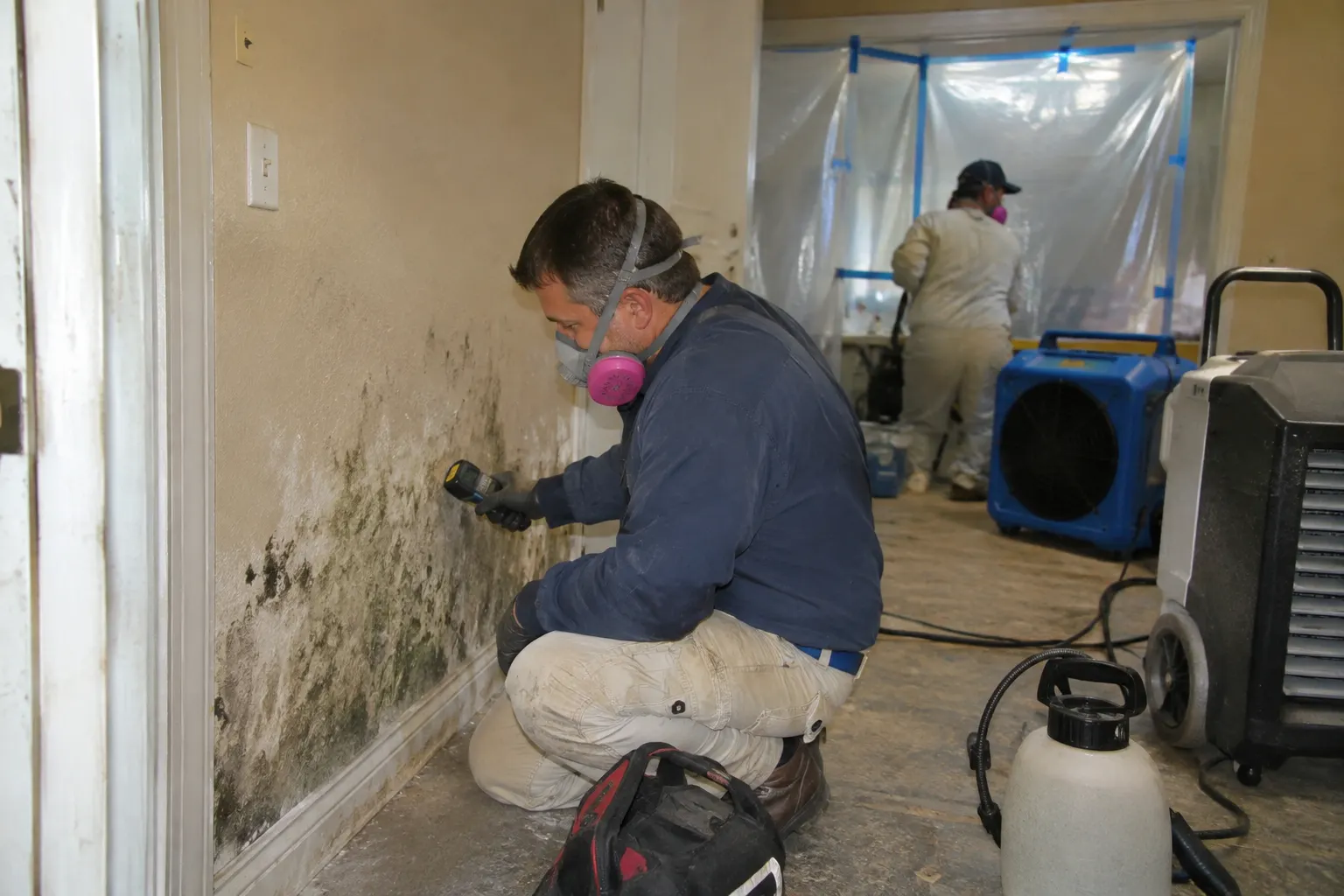
| I smell mold but cannot see it | Rarely first | Moisture meter, thermal imaging, opening a suspect cavity |
| Is the house above a legal mold limit? | No such limit exists | Nothing; EPA says no federal limits have been set |
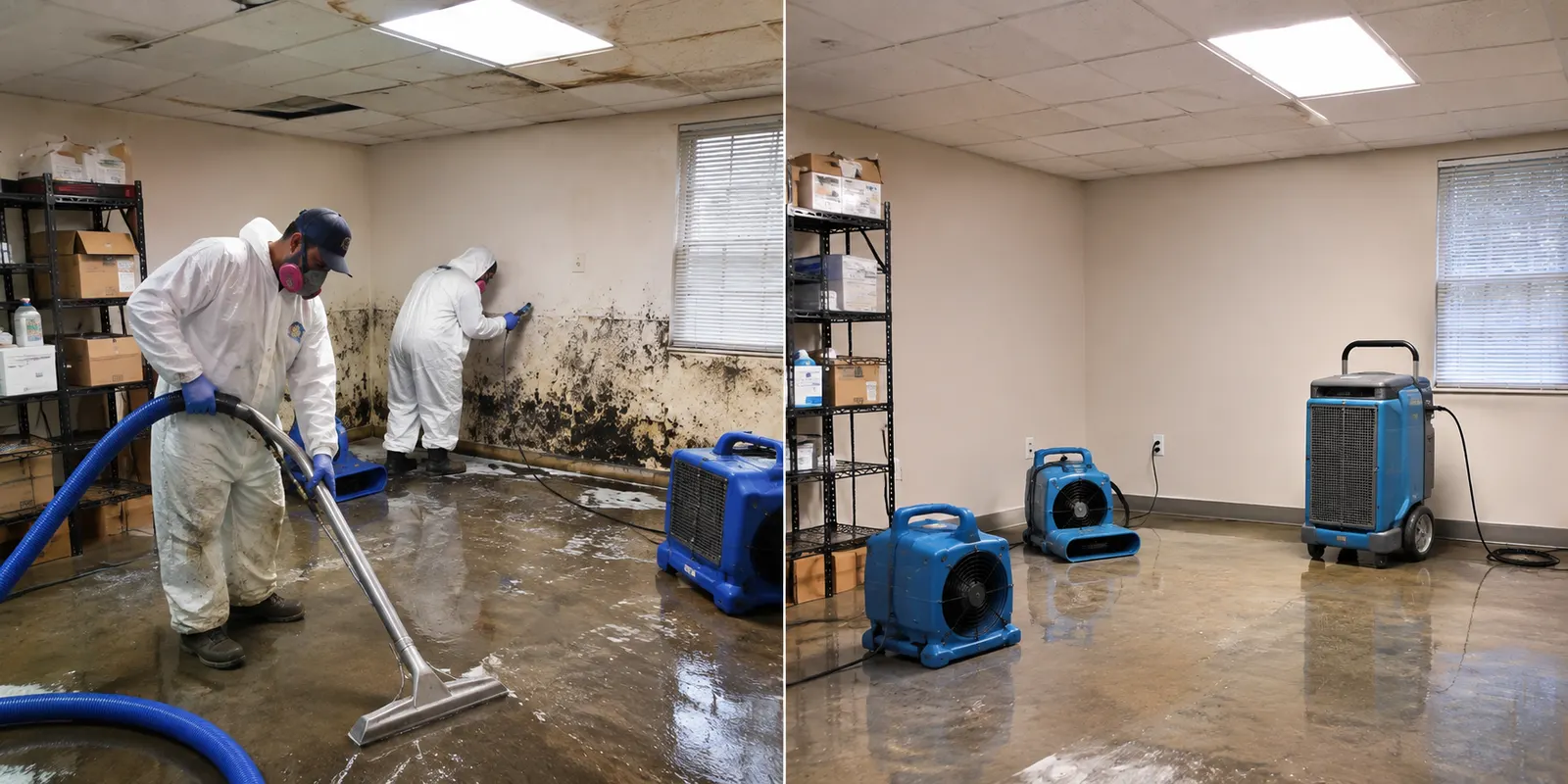
| Was the cleanup adequate? | Can help | A post-remediation assessment by a qualified assessor |
| Which species is it? | Lab can say | Does not change how it is removed |
| Will I get sick from it? | No | A physician, especially with asthma or weakened immunity |
About home test kits
Over-the-counter kits typically ask you to expose a dish to the air or press a tape to a surface and mail it for analysis. They are inexpensive, and they share the limits above: they can show that mold spores exist, which they always do in outdoor and indoor air, but they cannot tell you the cause or the amount to remove. A positive result tells you very little, and a negative one can give false comfort if the sample missed the damp cavity. If you are worried enough to buy a kit, you are usually better off spending the effort on a moisture check.
Testing and the Texas process
In Texas, the role of testing is built into how licensed projects finish. TDLR’s FAQ says a licensed remediator works from a protocol developed by a licensed mold assessment consultant, and that to determine clearance the consultant must conduct a post-remediation assessment. That assessment, often with sampling where the assessor judges it useful, is the point at which sampling tends to be most helpful, consistent with EPA’s note on judging whether an area was adequately cleaned. See how to hire a mold remediator in Texas for the sequence and the rule that the assessor and the remediator must be different.
What a post-remediation assessment usually checks
TDLR’s FAQ says that to determine clearance, a licensed consultant must conduct a post-remediation assessment. The rules decide the formal requirements, and this site did not retrieve them. In practice an assessment of this kind generally covers the same ground in a sequence.
- Visual inspection of the work area against the protocol, looking for remaining growth, staining and debris.
- Moisture readings to confirm the materials are dry and that the source is fixed.
- Check of containment removal and cleanliness, including surfaces and the area around the work.
- Sampling, where the assessor judges it useful. EPA says surface sampling may be useful to determine whether an area was adequately cleaned.
- A written report for the owner stating whether the project met the protocol’s criteria.
This is the stage at which sampling answers a real question, and the person doing it is independent of the remediator in Texas. If a remediator offers its own clearance, ask who the licensed assessor is.
What works better than a test
- Find the moisture. A moisture meter and a thermal camera locate wet materials. The question “where is the water?” has an answer a test cannot give.
- Open the suspect space. A small inspection hole in drywall or a lifted corner of carpet can show growth, staining or wet insulation directly.
- Check the HVAC drain. EPA recommends keeping air conditioner drip pans clean and drain lines unobstructed, and says not to run an HVAC system that you know or suspect is contaminated with mold.
- Dry and fix. A material that is dry and stays dry does not grow mold. See the mold timeline.
If you do decide to sample
EPA says sampling should be done by professionals with specific experience. If a licensed assessor recommends it, ask these questions first so the result drives a decision rather than just producing a number.
- What question is the sample meant to answer? “Is the cleanup adequate?” is a clear one. “Is my house okay?” is not.
- What method is being used, where will samples be taken and how many?
- What will it be compared to? An indoor result has little meaning without a reference such as an outdoor sample taken at the same time.
- Who interprets it, and will you get the full laboratory report and not only a summary?
- What happens if the result is high, and what happens if it is low? If neither result changes what you do, the test is not worth buying.
When a licensed assessor is worth it
- The project is large enough to fall under licensing, or contaminated water or ductwork is involved.
- You want an independent plan that is not written by the company doing the removal.
- You need documentation that remediation was done, for a landlord, a lender or an insurance matter.
- Someone in the building has asthma, allergies or weakened immunity, and you want a professional judgment on scope and clearance.
- You have a persistent odor or health complaint and have already checked for moisture.
If you are still working out whether you have a mold problem at all, read musty smell with no visible mold, and use the mold assessment tool to organize what you have observed. The mold removal page explains the process once the answer is yes.
Common questions
I smell mold but see none. Should I test?
Look for moisture first. A musty smell usually points to a damp place you have not found. A moisture meter and a careful check of hidden spaces answer the question a test cannot: where is the water. See the musty smell post.
Can an air sample tell me if the house is safe?
EPA says no federal limits exist for mold or mold spores, so a sample cannot be compared to a government standard. Results are hard to interpret without a comparison to outdoor air and an experienced assessor.
Does testing identify the type of mold?
A laboratory can identify what grew from a sample. That does not change the cleanup, which is the same whatever the species: stop the moisture and remove affected materials. This site does not identify species.
Should a seller or buyer test for mold?
That is a question for a licensed Texas mold assessor and the parties’ advisers, not for this site. The agencies cited here address homeowners cleaning up after leaks, not real estate transactions.
If water is already in the building, call and describe it. Related service: Mold removal.
Sources and further reading
- CDC, About Mold, 24 to 48 hour cleanup guidance, testing, who is affected
- EPA, A Brief Guide to Mold, Moisture and Your Home, drying within 24 to 48 hours, 10 square feet, sampling, biocides, HVAC, sewage
- TDLR, Mold Assessors and Remediators, program overview and license lookup
- TDLR, Mold program FAQ
This article is general information from the Dallas Flood Guard editorial team. It is not medical, legal, engineering or insurance advice. Sources are linked above. See the editorial policy for how posts are researched and corrected.