Key points
- The NWS 1991–2020 normals for DFW Airport give 37.01 inches a year, with May at 4.78 and October at 4.37 inches the wettest months.
- A monthly average says nothing about intensity. One heavy storm can do more than a normal month of rain.
- Water enters buildings by four routes: the roof, the grade, the drains and the plumbing. Only one of them has anything to do with floodplains.
- The National Weather Service says 6 inches of fast-moving water can knock over an adult and 12 inches can carry away most cars.
- TDI says more than half of homes flooded by Hurricane Harvey were outside designated flood zones.
Dallas has a reputation for dry summers and violent spring storms, and the weather record supports both. What it does not do is predict when a particular building will take on water, because the monthly averages blur the storms that matter. Here are the numbers, what they tell you and how to think about the ways rain gets inside.
What the normals say
The National Weather Service Fort Worth office publishes the 1991–2020 normals for DFW Airport. Annual precipitation is 37.01 inches. May is the wettest month at 4.78 inches, October is second at 4.37 and June third at 3.70. July and August are the driest, at 2.08 and 2.18 inches. Winter and early spring sit between 2.5 and 3.3 inches a month.
measuredAverage monthly precipitation at DFW Airport
1991–2020 normals, inches. Not a measurement for any particular neighborhood.
Monthly averages do not show intensity. A property can take on water in a single hours-long downpour in any month.
Late spring and early autumn are when rain-driven water is most likely to be a factor. Those are not the only times water gets in. A plumbing failure does not follow the rainfall chart.
What an average hides
A normal is a thirty-year mean of monthly totals. It says a typical May has about 4.78 inches, not that rain falls evenly over the month. Much of it comes in a few storms, and a single thunderstorm can deliver a large share of a month’s rain in an hour. Drainage, roofs and flat sites handle ordinary rain and fail under intense rain, so the intensity is what matters, and it does not show up in a monthly bar.
That is why the same building can sit through months of rain without a problem and take on water in one storm, and why a dry month on the chart does not mean a safe month. Treat the chart as the shape of the year, not a forecast.
Four routes into a building
| Route | How it happens | What it has to do with flood zones |
|---|---|---|
| Roof | Hail or wind damages shingles, flashing or seals, and rain finds the gap. Water shows up in a ceiling. | Nothing. |
| Grade and openings | Runoff crosses a threshold, a garage door line, a window well or a low slab edge. | Sometimes. Water here can be flood, or just local runoff. |
| Drains | Overloaded storm or sanitary systems back up into the lowest fixture or floor drain. | Sometimes. A backup is a different insurance question from a flood. |
| Plumbing | A pipe, fitting or appliance fails, unrelated to rain. A freeze is one cause. | Nothing. |
Only some of these routes have anything to do with a creek or a mapped floodplain. The first question people ask, “am I in a flood zone?”, answers only part of the picture.
What flood zones are and are not
FEMA’s glossary says the Special Flood Hazard Area is the area that will be inundated by a flood event having a 1 percent chance of being equaled or exceeded in any given year, the 100-year flood. Moderate hazard areas, shaded Zone X, lie between that flood and the 0.2 percent annual chance flood, and unshaded Zone X marks minimal hazard. These are mapped categories used for regulation and for insurance.
Before the wet season
- Clean gutters and downspouts, and make sure they discharge away from the foundation.
- Walk the outside of the house during a rain. Look for water running toward the foundation, a garage door line or a window well.
- Check the roof for lifted or missing shingles and failed flashing around vents and chimneys.
- Clear floor drains and area drains of leaves and debris.
- If you have a sump, test it, and ask about a battery backup for outages.
- Know your main shutoff and where your valuables are, and move stored items off garage floors.
A seasonal check calendar
The normals suggest when to do which check. This is a suggestion drawn from the chart, not a rule.
| When | Why | Check |
|---|---|---|
| February and March | Before the wettest stretch. Rainfall normals rise from 2.76 inches in February to 3.30 in March. | Roof, flashing, gutters, grading and drains. |
| May | The wettest month at 4.78 inches. | After each heavy storm, walk the outside and look at ceilings and garages. |
| July and August | The driest months at 2.08 and 2.18 inches, but a thunderstorm can still be intense. | Air handler drain lines. Look for condensation in attics. |
| October | The second wettest month at 4.37 inches. | Clear gutters of leaves, test sump pumps, check window wells. |
| November to February | Freeze season. DFW averages 29.2 freeze days a year, mostly in this stretch. | Pipe insulation, outdoor faucets, and the main shutoff. See the freeze prep guide. |
A site walk during a rain
One walk around a building in a steady rain shows more than any map. Do it from dry ground, and do not step into moving water.
- Watch where water goes. Note the direction it flows across the yard, driveway and parking area.
- Look at downspouts. Does each discharge several feet from the foundation, or onto a slab edge or a door?
- Check gutters for overflow. A gutter that spills at one point is usually clogged or sagging.
- Look at doors and thresholds, including the garage door line and any low door. Water pooling there is a path in.
- Check window wells and stairwells for standing water.
- Look at the lowest drain to see whether it is clear.
- Photograph or film the problem spots, then mark them so you can fix them in dry weather.
Inside, a ceiling or wall that shows a new stain after rain points to the roof or an opening. Water at the base of an exterior wall points to grade. The two have different fixes, and the walk tells you which one you have.
During a heavy rain
The National Weather Service’s Turn Around Don’t Drown page says as little as 6 inches of fast-moving flood water can knock over an adult, 12 inches of rushing water can carry away most cars and just 2 feet can carry away SUVs and trucks. It also says more than half of flood-related drownings occur when a vehicle is driven into hazardous flood water.
measuredHow little moving water it takes
Depth of fast-moving water at which the NWS says people and vehicles are carried away.
Inside, stay out of water near electrical equipment and do not wade through water you cannot see through. The safety guide covers what to check before staying in a wet house.
After the water gets in
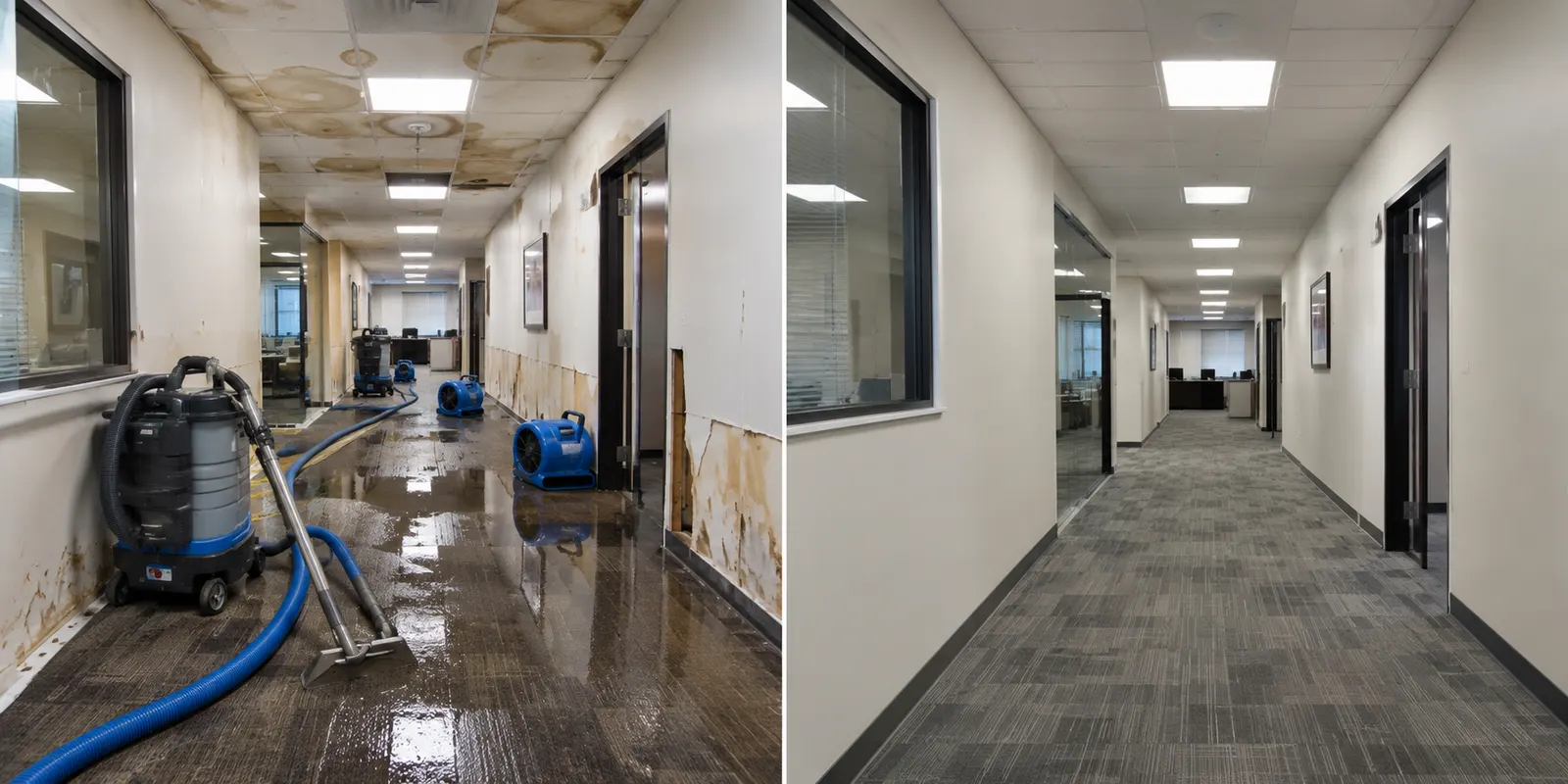
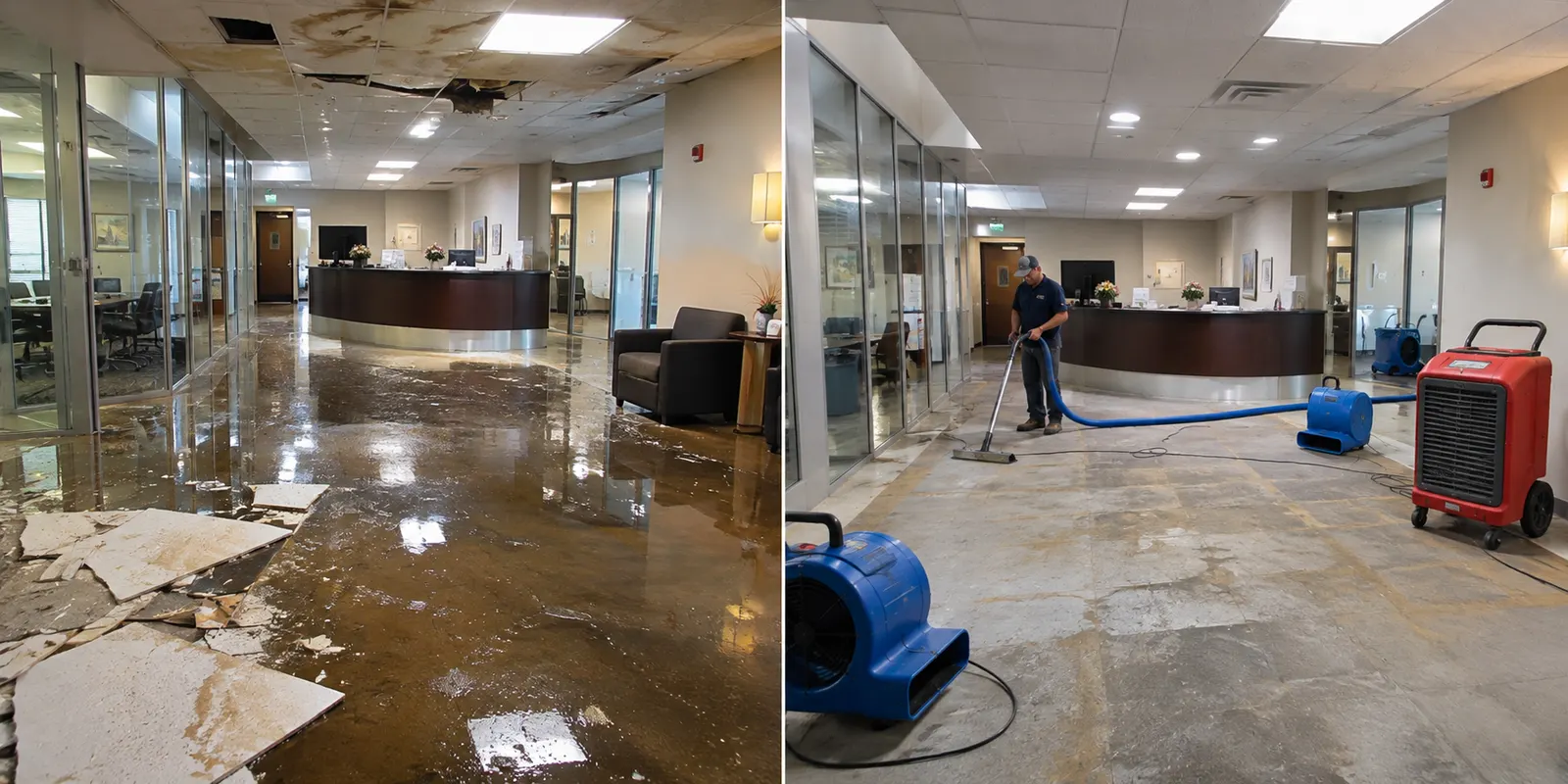
The next decisions depend on where the water came from. Water from a failed roof is usually the cleanest and most local. Water from the grade or from drains is usually contaminated and needs more removal. See the categories post. Whatever the route, the clock in the mold timeline is running, and the first steps are the same: make the area safe, document it, and get extraction and drying started. The flood damage cleanup page describes the work, and the roof leak page covers the most common route.
Common questions
Which month has the most rain in Dallas?
In the NWS 1991–2020 normals for DFW Airport, May is the wettest month at 4.78 inches, followed by October at 4.37 inches and June at 3.70 inches.
Is July dry?
On average it is among the driest months at 2.08 inches, but a single thunderstorm can still deliver heavy rain in a short time.
Do these numbers apply to my neighborhood?
They describe the DFW Airport weather station. Rainfall varies across the metro on any given day, so treat them as regional context.
Is my property at risk if it is outside a flood zone?
Possibly. A flood zone is a mapped regulatory category. Roofs, grading, drains and plumbing move water into buildings outside zones too, and TDI notes that many Harvey-flooded homes were outside designated zones.
If water is already in the building, call and describe it. Related service: Flood damage cleanup.
Read about flood damage cleanup →
Sources and further reading
- NWS Fort Worth, DFW Normals, Means, and Extremes (1991–2020), monthly precipitation, freeze days, snowfall, record lows
- NWS, Turn Around Don’t Drown, depth of moving water that moves people and vehicles
- FEMA, Flood zones (glossary), SFHA and Zone X definitions
- TDI, Home insurance guide, what policies cover and exclude; updated June 1, 2026
- FEMA, Flood insurance, homeowners policies and flood; 30-day wait; updated October 20, 2026
This article is general information from the Dallas Flood Guard editorial team. It is not medical, legal, engineering or insurance advice. Sources are linked above. See the editorial policy for how posts are researched and corrected.