Key points
- The first hour is about isolating the water, keeping people out of electrically uncertain areas and notifying the right people.
- In a multi-tenant building, work in common areas and shared systems has to be authorized by the owner or manager, so name one contact early.
- Document before anything is moved: photographs, a room-by-room list and times.
- EPA and CDC guidance is to dry water-damaged areas within 24 to 48 hours, so extraction and drying should start within the first day.
- Reopening is decided from moisture readings, electrical and fire protection status and regulator or landlord requirements, not from how a room looks.
A water loss in a commercial building is a coordination problem with a drying problem inside it. More people have a say, the space is shared, systems run through several tenants and every hour out of service costs something. A written checklist cuts the confusion, because in the first day the same few decisions come up every time.
schematicThe first 24 hours at a glance
A working order. Points tied to EPA or CDC guidance are marked in red.
- 0 to 1 hourIsolate the water. Keep people out of wet, sagging or electrically uncertain areas. Call the manager or engineer.
- 1 to 4 hoursNotify tenants, owner and insurer. Photograph and list affected spaces and contents. Call a plumber and a restoration company.
- 4 to 12 hoursExtraction under way. Moisture mapped. Wet ceiling, insulation and carpet removed where needed.
- 12 to 24 hoursDrying equipment running. Readings recorded. Tenants updated.
- 24 to 48 hoursEPA and CDC window to have water-damaged areas and items dry.
Stated by a cited sourceTypical practice, not a cited figure
In the first hour, isolate and make safe
- Find and close the shutoff. A branch valve for the affected area first, then the riser, then the main. IBHS’s guidance for interior water damage is to know where the main shutoff is. In a commercial building, the engineer or manager closes risers.
- Check electrical safety. CDC’s guidance for flooded buildings is not to turn power on or off yourself if you would have to enter standing water to reach the switch. Call the electrician or utility instead. Light fixtures, floor boxes and equipment under a wet ceiling can be energized.
- Keep people out. Wet tile and polished concrete are slip hazards. Sagging ceilings can fall.
- If it is a sprinkler release, call the fire protection contractor and follow the building’s procedure.
- Name one contact. One person at management and one person on the tenant’s side who can approve access.
In hours 1 to 4, notify and document
Notify in this order: management or the owner, affected tenants including those below and beside, your insurer, a plumber if a line failed, and a restoration company. Then document, because once removal begins the evidence changes.
- Photograph every affected space from the doorway, then close-ups of damage, the source and any visible water lines.
- List affected contents by room: inventory, equipment, records, furniture. Photograph labels and serial numbers.
- Record times: when the water was discovered, when it was shut off, who was notified and when.
- Protect what you can: lift inventory off floors, cover equipment, move records.
- Ask the manager what the building requires of vendors, such as proof of insurance, so work is not held up.
In hours 4 to 24, extract and start drying
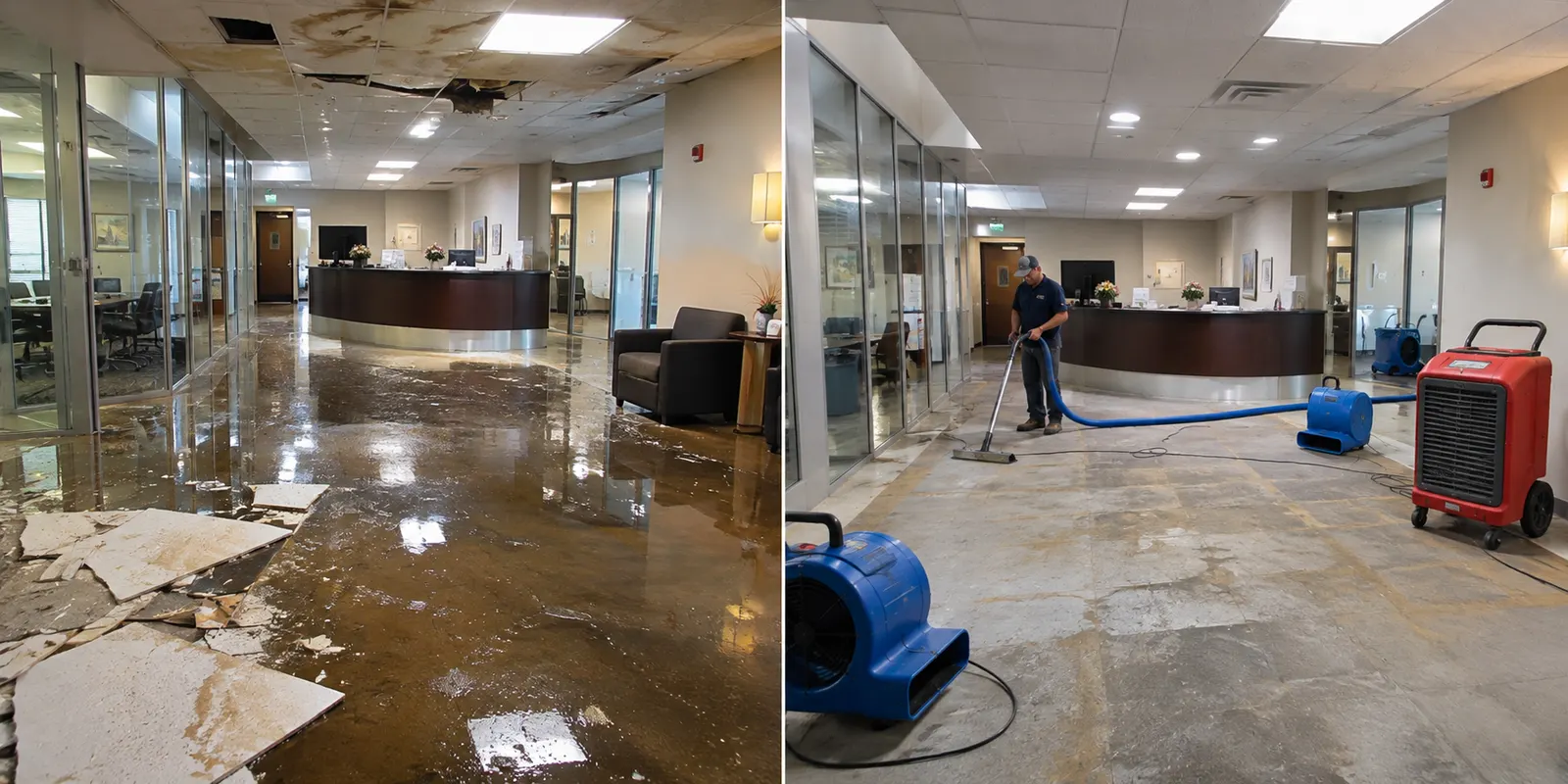
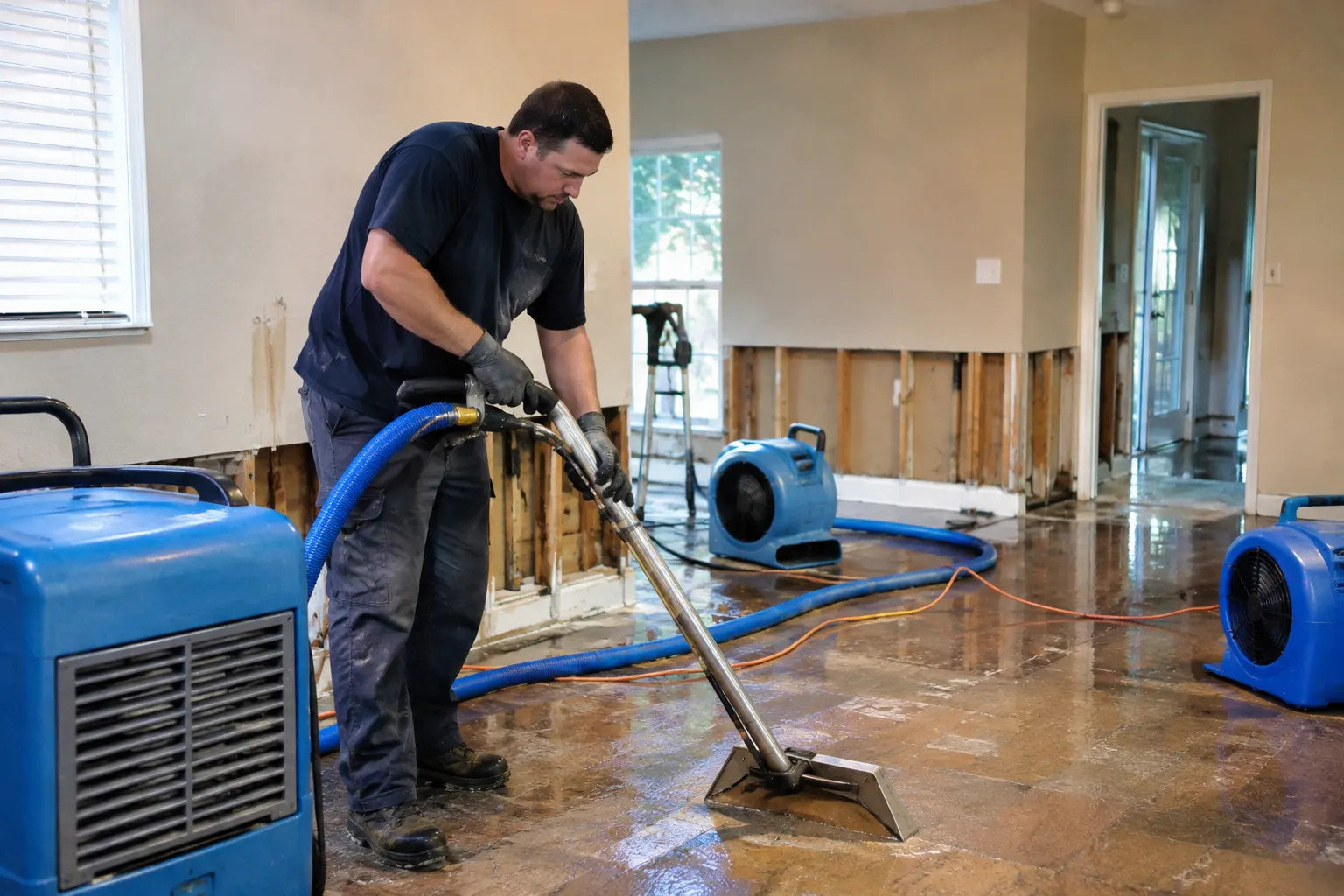
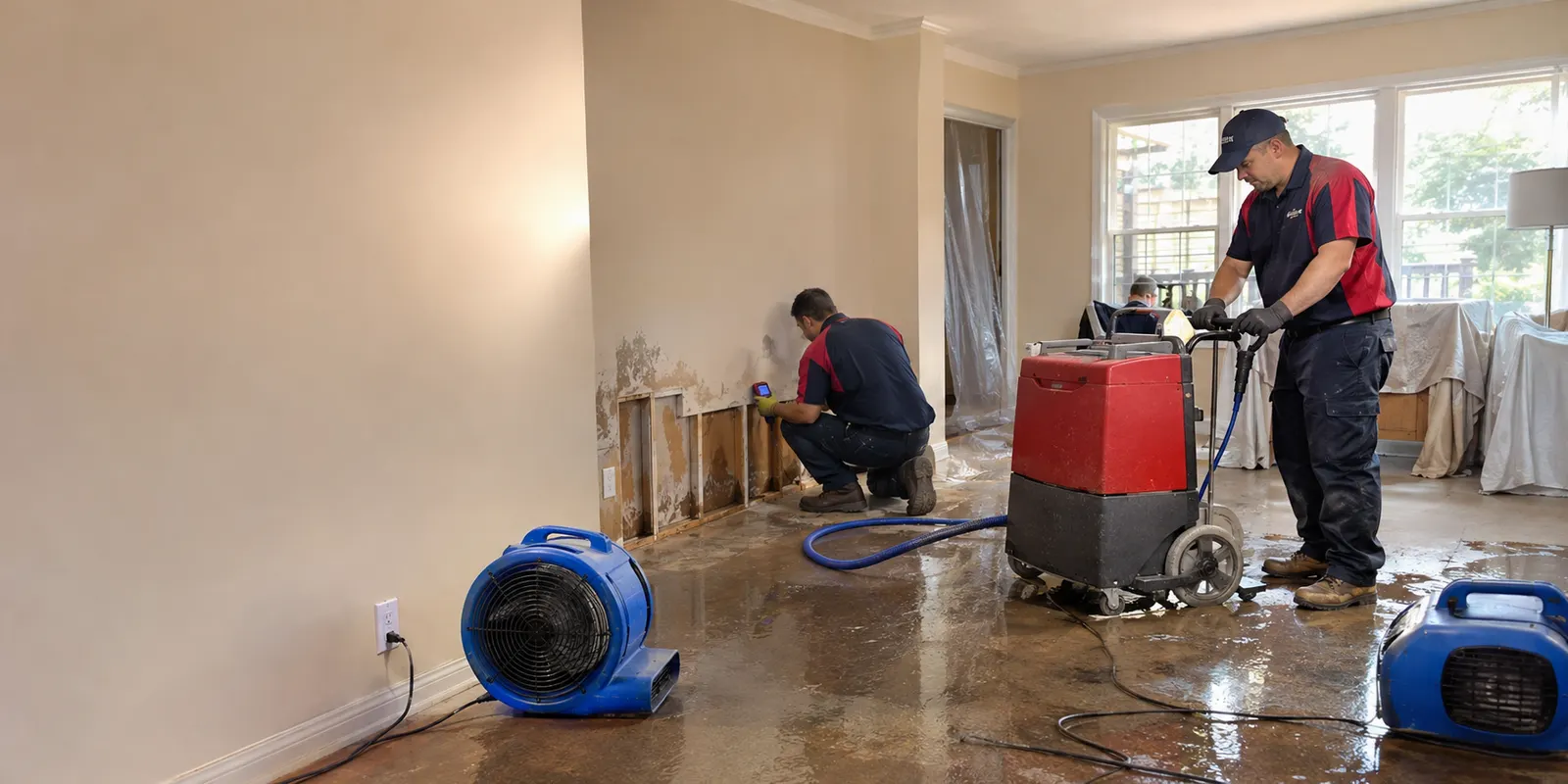
EPA says it is important to dry water-damaged areas and items within 24 to 48 hours to prevent mold growth, and CDC says to clean up and dry out fully and quickly within 24 to 48 hours after a flood. For a commercial space that means extraction and drying equipment should be working within the first day. The technician maps moisture with meters and thermal imaging, removes wet ceiling tile, insulation and carpet where needed, and sets air movers and dehumidifiers. See how structural drying works.
Equipment in an occupied space needs a plan: cord routes that are not trip hazards, circuits that will not overload, noise limits and attention to heat from dehumidifiers in small server rooms. Ask the contractor for that plan.
Who does what
| Party | Responsible for |
|---|---|
| Building engineer or manager | Shutoffs, access to chases and ceilings, authorization for common areas, tenant notices. |
| Tenant | Protecting its contents and records, access to its suite, its own insurer. |
| Plumber | Repairing the failed line. |
| Fire protection contractor | Sprinkler systems after a discharge. |
| Electrician | Checking wet circuits and equipment before power is restored. |
| Restoration company | Extraction, removal of wet materials, drying, moisture records. |
| Insurers | Coverage for the building and for tenant contents, business interruption where it applies. |
Tenants and shared systems
In a multi-tenant building the source is often in someone else’s suite. Water crosses ceiling plenums, shared walls and risers. The manager has to tell every affected tenant, and each tenant may need to approve entry. Give them a simple written update at set times: what happened, what is being done, what they should do and when the next update will come. The Addison page has a notification sequence for multi-story buildings.
How the checklist bends by property type
- Restaurants. Food service stops until the area is cleaned and cleared, and health-department rules decide when a kitchen can reopen. Water from a drain or grease line is handled differently from clean supply water. Notify the regulator as its rules require.
- Medical and dental offices. Clinical areas, equipment and patient records need protection and planning with the practice’s compliance staff. Do not move records or equipment without the owner’s direction.
- Data rooms and server closets. The risks are power and cooling. Dehumidifiers add heat to small rooms, so the plan has to consider ventilation and temperature. IT staff decide shutdown and relocation.
- Retail. Stock on the floor and display fixtures wick water. Customer-facing hours matter, and parts of the store can often stay open if the wet area is isolated.
- Warehouses. Racking bases and pallets wick water, powered equipment near water is a hazard and the volume to dry is large.
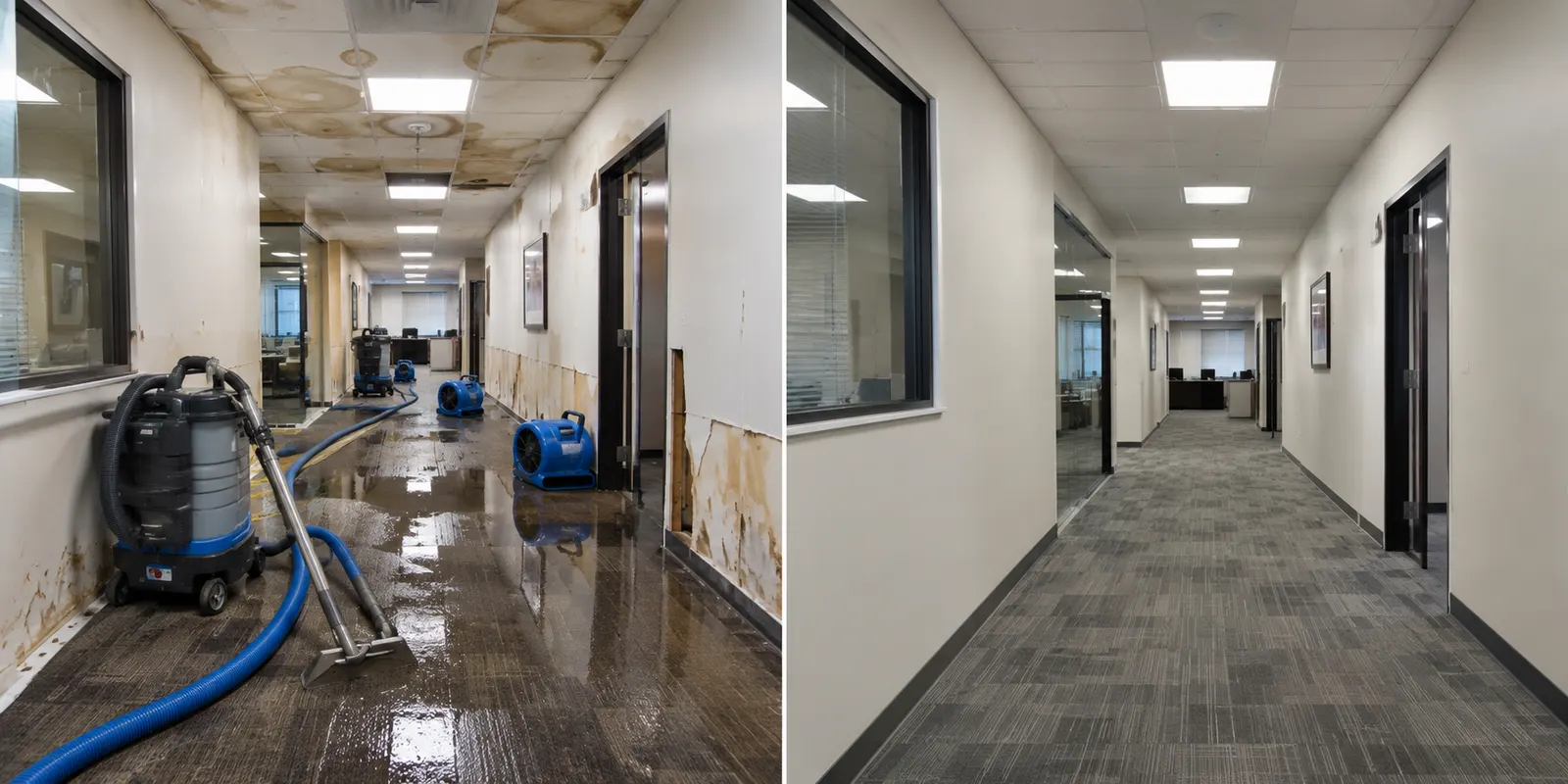
- Offices. Suspended ceilings, carpet tile and shared plenums mean water often reaches suites below.
The first hour is the same everywhere. What changes is who you must call next and what you cannot afford to lose.
Insurance and business interruption
Commercial policies differ more than home policies. The first call is to the broker or agent: ask what the policy requires, whether business interruption coverage applies and what documentation it wants. Keep the records from the first day: photographs, the contents list, the timeline and the drying log. A restoration company’s moisture records show the extent of the loss and the response, and the insurer decides coverage. The documentation post describes what Texas regulators publish for home claims, which is a useful baseline for the records you keep.
What days 2 to 5 usually look like
After the first day, the work shifts from emergency to monitoring. Plan for it so tenants and staff are not surprised.
- Daily readings. The technician returns to read the same points, adjusts equipment and tells you which sections are drying and which are not.
- Equipment changes. Air movers and dehumidifiers are moved or removed as areas reach their targets.
- Tenant updates. A short written note each day: what changed, what is next and whether any space can reopen.
- Decisions on materials. Sections that are not drying are opened or removed, and the manager and insurer are told why.
- Odor and moisture checks before closing anything back up.
The common friction points are access (locked suites, after-hours entry), noise and cords in occupied space, and unclear authority over shared areas. Naming a contact on each side in the first hour prevents most of them.
The reopening decision
- Readings, not appearances: materials and cavities read dry against a reference.
- Electrical safety: wet circuits and equipment checked and cleared.
- Fire protection: sprinklers and alarms operable.
- Contamination and odor: no remaining sewage or floodwater residue; no persistent musty smell.
- Regulator and landlord requirements, such as health department approval for a kitchen.
- Partial reopening is possible when a dry area can be separated from an active drying zone.
If a smell or damp persists after reopening, read musty smell with no visible mold. For the service itself, see commercial water damage restoration.
Common questions
Who should call the restoration company, the tenant or the manager?
Whoever controls the space where work will happen. In a multi-tenant building that is usually the manager or owner for common areas and shared systems, and the tenant for its own suite, with the manager’s authorization. Settle it in the first hour so work is not held up.
What if the water is from a sprinkler head?
Treat it as a fire protection issue as well as a water loss. The system needs qualified service and the fire department’s guidance for the building. Do not shut down protection without following the building’s procedure.
Do we have to close the business?
Not necessarily. It depends on the safety of the area, whether the affected space can be isolated and any regulator’s rules, such as for food service. Decide it from inspection, not guesswork.
What paperwork will the building ask a vendor for?
Property managers commonly require proof of insurance before vendors enter. Ask the manager what is required so work is not held up at the door.
If water is already in the building, call and describe it. Related service: Commercial water damage restoration.
Read about commercial water damage restoration →
Sources and further reading
- CDC, Reentering Your Flooded Home, electrical safety, mold, generators; updated August 24, 2026
- EPA, A Brief Guide to Mold, Moisture and Your Home, drying within 24 to 48 hours, 10 square feet, sampling, biocides, HVAC, sewage
- CDC, About Mold, 24 to 48 hour cleanup guidance, testing, who is affected
- IBHS, How to prevent interior water damage from plumbing and appliances, know and use the main shutoff
This article is general information from the Dallas Flood Guard editorial team. It is not medical, legal, engineering or insurance advice. Sources are linked above. See the editorial policy for how posts are researched and corrected.